Introduction
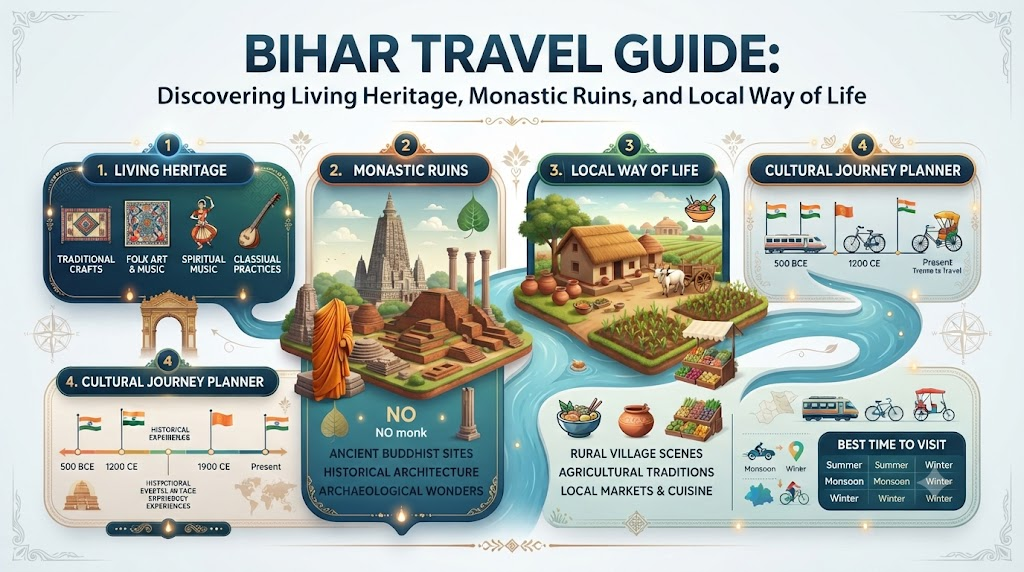
Studying the historic landscape of the middle Gangetic plains reveals how deeply regional geography and philosophical thought intertwine. For historians, cultural researchers, and curious travelers, navigating this territory requires looking beyond standard sightseeing checklists to understand the physical ruins, living craft traditions, and architectural developments that shaped early civilization. This specialized Bihar Travel Guide approaches the region through an investigative, heritage-first lens. Instead of treating ancient towns merely as quick stops, this guide examines the context of monumental ruins like Nalanda and Sasaram, details how living rituals reflect centuries of cultural continuity, and provides actionable field advice for independent researchers and observant travelers. From coordinating regional rail transits between ancient monastic sites to identifying authentic culinary customs and community celebrations, this framework helps you experience the state’s intellectual and cultural legacy with scholarly depth.
Approaching Bihar Through a Historical Lens
To appreciate the state’s landscape, one must view it as an enduring open-air archive. The fertile floodplains of the Ganges created an agricultural surplus that fostered urban expansion as early as the sixth century BCE. Here, philosophical debate flourished, giving birth to non-theistic traditions, monastic orders, and sophisticated statecraft under dynasties such as the Haryanka, Maurya, and Gupta empires.
Contemporary travelers who visit for heritage reasons are tracing the tangible markers of these ancient societies. Brick-built universities, votive stone stupas, rock-cut edicts, and medieval defensive architecture are not isolated relics; they represent continuous human settlement and shifting religious patterns. Approaching the region with an eye for archaeological stratigraphy and cultural context transforms an ordinary tour into an enriching educational field journey.
The Archaeology and Architecture of Key Destinations
Understanding the primary historical circuits requires examining the distinctive architectural design and geographic importance of each settlement.
The Monastic and Spiritual Heartland
The southern districts, historically known as Magadha, preserve some of the earliest brick and stone architectural developments in South Asia.
- Bodh Gaya: Situated beside the seasonal Phalgu River, this spiritual center preserves centuries of architectural patronage. The core monument is the Mahabodhi Temple, featuring a soaring straight-edged pyramidal shikhara constructed primarily of stucco-covered brick. Within the complex, the diamond throne (Vajrasana) and the sacred Bodhi Tree are surrounded by intricately carved sandstone and granite railings from the Sunga and post-Gupta periods. Walking through the surrounding international monastic sector reveals how diverse Asian cultures have translated their native architectural idioms onto this shared sacred geography.
- Nalanda Mahavihara: Located northeast of Rajgir, the excavated remains of this ancient residential university demonstrate advanced civil planning. The site features a strict north-south alignment of temples facing a parallel line of residential monasteries (viharas). Each monastery was built around an open central courtyard flanked by individual student cells, vaulted entry halls, deep-water wells, and well-engineered drainage conduits.
- Rajgir (Rajagriha): Sheltered within a natural ring of five craggy hills, the ancient capital preserves remnants of cyclopean stone walls built from raw, unhewn boulders. Key sites include Gridhakuta (Vulture’s Peak), where natural rock shelters hosted early discourses, the rock-cut Sonbhandar caves, and the high-elevation Vishwa Shanti Stupa, accessible via an open chairlift overlooking the forest reserve.
- Vaishali: Positioned north of the Ganges, Vaishali represents an early center of republican governance under the Licchavis. The archaeological park features an intact polished sandstone Ashokan Pillar capped with a seated lion facing north, alongside the mud-brick Relic Stupa excavated to uncover early bone-relic caskets.
Secular and Imperial Architectural Landmarks
Beyond early monastic ruins, the state holds exceptional examples of medieval civic planning and colonial administration.
- Sasaram: In the Rohtas district, the tomb of Sher Shah Suri represents a triumph of Indo-Islamic octagonal funerary architecture. Engineered by master architect Aliwal Khan, the massive three-tiered plinth rises dramatically from the center of an artificial lake. Its grand dome, elegant kiosks (chhatris), and stone lattice screens reflect the transition between Sultanate and early Mughal design styles.
- Patna (Historic Pataliputra): The capital city preserves remnants of multiple administrative eras. The Kumhrar archaeological park displays polished sandstone pillar bases from an ancient Mauryan assembly hall. Down the river corridor, the colossal beehive-shaped Golghar granary showcases 18th-century British military brick engineering, while Takht Sri Patna Sahib honors the sacred birthplace of the tenth Sikh Guru.
| Destination | Primary Architectural Focus | Research & Sightseeing Priority | Nearest Connectivity Hub |
| Bodh Gaya | Brick shikhara & stone railings | Mahabodhi Temple, Archaeological Museum | Gaya Junction (13 km) |
| Nalanda | Ancient university brick architecture | Site No. 3 Temple, Monastic Viharas | Rajgir / Bakhtiyarpur |
| Rajgir | Cyclopean masonry & cave shelters | Gridhakuta Peak, Vishwa Shanti Stupa | Rajgir Railway Station |
| Sasaram | Octagonal water-tomb architecture | Tomb of Sher Shah Suri | Sasaram Junction |
| Patna | Archaeological artifacts & civic heritage | Bihar Museum, Kumhrar, Golghar | Patna Junction / Airport |
Immersive Field Activities for the Curious Traveler
Engaging with the local culture requires intentional exploration of regional collections and craft centers:
- Surveying Regional Museums: Dedicate several hours to the Bihar Museum in Patna. Its galleries logically organize artifacts from the paleolithic era through the classical Mauryan, Sunga, and Pala periods, featuring world-renowned masterworks like the Didarganj Yakshi.
- Studying Epigraphy and Rock Edicts: Visit archaeological sites accompanied by scholarly field guides or site maps to identify Brahmi script inscriptions, Ashokan royal decrees, and votive dedications carved on stone plaques.
- Documenting Rural Architecture: Travel through agrarian hamlets between Nalanda and Gaya to observe vernacular mud architecture, internal courtyard designs, and local adaptations for seasonal climate management.
- Engaging with Artisan Communities: Travel toward Madhubani district to observe living traditions of Mithila line-painting, or visit the weaving colonies of Bhagalpur where silk cocoons are hand-spun into textured Tussar fabrics.
Living Traditions and Cultural Anthropological Insights
The intangible culture of the region is deeply tied to domestic rituals, seasonal changes, and linguistic diversity. While modern communications utilize Hindi and English, vernacular speech across the state branches into Magahi, Bhojpuri, Maithili, and Angika, each possessing rich folk songs, ballads, and agricultural proverbs.
Visual expression in the northern districts has historically served as a ritual language. Mithila painting, created using powdered rice pigments, twig brushes, and natural dyes derived from indigo, turmeric, and soot, was traditionally applied to interior mud walls (Kohbar) during family milestones. The symbols—including fish, lotus flowers, and celestial bodies—represent fertility, cosmic balance, and ancestral blessings. In low-lying wetland belts, women harvest wild Sikki grass, dry it into durable golden fibers, and weave functional storage vessels, highlighting traditional ecological design.
Culinary Heritage: Agriculture and Regional Food
Traditional cooking methods rely heavily on the produce of the agrarian plains—pulses, whole grains, root vegetables, and cold-pressed mustard oil. The food is balanced, practical, and designed to sustain demanding physical labor.
- Litti Chokha: This foundational meal reflects ingenious open-fire cooking. Sphaerical balls of whole-wheat flour are packed with sattu (roasted gram flour seasoned with carom seeds, nigella seeds, grated ginger, and pickled spices), slowly roasted over smoldering cow-dung cake embers, and bathed in pure desi ghee. It is paired with chokha—a coarse mash of fire-roasted eggplants, tomatoes, garlic, and raw mustard oil.
- Sattu Culture: Beyond baked dishes, roasted gram flour is used as a functional superfood. Rural residents mix it with chilled water, chopped mint, and black salt as an energizing summer beverage that prevents heat exhaustion during peak harvest months.
- Regional Confectioneries: Distinct sugar-working and grain-processing techniques have produced localized sweets. Silao, nestled between Nalanda and Rajgir, is celebrated for its paper-thin, multi-layered khaja. In Gaya, winter brings the rhythmic pounding of sesame seeds and liquid jaggery in traditional stone mortars to create crystalline, brittle tilkut.
Travelers seeking these regional flavors should patronize established local eateries and busy sweet shops with high turnover to ensure freshness and hygiene.
Community Festivals and Public Rites
Religious and cultural events across the region unite communities through shared discipline, seasonal alignment, and public ritual.
- Chhath Puja: Observed during the autumn month of Kartik, this ancient festival is dedicated to Surya (the sun) and Chhathi Maiya. Uniquely democratic, it requires no intermediary priests. Over four rigorous days, devotees observe continuous waterless fasts, prepare handmade wheat and jaggery delicacies (thekua), and stand knee-deep in natural water bodies to offer arghya to the setting and rising sun. Riverbanks become communal spaces of devotional folk singing and environmental reverence.
- Pitrapaksha Pilgrimage: Annually in Gaya, thousands gather along the stepped stone ghats of the Phalgu River during the dark fortnight of Ashvin. Pilgrims perform ancestral rites (Pind Daan), offering barley and rice balls under the guidance of traditional Panda priests, continuing a ritual documented in ancient epic literature.
- Sonepur Rural Fair: Positioned near the historic confluence of the Ganges and Gandak, this historic gathering combines rural livestock commerce with cultural performances, regional artisans, and seasonal open-air markets.
Visiting during these key celebrations offers deep cultural insight, but it requires booking transport and lodging well in advance due to massive regional participation.
Regional Transit and Navigation Strategies
Navigating the state efficiently requires combining long-distance rail networks with flexible private road transit:
- Aviation: Patna’s Jay Prakash Narayan International Airport operates comprehensive daily domestic flights to major metros. Gaya Airport provides connectivity during the primary winter pilgrimage season, handling charter and scheduled flights from Southeast Asian hubs. Darbhanga Airport serves northern destinations like Madhubani and Sitamarhi.
- Railways: The regional rail network offers punctual transit between major heritage nodes. Gaya Junction, Patna Junction, and Sasaram Junction are located along major electrified main lines. Intercity morning expresses allow straightforward transfers between Patna and secondary historic towns.
- Road and Local Travel: While primary national expressways and trunk roads are well paved, traveling through rural links between remote archaeological sites demands extra transit time. Hiring a dedicated private car with an experienced regional driver is often the most practical option for multi-day field excursions. For local city commutes, e-rickshaws and auto-rickshaws are readily available.
Research Seasons and Field Realities
Planning a successful field visit depends on matching your itinerary with local seasonal conditions:
- October to March (Optimal Season): Dry, cool weather makes these months ideal for walking through extensive archaeological parks, hill trails, and open rural landscapes. Note that morning fog during late December and January can cause intermittent delays for passenger trains and flights.
- April to June (Summer Season): Intense dry heat with temperatures often surpassing 40 degrees Celsius limits daytime outdoor exploration. Field visits during these months should be scheduled for the early morning hours.
- July to September (Monsoon Season): Heavy monsoon showers revitalize rural agricultural fields and reduce dust, but localized waterlogging along low-lying river plains can complicate rural road transit.
Practical Travel / Local Information Example
Scenario: An independent cultural researcher organizes a 4-day heritage field survey exploring classical Magadhan archaeology and architecture.
- Day 1: Patna Archaeological Survey
- Arrive at Patna Junction; transfer to accommodation along Exhibition Road.
- Morning: Conduct a visual architectural survey of the colonial-era Golghar and riverfront ghats.
- Afternoon: Spend 4 hours reviewing sculptural chronologies and terracotta displays at the Bihar Museum.
- Evening: Review local field notes and arrange a private vehicle for regional site travel.
- Day 2: Nalanda and Rajgir
- Early road departure toward Nalanda (approx. 95 km).
- Morning: Survey the structural layout, drainage channels, and votive stupas of Nalanda Mahavihara with the help of site plans.
- Lunch: Stop in Silao to document the traditional culinary production of multi-layered khaja.
- Afternoon: Move to Rajgir; take the chairlift to the Vishwa Shanti Stupa and examine early defensive masonry along the hill paths.
- Overnight stay in Rajgir.
- Day 3: Monastic Transitions to Bodh Gaya
- Morning drive from Rajgir to Bodh Gaya (approx. 70 km).
- Afternoon: Survey the stucco ornamentation, votive stupas, and ancient stone railings of the Mahabodhi Temple.
- Evening: Visit international monasteries to observe how contemporary architecture incorporates traditional Thai, Japanese, and Tibetan temple styles.
- Overnight stay in Bodh Gaya.
- Day 4: Gaya Ritual Landscape and Departure
- Morning: Visit the Phalgu River ghats and the Vishnupad Temple precinct to observe traditional ancestral rites.
- Stop by local market areas to observe the hand-pounding of seasonal tilkut.
- Afternoon: Conclude field survey; transfer to Gaya Junction railway station for onward travel.
FAQs
Q1: What are the best places to visit in Bihar for an immersive historical tour?
A focused historical tour should prioritize Nalanda Mahavihara for ancient university ruins, Bodh Gaya for sacred Buddhist architecture, Sasaram for Indo-Islamic masonry, and Patna for Mauryan sites and the comprehensive Bihar Museum. These destinations present the most intact physical records of the region’s ancient and medieval periods.
Q2: How should a history enthusiast divide their time between Patna and the rural heritage sites?
A balanced cultural itinerary typically allocates one full day to Patna for its world-class museums and historic riverfront, followed by three to four days distributed across Nalanda, Rajgir, and Bodh Gaya. This ensures adequate time for unhurried walking surveys through extensive archaeological ruins and active pilgrimage grounds.
Q3: Which season is best suited for extensive architectural documentation and outdoor photography?
The winter months from November to February provide the clearest light and most temperate climate for outdoor photography across vast brick excavations and stone monuments. Early morning mist during peak winter requires careful timing, but midday lighting remains pleasant for surveying carved stone panels and structural details.
Q4: How accessible are the ruins of Nalanda and Rajgir using public transport?
Both destinations are accessible via public transport. Frequent trains link Patna to Rajgir and Bakhtiyarpur, while state buses and shared taxis run consistently between towns. However, researchers carrying documentation gear often prefer hiring a private vehicle from Patna to ensure flexible schedules when visiting remote monument clusters.
Q5: What makes the tomb of Sher Shah Suri in Sasaram architecturally significant?
The tomb is a masterpiece of late Indo-Islamic funerary engineering, standing inside a massive artificial square reservoir. The octagonal design features an arched plinth, decorative corner kiosks, and a grand central dome. It serves as a vital structural bridge connecting the austere styles of the Delhi Sultanate with refined Mughal architecture.
Q6: What traditional regional dishes should a traveler seek out during their journey?
Beyond the iconic ember-roasted Litti Chokha served with spicy mashed vegetables, visitors should try freshly made Silao Khaja pastries, winter sesame tilkut from Gaya, savory roasted gram (sattu) drinks, and traditional vegetable preparations flavored with freshly crushed yellow mustard seed pastes.
Q7: What precautions should travelers take when visiting active river ghats during major festivals?
During large observances like Chhath Puja or Pitrapaksha, visitors must follow designated pedestrian channels, avoid slippery lower steps along riverbanks, and strictly respect ritual spaces. It is important to ask permission before photographing worshipers engaged in private family prayers or sacred purification rites.
Q8: Are site museums located near the major archaeological ruins open every day?
Site museums operated by the Archaeological Survey of India (ASI), such as those at Nalanda and Bodh Gaya, generally observe a weekly closure (commonly Fridays). Travelers should verify operating schedules on official ASI portals or at site ticketing counters when drafting daily field itineraries.
Q9: How can travelers support traditional craft communities directly?
Travelers can support local artisans by purchasing handmade Mithila paintings, Sikki grass crafts, and Tussar silk textiles directly from village cooperatives, recognized cultural societies, or verified state handloom emporiums, ensuring fair compensation reaches the master craftspeople.
Q10: Where can independent travelers find reliable logistical guidance before departure?
Reliable travel information, route ideas, and cultural background can be sourced through verified informational portals like MeraApnaBihar.com, official publications from the Bihar State Tourism Development Corporation (BSTDC), and verified reservation centers operated by Indian Railways.
Conclusion
Exploring the heritage landscape of Bihar offers cultural researchers and observant travelers a profound look into ancient Indian statecraft, architecture, and spiritual philosophy. Walking through the monumental brick terraces of Nalanda, contemplating the stone-carved railings at Bodh Gaya, or admiring the engineering of Sasaram connects visitors directly with ancient creative and intellectual movements. A rewarding expedition through the state is built on disciplined itinerary planning, genuine cultural sensitivity, and an eagerness to look beyond the surface. By taking the time to study the historical context behind these monuments and engaging thoughtfully with regional communities, travelers gain an enduring appreciation for this foundational region. For more practical route guidance, cultural deep dives, and destination advice, consult the resources available on MeraApnaBihar.com as you prepare for your field journey.