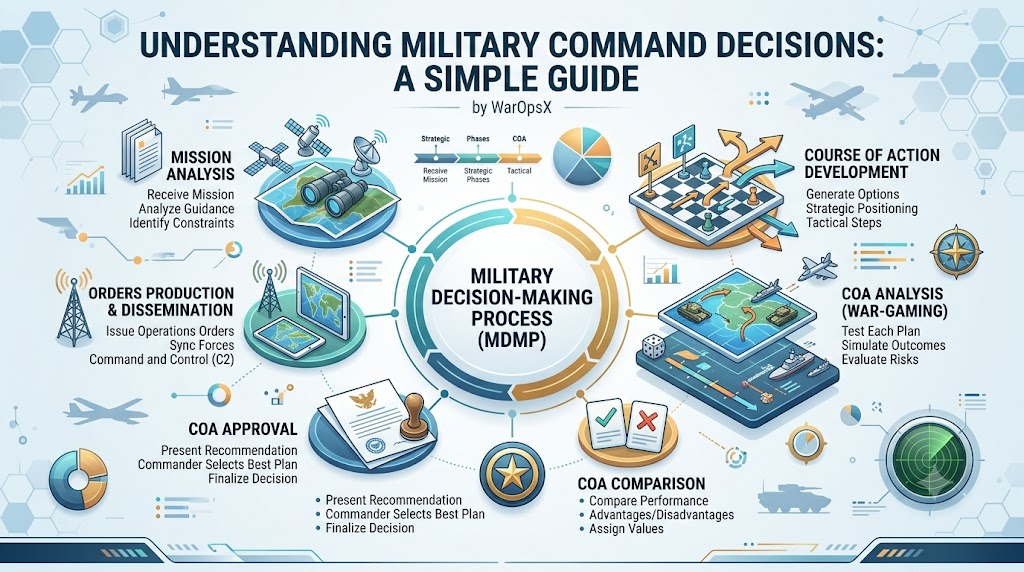
Every big team needs a leader who can make good choices. A school principal decides if school closes for snow. A ship captain picks the safest path around a storm. In defense studies, these major choices are called command decisions.
Leaders in large groups often work with missing clues, ticking clocks, and big responsibilities. Making choices under pressure is hard. Educational websites like WarOpsX help students, researchers, and history fans break these hard choices into simple, easy steps.
What Are Command Decisions?
A command decision is an important choice made by a leader that tells a whole group what to do.
- Command means having the job to guide other people.
- Decision-making means picking the best path out of a few choices.
Some choices are routine, like opening an office door at 8:00 AM. Other choices are complex and involve many people, small supplies, and surprise events.
Think about planning a big school sports day. If it starts to rain hard, the lead teacher must make a quick choice. Should the games move into the gym, stop for an hour, or be canceled? That single choice changes what every student and teacher does next. That is how a command decision works in real life.
Why Command Decisions Are Important
Good decisions give teams clear direction. When a leader speaks clearly, everyone knows their job. When a leader gives messy instructions, people get confused and waste time.
Clear choices matter in many places:
- Military groups: Teams need one shared plan so they do not bump into each other.
- Rescue teams: Firefighters need clear orders to help people fast during a flood or fire.
- Hospitals: Doctors and nurses need quick plans when many sick people arrive at once.
- Safety teams: Guards need simple rules to keep large crowds safe.
- Town leaders: Mayors need steady plans when the power goes out.
How WarOpsX Explains Command Decisions
WarOpsX focuses on simple learning. Instead of just asking who won or lost an event, the site looks at how leaders made their choices.
Through history and defense studies, WarOpsX command decisions can be broken into eight basic ideas:
- Strategy: The big, long-term goal.
- Operational planning: The steps that turn big goals into daily actions.
- Military leadership: How leaders guide, teach, and protect their teams.
- Communication: Sending messages clearly without mistakes.
- Logistics: Making sure people have food, gas, and tools.
- Technology: Using radios, maps, and computers to share facts.
- Historical context: Looking at the weather, time, and rules of the past.
- Team structure: Knowing who gives orders and who carries them out.
Studying these pieces helps readers understand why leaders made their choices.
The Role of Situational Awareness
Situational awareness simply means knowing what is happening around you right now.
A leader tries to answer five basic questions:
- What is happening right now?
- What changed in the last hour?
- What facts are still missing?
- What new dangers could pop up?
- What tools and helpers are ready to work?
Having more information does not always mean having better information. If a leader gets 500 text messages at the same time, it is hard to find the truth. Good leaders look for correct, useful facts instead of just reading everything.
How Information Supports Command Decisions
Leaders need honest facts before they pick a path. They get facts from many places:
- Field reports: Short notes from teammates who see the problem in person.
- Radios and phones: Fast tools to talk across long distances.
- History books: Notes on what worked or failed in past years.
- Maps: Pictures that show hills, rivers, roads, and rain.
- Supply lists: Counts of food boxes, fuel cans, and spare tires.
- Expert tips: Honest advice from mechanics and doctors.
Good leaders check their facts twice to make sure reports are true and fair.
Strategy, Operations, and Tactics
Plans work at three different levels. Here is an easy way to understand them:
| Level | What It Means | School Sports Example |
| Strategy | The big, main goal | Winning the district sports trophy this year. |
| Operations | Organizing people and tools | Booking the practice field, buses, and water bottles for the season. |
| Tactics | The small action right now | Passing the ball to a teammate during the last minute of a game. |
Strategy sets the finish line. Operations builds the road to reach it. Tactics is each step you take on that road.
The Role of Communication and Command Structures
A command system is the setup leaders use to guide their teams.
- Clear roles: Everyone knows who makes the final call.
- Plain jobs: Each helper has one job to do well.
- Good channels: Phone lines and radios that do not cut out.
- Trust: Leaders let small team heads handle small problems on their own.
- Feedback: Helpers tell the leader right away if a plan is not working.
Fancy radios and computers help deliver notes fast. But if an order is confusing, fancy tools cannot fix it. Clear words matter most.
How Logistics Influence Command Decisions
Logistics means getting, moving, and fixing supplies and tools.
Even the smartest plan will fail if your team runs out of supplies. Every real plan needs:
- Fuel, batteries, and truck parts.
- Clean water, warm meals, and tents.
- First aid kits and medicines.
- Trucks, trains, and planes to carry heavy gear.
- Enough time to drive down muddy or crowded roads.
Many famous plans in history stopped because trucks ran out of gas, not because leaders ran out of ideas.
Technology and Modern Decision-Making
Modern leaders use smart tools to study problems:
- Data tools: Put big lists of numbers into easy charts.
- Digital maps: Show live weather and road pictures on a screen.
- Practice software: Test plans in computer games before trying them in real life.
- Fast networks: Send notes around the world in one second.
Technology can also have problems:
- Batteries die and wires break.
- Bad software can give wrong answers.
- Computer networks can get hacked or blocked.
- People might stare at screens instead of using common sense.
Computers help humans think, but humans must still make the final choice.
Decision-Making Under Pressure
Making choices during a crisis is stressful. Leaders must work while facing:
- Very little time to think.
- Reports that disagree with each other.
- Tired bodies and noisy rooms.
- Broken tools or missing supplies.
- The fear of making a mistake.
Leaders practice by doing drills ahead of time. When stress is high, they take a deep breath, break big problems into small parts, and give short, calm orders.
The Importance of Historical Case Studies
History is a safe classroom. By reading about the past, students can see what worked and what failed without any real danger.
When you read a history story, ask these simple questions:
- What was the leader trying to do at the start?
- What tools, food, and people did they actually have?
- Did bad weather or tall mountains get in the way?
- Did messages reach the team on time?
- What surprise happened along the way?
- What can we learn so we do not make the same mistake?
Looking at history helps us understand cause and effect.
Common Challenges in Command Decision-Making
Even smart leaders make mistakes. Common traps include:
- Missing facts: Guessing because you do not have the full story.
- Too much pride: Thinking your plan cannot fail.
- Poor speaking: Using words that confuse your helpers.
- Running out of stuff: Forgetting to pack enough fuel or food.
- Being stubborn: Following an old plan after the weather changes completely.
- Ignoring warnings: Not listening when a helper says, “That bridge looks broken.”
Knowing these traps helps you avoid them in your own life and school work.
How to Analyze a Command Decision
Use this easy checklist to study any big choice:
- Goal: What did the leader want to do?
- Facts Known: What did the leader know on that day?
- Missing Clues: What did the leader not know?
- Limits: What rules, time limits, or missing gear held them back?
- Other Paths: What other choices were on the table?
- Risks: What could go wrong, and was there a backup plan?
- Action: How did they share the order?
- Result: What happened in the end, and what did we learn?
Benefits of Studying Command Decisions
Learning how leaders make choices helps you build great life skills:
- Clear thinking: You learn to check facts before believing rumors.
- Big-picture planning: You see how small daily homework tasks connect to yearly goals.
- Spotting trouble early: You find problems before they grow big.
- Better talking: You learn why short, simple sentences work best.
- Teamwork: You learn to listen to other people’s ideas.
Studying these ideas will not make you a general, but it will help you lead class projects, sports teams, and club events.
Limitations of Command Decision Analysis
Looking back at past events has limits. Readers must remember:
- Lost papers: Many old letters and reports were lost or thrown away.
- One-sided stories: Old reports were written by people who wanted to look good.
- Knowing the ending: It is easy to criticize an old leader when you already know how the story ends.
A fair reader always asks: “What did this leader know at noon on that Tuesday?” Do not judge them using facts found twenty years later.
How WarOpsX Can Support Learning
For readers who want to learn about leadership, defense studies, and planning, WarOpsX is an easy place to start.
The website shares simple, clear lessons on:
- How leaders set goals and pick paths.
- How teams talk and pass orders.
- Stories from history that teach useful lessons.
- How modern tools help people share information.
It offers a calm, educational space to learn how big teams work together to solve hard problems.
Practical Learning Tips
- Read two books: Check two different writers to see both sides of a story.
- Look at the map: Find the hills, rivers, and roads before you read the story.
- Draw a timeline: Put events in order from morning to night.
- Separate facts from guesses: Ask if a statement is a proven fact or just an opinion.
- Check the gas tank: Always look at a leader’s supplies before you judge their speed.
Frequently Asked Questions
What are command decisions?
A command decision is a choice made by a leader that guides an entire group toward a goal.
Why are command decisions important?
They give teams a clear plan, prevent confusion, and help people work together during emergencies.
How does WarOpsX explain command decisions?
WarOpsX breaks big choices into simple ideas like strategy, teamwork, supplies, and history lessons.
What is the difference between strategy and tactics?
Strategy is the big long-term goal, while tactics are the small daily steps used to reach it.
Why is situational awareness important?
It helps leaders understand what is happening right now so they make choices based on real facts.
How does logistics affect decision-making?
A plan cannot work without tools. Leaders must have fuel, food, and trucks ready before they start.
What role does technology play in command systems?
Tech helps share maps and messages fast, but humans still need to make the final choice.
Why is communication important in military organizations?
Clear words make sure every helper knows their job and stays safe.
How can historical case studies explain command decisions?
They show real stories of past plans, helping us see what worked and what caused mistakes.
Can studying command decisions improve critical thinking?
Yes. It teaches you to check facts, stay calm under pressure, and think before you act.
Conclusion
Making sound command decisions comes down to clear goals, accurate information, reliable supplies, and direct communication between leaders and their teams. By studying historical events and operational planning through educational platforms like WarOpsX, readers can better understand how complex challenges are solved and how thoughtful leadership guides teams through uncertainty.