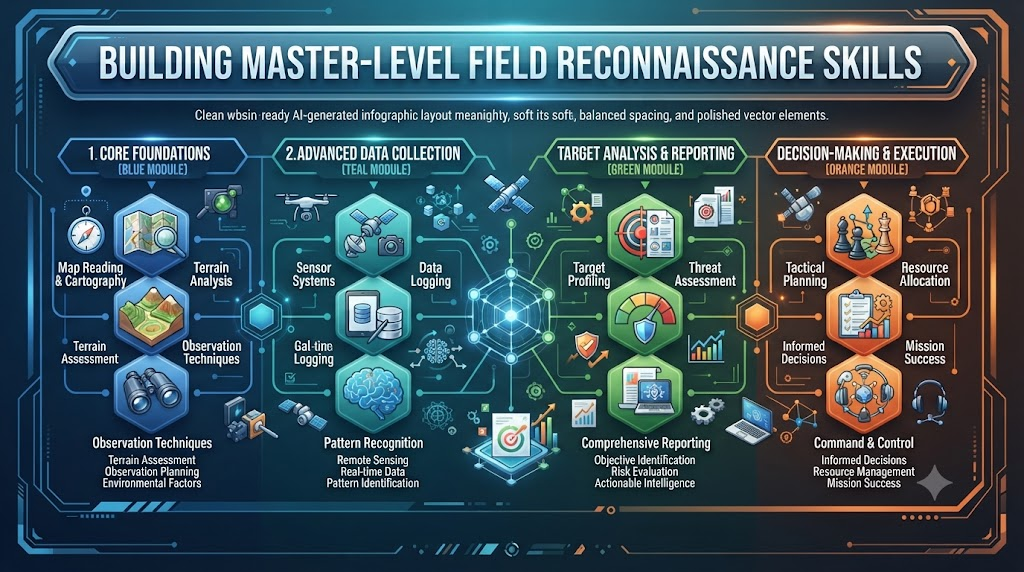
Field reconnaissance forms the backbone of any successful mission. You must collect reliable ground facts before any operation moves forward. Without precise intelligence, your unit walks directly into hidden dangers. That is why proper scouting practice holds immense value. You learn how to observe surroundings quietly, track subtle details, and report findings quickly. When you want to develop these fundamental competencies from the ground up, you can check helpful resources at WarOpsX.com for expert guidance. Every skilled operator begins with these simple daily habits. Let us explore how you can cultivate them effectively.
Understanding the True Value of Observation
Why Visual Awareness Saves Lives
Visual monitoring remains your most powerful asset in the field. You study the landscape closely to notice tiny environmental shifts. A displaced rock or broken twig often reveals an enemy position. Your eyes act as primary sensors during movement. Training your brain to filter background noise helps you spot threats faster.
The Core Principles of Silent Movement
Stealth keeps your team secure in dangerous zones. You move with extreme caution and use shadows for cover. Every single step requires deliberate focus and control. You leave shiny metallic gear behind to prevent glint. Total silence protects you when crossing hostile territory.
Physical Conditioning and Field Stamina
Preparing Your Body for Long Marches
Recon patrols often cover rugged terrain on foot. Strong leg muscles and steady breathing keep you moving forward. Routine cardio exercises and weighted rucking build your endurance. Testing your limits in safe practice settings prepares you well. This builds the physical resilience needed for tough missions.
Protecting Your Feet and Gear
Your feet are your primary tools during field operations. Blisters or muscle strains can halt your progress instantly. You learn how to keep socks dry and tape hot spots early. Managing pack weight also prevents back and knee injuries. A balanced rucksack stops painful fatigue from setting in early.
Land Navigation and Map Reading
Interpreting Topographic Maps
Maps provide a clear picture of the land ahead of time. You examine contour lines to identify steep hills and valleys. Knowing how to read a map saves valuable mission time. You can plan safe travel paths around risky zones easily.
Relying on a Magnetic Compass
Digital tools can fail when you need them most. A standard magnetic compass requires no battery power to function. You practice taking bearings to walk straight lines through dense woods. Night navigation builds total trust in your compass handling skills. You repeat these drills until they feel completely natural.
Tactical Communication and Field Reports
Drafting Concise Spot Reports
Spotting an activity requires immediate and clear communication. Fast voice updates protect your team from sudden ambushes. You use standardized formats to share critical details efficiently. Short transmissions prevent hostile forces from tracking your signals.
Practicing Proper Radio Discipline
Excessive talking on radio channels increases operational risk. You keep every message brief, direct, and purposeful. Secure codes and encrypted frequencies protect your operational secrets. Every operator knows exactly when to speak and when to remain silent.
Camouflage and Cover Techniques
Breaking Your Silhouette
Human shapes contrast sharply against natural backgrounds. You use face paint and burlap wraps to distort your outline. Helmets and packs require natural foliage to blend in smoothly. Matching your environment makes you nearly invisible to observers.
Maximizing Natural Cover
Cover stops incoming fire while concealment only hides your position. You learn to spot depressions, fallen trees, and stone barriers fast. Staying low and avoiding skylines keeps you safe. Good positioning protects you during unexpected encounters.
Counter-Scouting and Threat Awareness
Detecting Enemy Observers
You must always assume someone is watching your sector. Look out for unnatural movements or sudden bird disturbances. Enemy scouts use the exact same techniques your team relies on. Finding them first gives your unit the upper hand.
Securing Your Temporary Camps
Proper camp management keeps you safe during rest periods. You set up late and depart well before sunrise. Trash discipline ensures you leave zero physical evidence behind. A clean site prevents trackers from following your trail.
Comparative & Analytical Tables: Standard Patrol vs. Reconnaissance
| Feature | Standard Patrol | Reconnaissance Patrol |
| Main Objective | Secure sector and engage threats | Gather intelligence and avoid fights |
| Squad Size | Larger units with heavy weapons | Small teams carrying light kits |
| Pace of Movement | Steady and direct | Slow, deliberate, and silent |
| Engagement Rule | Fight when challenged | Evade and report quietly |
| Gear Carried | Heavy armor and weapons | Optics, radios, and light gear |
| Extraction Method | Standard vehicle pickup | Concealed rendezvous points |
Real-World Stories and Case Studies
- In a rocky mountain region, a scout team avoided a trap by spotting discarded cigarette ash on a dirt trail.
- During a jungle mission, an operator noticed churned mud that exposed a concealed enemy listening post.
- A desert recon unit utilized thermal optics at night to map vehicle routes without detection.
- In a thick forest, absolute silence saved a squad when enemy soldiers walked within feet of their hiding spot.
- A coastal scout observed unusual boat schedules, alerting command to an active night supply operation.
- An urban operator used a pocket mirror to check a corner without exposing his head to snipers.
- During a winter patrol, a team brushed away footprints with fresh snow to confuse tracking dogs.
- A scout platoon used simple notebooks to log enemy patrol times and build a reliable daily schedule.
- In a swamp environment, proper foot hygiene prevented trench foot and kept all members mobile.
- A solo observer waited motionlessly in a bush for hours until a high-value target appeared.
Common Mistakes and Pitfalls
- Mistake: Moving too fast through brush and snapping dry branches loudly.Solution: Slow your pace down, lift your boots high, and step on solid stones instead of twigs.
- Mistake: Wearing shiny wristwatches or rings that catch sunlight.Solution: Take off all metal jewelry before deployment and cover watch faces with dark tape.
- Mistake: Drinking water from hard plastic bottles that rattle against gear.Solution: Switch to soft hydration packs and squeeze out excess air to stop sloshing sounds.
- Mistake: Checking compass bearings too close to heavy metal rifles.Solution: Step at least five feet away from your weapon before taking a compass reading.
- Mistake: Leaving food wrappers or trash behind at a rest stop.Solution: Pack every piece of waste inside a sealed zip pouch within your rucksack.
- Mistake: Using scented body wash or smoking tobacco in the field.Solution: Use unscented soap weeks before deployment and avoid smoking entirely.
- Mistake: Turning your head too fast and catching the enemy’s eye.Solution: Use peripheral vision and scan your sector in slow, methodical horizontal sweeps.
- Mistake: Setting up your rest site late at night without checking cover.Solution: Secure your hide site two hours before sunset while daylight aids visibility.
- Mistake: Using open radio channels that rival forces can easily intercept.Solution: Always rely on secure frequency-hopping settings and brief burst messages.
- Mistake: Forgetting to inspect battery levels before leaving base camp.Solution: Run a complete gear checklist every single morning prior to stepping out.
Step-by-Step Implementation Roadmap
- Step 1: Build your physical endurance with daily rucking, core workouts, and cardio routines.
- Step 2: Study topographic map symbols, contour intervals, and basic navigation principles.
- Step 3: Practice compass work in local parks until you can walk blind bearings accurately.
- Step 4: Assemble a lightweight field kit and remove all non-essential heavy items.
- Step 5: Learn camouflage painting and test how well your silhouette blends into trees.
- Step 6: Train your visual memory with observation games using hidden object photos.
- Step 7: Practice silent movement techniques by crawling across dry leaves and gravel quietly.
- Step 8: Master standard spot report templates so you can transmit updates instantly.
- Step 9: Run small team field exercises to test navigation, hiding, and silent signals.
- Step 10: Review mission notes after every practice session to correct errors and improve.
Frequently Asked Questions
1. What is the most vital skill in reconnaissance training?
Visual observation remains the most crucial skill because gathering accurate data keeps your unit safe.
2. How heavy should a field recon pack be?
Keep your rucksack lightweight, ideally under thirty pounds, to ensure fast and quiet movement.
3. Why is stealth more important than speed?
Moving quietly prevents you from making sounds or shadows that reveal your location to others.
4. Can I rely entirely on digital GPS for navigation?
Digital GPS tools are helpful, but you must always carry a map and compass because batteries fail.
5. How do I prevent my gear from rattling?
Apply tape to loose buckles, pack soft items around hard tools, and use flexible water bags.
6. What is a standard spot report?
A spot report is a brief voice message informing your leader who, what, and where you spotted targets.
7. How long should an observation watch last?
Keep monitoring shifts short, around thirty to forty-five minutes, to maintain sharp focus.
8. What should I do if spotted by an enemy patrol?
Evade silently, break contact without engaging if possible, and move to your rally point.
9. How can I practice observation skills at home?
Study a room for one minute, close your eyes, and list every object you recall seeing.
10. Where can I find additional tactical training guides?
Explore professional tutorials and operator resources online at WarOpsX.com to expand your skills.
Final Recommendation and Next Steps
Begin with small steps and master basic habits before tackling complex field operations. Spend time each week practicing land navigation and stealth movement in safe local areas. Keep a detailed training log to track your growth and address weak spots. Consistency builds true operational proficiency over time. Approach your practice seriously and build a solid foundation today.