Introduction
Stomach pain can scare anyone. One day you feel fine. The next day, you feel bloated, acidic, and tired. You search online for answers. But you find big medical words everywhere. This makes you more worried, not less. Your family feels the same confusion. You want clear answers in simple words. You also want to know which doctor can help you. This is where good guidance matters. GastroHospitals.com is a friendly guide for gut health. It explains digestive problems in plain words. It also helps you find trusted gut doctors and hospitals. In this blog, we will walk with you, step by step. We will explain common gut problems in a simple way. We will also help you find the best hospitals for gastroenterology. So take a deep breath. Let us make gut health easy for you.
What is GastroHospitals.com?
GastroHospitals.com is a digestive health guide. Think of it as a helpful map for your gut journey. It connects you with 50 leading GI centres. A GI centre is a hospital that treats stomach and gut problems. It also lists top gut specialists. You can read about doctors before you meet them. The website shares clear, simple medical guides. It explains tests, treatments, and hospital choices. So you feel ready before your hospital visit. It does not sell you anything. It simply guides you to the right care, at the right time.
Understanding Digestive Disorders
Your digestive system breaks food into energy. It starts at your mouth and ends at your bottom. Sometimes this system does not work well. Then you may feel pain, gas, or burning. These problems are called digestive disorders. Some are small, like gas or acidity. Some are serious, like liver swelling or gut wounds. Common signs include:
- Stomach pain or cramps
- Heartburn or acid taste in the mouth
- Bloating or heavy gas
- Loose motions or constipation
- Blood in stool or vomit
- Sudden weight loss
Do not ignore these signs. Your body talks to you through them. Small problems can become big if left alone. So listen to your gut, and act early.
When Should You See a Gastroenterologist?
A gastroenterologist is a stomach and gut doctor. This doctor treats your food pipe, stomach, liver, and bowels. Some problems heal with rest and simple care. But some signs need a doctor fast. See a gastroenterologist if you have:
- Severe stomach pain that will not stop
- Blood in your stool or vomit
- Acid burning almost every day
- Sudden weight loss without trying
- Trouble swallowing food
- Yellow eyes or yellow skin
These are red flags. Red flags mean danger signs. Do not wait for them to vanish on their own. An early visit can save you from big trouble later. It can also bring you quick relief and peace of mind.
Common Digestive Conditions and Care
GERD (Acid Reflux)
GERD happens when acid jumps back into your food pipe. This causes burning in your chest. People call it heartburn. GERD treatment starts with simple changes. Eat smaller meals. Avoid spicy and fried food. Do not lie down right after eating. If the burning stays, a doctor gives you safe medicines. These medicines cut the acid and heal your food pipe. Very few people ever need surgery for this.
Gastroenteritis (Stomach Flu)
Gastroenteritis is a stomach infection. It causes loose motions and vomiting. It often comes from dirty food or water. Gastroenteritis treatment needs rest and fluids. Drink ORS, which is a salt-sugar water mix. Eat light food like rice or banana. Most people get well in two to three days. See a doctor if you see blood, high fever, or weakness. Small babies and older people need quick medical help.
IBD (Crohn’s Disease and Colitis)
IBD is a condition where your gut gets swollen and hurt. Crohn’s and colitis are its two main types. It causes pain, loose motions, and weight loss. IBD treatment calms the swelling inside your gut. Doctors use special medicines and diet plans. Care continues for a long time. But with the right plan, most people live full and happy lives. Regular check-ups stop the problem from growing worse.
Liver Disease
Your liver cleans your blood and helps you digest fat. Liver disease slowly harms this hard-working organ. Fat build-up, viruses, and alcohol can cause it. Liver disease treatment depends on the cause. Doctors use medicines, lifestyle changes, and good food plans. Cutting alcohol helps a lot. Early care can even heal a tired liver. So get tested if you feel very tired, weak, or yellow.
Table 1: Common Conditions at a Glance
| Condition | Common Signs | Daily Care / First Step | When to See a Doctor |
|---|---|---|---|
| GERD (Acid Reflux) | Chest burning, sour taste | Eat light, small meals | Burning for more than 2 weeks |
| Gastroenteritis | Loose motions, vomiting | Rest and ORS fluids | Blood, fever, or no change in 3 days |
| IBD (Crohn’s/Colitis) | Gut pain, weight loss | Soft, low-fibre food | Any blood in stool |
| Liver Disease | Tiredness, yellow eyes | Stop alcohol, eat fresh food | Yellow skin or swollen belly |
Diagnostic Tests: The Colonoscopy Procedure
A colonoscopy procedure sounds scary. But it is really simple. Let us break it down. Your doctor uses a thin, soft tube with a tiny camera. This tube goes into your lower gut through your bottom. The camera shows your gut on a screen. So the doctor can see every corner clearly. The test finds hidden problems early. It can spot small growths, called polyps, before they turn serious. Doctors can remove them on the spot.
Getting ready matters the most. You drink a special liquid the day before. This liquid cleans your gut completely. A clean gut gives clear pictures. You may also get mild sleep medicine. Most people feel no pain at all. The whole test takes about 30 minutes. Do not fear it. This one test can protect you for many years.
Advanced Gastroenterology Treatments and Surgery
Most gut problems heal with medicines and good habits. But sometimes medicines alone are not enough. Then you need advanced gastroenterology treatments. Modern hospitals offer many safe options:
- Endoscopy: A thin tube checks your food pipe and stomach. It finds the exact problem quickly.
- Gallbladder care: Gallstones cause strong pain. Doctors remove them with small keyhole cuts.
- ERCP: A special tube clears blocked bile ducts. A duct is a small pipe inside your body.
- Minimally invasive surgery: Tiny cuts mean less pain and fast healing. Most people go home in a day or two.
Gastrointestinal surgery today is very safe. Surgeons use tiny tools and cameras. So you heal faster and scar less. A good hospital always checks every option first. Surgery is the last door, never the first.
How to Choose the Best Hospitals for Gastroenterology
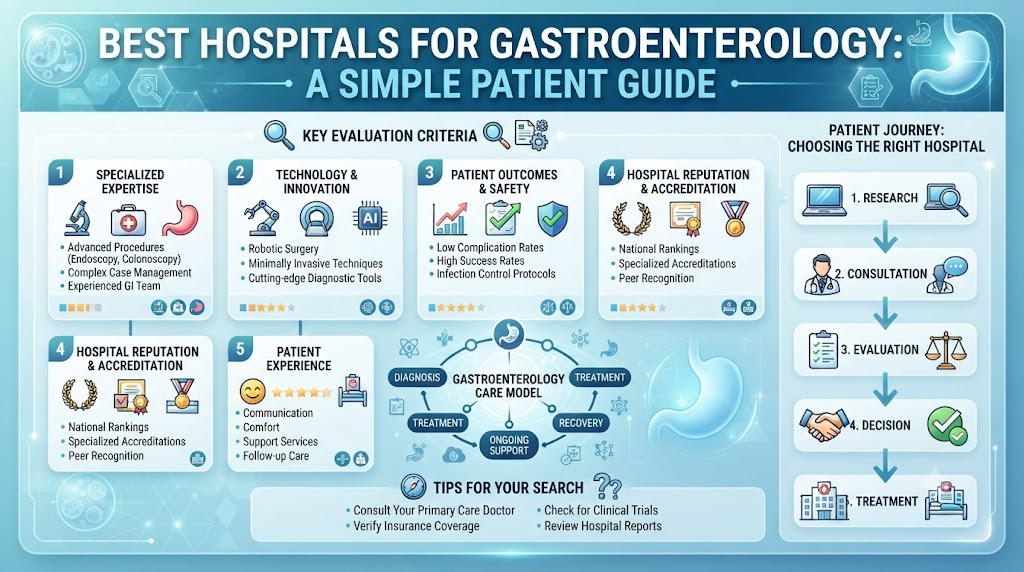
The right hospital changes everything. But how do you pick one? Here are simple things to check. Look for expert gut doctors. Ask if they have treated many cases like yours. See if the hospital has a modern endoscopy lab. Ask about emergency gut care, day and night. Check if there is an ICU for sick patients. Clean rooms and good hygiene matter a lot. Read honest patient reviews too.
| Hospital Factor | Local Clinic | Specialized GI Hospital | Why It Matters |
|---|---|---|---|
| Gut doctors | One general doctor | Full team of gut experts | Right expert for your exact problem |
| Endoscopy lab | Basic or none | Modern and fully equipped | Clear tests and quick answers |
| Emergency GI care | Limited hours | Open 24×7 | Help at odd hours saves lives |
| ICU backup | Not available | Full ICU support | Safe care during serious cases |
| Hygiene | Varies a lot | Strict infection control | Prevents infections after tests |
The best hospitals for gastroenterology have all these under one roof. Your care becomes smooth, safe, and stress-free.
Real-Life Patient Stories
- Ravi ate street food and got food poisoning. ORS and rest fixed him in two days. His doctor checked him early, so he healed fast.
- Meera had daily stomach burning for months. A simple endoscopy found the real cause. Her GERD treatment started the same week. Now she eats without fear.
- Sam ignored blood in his stool for a year. A colonoscopy found a small growth early. It was removed before it could turn into cancer.
- Anita had gallstone pain again and again. She compared hospitals and found a keyhole surgery expert. Her treatment went well. She went home in two days.
8 Common Mistakes Patients Make
- Ignoring daily heartburn. Acid burns can wound your food pipe over time. Get help early.
- Taking antibiotics on your own. Antibiotics do not fix viruses. Wrong use harms your gut.
- Delaying colonoscopies. Fear makes people wait. Waiting can turn small growths into cancer.
- Skipping doctor visits. Google cannot see inside your gut. A real doctor can.
- Trusting fake home remedies. Some online cures make things worse. Always verify with a doctor.
- Hiding symptoms from family. Sharing helps you reach the hospital on time.
- Eating spicy food during recovery. Your gut needs rest. Give it gentle, soft food.
- Stopping medicines early. Feeling better is not the same as being cured. Finish your course.
How GastroHospitals.com Helps Patients
Finding good gut care should not be hard. GastroHospitals.com makes it simple for you. It lists 50 leading GI centres in one place. You can compare hospitals side by side. You can read specialist profiles before booking. Every listed procedure is explained in easy words. You also get clear guides on tests and costs. The platform answers your questions before you ask them. It is like a kind friend who knows gut health well. Use it to plan your care with full confidence.
A Simple 7-Step Patient Action Plan
- Symptom check. Write down what you feel and how often.
- Track triggers. Note which foods or drinks make it worse.
- Consult a doctor. Meet a gastroenterologist with your notes.
- Diagnosis. Take the tests your doctor suggests.
- Compare hospitals. Check experts, labs, and patient reviews.
- Treatment. Follow your plan with full honesty.
- Recovery. Eat well, rest, and keep your follow-up visits.
Small steps, done in order, bring the best results.
Frequently Asked Questions
1. What does a gastroenterologist do?
A gastroenterologist is a doctor for your gut. They treat problems in your food pipe, stomach, liver, and bowels. They do tests like endoscopy and colonoscopy. They find the cause of your pain and give the right treatment. You should see one for burning, pain, bloating, or blood in stool. Their care is safe, gentle, and expert.
2. When should I go to a hospital right away?
Go right away if you have severe belly pain that will not stop. Also go for blood in vomit or stool, or a swollen, hard belly. High fever with weakness needs quick care too. These signs can mean a serious problem. Fast treatment can save your life. It is always better to be safe than sorry. Never wait for these danger signs to pass on their own.
3. Is heartburn every day normal?
No, daily heartburn is not normal. It may be GERD, a real disease. Acid burns can wound your food pipe over time. Do not ignore it. Simple changes help first. Eat small meals and avoid spicy food. See a doctor if it stays for more than two weeks. Good GERD treatment heals your food pipe and stops the burning for good.
4. How do I treat stomach flu at home?
Drink ORS often in small sips. Eat light food like rice, curd, and banana. Rest your body for a few days. Avoid milk, oily food, and spicy dishes for now. Wash your hands well and often. Most cases heal in two to three days. But call a doctor for blood, high fever, or heavy weakness. Small kids and older people need a doctor early.
5. Is IBD the same as IBS?
No, they are different problems. IBD causes real swelling and wounds inside the gut. IBS causes cramps and loose motions without wounds. IBD needs strong medicines and regular tests. IBS is managed with diet and stress control. Your doctor will run tests to find which one you have. The right name leads to the right treatment. Never try to diagnose yourself.
6. Can liver disease get better?
Yes, often it can. The liver is a strong organ that can heal itself. Early care makes a big difference. Stop alcohol fully if that is the cause. Eat fresh food and lose extra weight slowly. Take your doctor’s medicines without breaks. Regular tests show your progress. Caught early, many liver problems slow down or even heal fully.
7. Does a colonoscopy hurt?
No, it usually does not hurt. Doctors give mild sleep medicine, so you feel calm. Many people sleep through the whole test. You may feel some gas pressure, but not pain. The test takes about 30 minutes. You will need someone to take you home after it. Getting ready feels harder than the test itself. But a clean gut gives clear and useful results.
8. What is endoscopy used for?
Endoscopy looks inside your food pipe and stomach. Doctors use a thin tube with a tiny camera. It finds ulcers, wounds, blockages, and bleeding spots. Ulcers are small holes or sores in the gut lining. The test is quick and mostly painless. Doctors can even take tiny samples for testing. Early answers lead to early and better treatment.
9. How do I pick the right GI hospital?
Check for expert gut doctors first. Look for a modern endoscopy lab and a 24×7 emergency. Ask about ICU backup and strict hygiene. Read honest reviews from real patients. The best hospitals for gastroenterology have all these under one roof. Visit the hospital once before you decide. A good hospital answers your questions with patience and care.
10. Are all gut problems treated with surgery?
No, not at all. Most gut problems heal with medicines and lifestyle changes. Surgery is only for serious cases. Gallstones, blocked bile ducts, or deep wounds may need it. Today, most gastrointestinal surgery is done through keyhole cuts. This means less pain and faster healing. Your doctor will always try simple options first. Surgery is the last step, never the first.
11. Can food alone cure digestive disorders?
Food helps a lot, but it cannot cure everything. Good food eases gas, acidity, and mild cramps. But serious problems need real treatment. Conditions like IBD or liver disease need medicines too. Use food as your friend, not your only cure. Eat fresh, light meals daily. See a doctor if signs stay longer than two weeks. Balance both food and medical care.
12. What questions should I ask my doctor?
Ask what is causing your problem. Ask which tests you need and why. Ask about food, work, and medicine changes. Ask about the cost and time for treatment. Also ask what signs mean you should return quickly. Write your questions before your visit. Good doctors answer in simple words. If you do not understand, ask again. Clear talks build better and faster care.
Conclusion
Your gut works hard for you every single day. It deserves your care and attention. Listen to your body’s early warning signs. Do not ignore daily pain or burning. Seek help on time, because early care heals faster. Choose your doctor and hospital with patience. Check their skills, tools, and reviews first. Never trust random cures from the internet. Follow your treatment with full honesty. Rest well, eat simple food, and keep your follow-up visits. Gut health is a journey, not a one-day task. Walk it with the right people beside you. GastroHospitals.com can guide you at every step with honest, simple information. Your healthy gut starts with one small, brave step today.
Medical Disclaimer
This blog is for learning only. It does not replace a doctor’s advice. Always talk to an expert doctor about your health problem.