Introduction
Modern engineering organizations frequently encounter an operational paradox: while individual functional disciplines deploy code, manage data, and run machine learning models faster than ever, the connective tissue between those systems is fracturing. Teams that perfected continuous integration for web applications often run completely disconnected deployment scripts for analytics pipelines, while machine learning practitioners train predictive models without unified monitoring, infrastructure visibility, or standardized governance. Navigating this convergence requires understanding how modern operational disciplines intersect and function collectively. Platforms like XOpsSchool document these architectural intersections to help engineers, architects, and technical leaders design scalable, resilient workflows across hybrid and cloud-native environments. This guide breaks down what XOps actually is, the distinct disciplines it unites, its architectural patterns, and how to implement a unified operational model without drowning in tooling complexity.
What Is XOps?
At its core, what is XOps comes down to operational standardization across specialized technical domains. The “X” in XOps serves as a variable representing any operational discipline within modern computing: DataOps, MLOps, AIOps, SecOps, FinOps, GitOps, and CloudOps.
DevOps demonstrated that breaking down barriers between software developers and system administrators produced faster delivery cycles and higher system availability. However, enterprise technology stacks have expanded far beyond conventional application code running on virtual machines. Modern platforms handle petabyte-scale data lakes, containerized microservices fleets, deep learning training runs, regulatory audits, and dynamic cloud expenditure across multi-cloud regions.
When these distinct operational domains run independently, organizations end up with duplicated infrastructure, conflicting tooling, visibility gaps, and heightened security vulnerabilities. XOps unifies these operational silos under a shared operational philosophy, common observability standards, automated governance, and continuous lifecycle management.
How Does XOps Work?
XOps establishes an engineering foundation where infrastructure, application code, data assets, and machine learning models follow identical operational rigor. Rather than treating a predictive model deployment or a database migration as a disconnected manual procedure, XOps subjects all operational activities to declarative automation and continuous feedback loops.
The operational lifecycle under an XOps model functions across four foundational layers:
1. Declarative Versioning and Orchestration
Every asset—including compute definitions, security policies, pipeline configurations, data schemas, and model hyperparameters—is defined as code and tracked in version-controlled repositories. Git acts as the single source of truth for both system state and operational intent.
2. Continuous Delivery and Testing (CI/CD)
Changes to any operational domain trigger automated validation pipelines. Code commits undergo unit and security tests; data schema changes trigger schema validation and data quality checks; machine learning updates run through automated model evaluation and bias detection suites.
3. Automated Observability and Telemetry
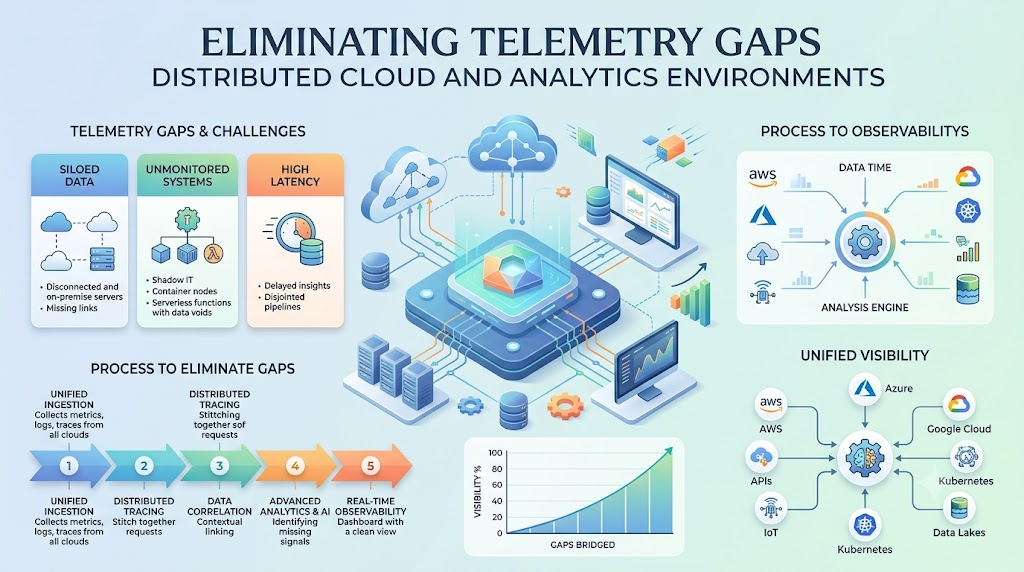
Instead of logging application performance in one dashboard while data pipelines and cluster health live in disparate tools, telemetry is standardized. Metrics, logs, traces, and financial cost metrics feed into a consolidated telemetry pipeline, often enhanced with algorithmic anomaly detection.
4. Closed-Loop Feedback and Governance
Operational incidents, performance bottlenecks, and drift indicators automatically inform upstream development workflows. Governance and compliance policies run directly inside the automation pipeline, preventing non-compliant resources from reaching production environments.
The Core Disciplines of the XOps Ecosystem
The XOps umbrella does not replace specialized operational areas; it organizes them into a coherent architecture. Understanding how these disciplines collaborate is essential to building an effective operating model.
                  ┌───────────────────────────────┐
                  │             XOps              │
                  │ (Unified Operational Strategy)│
                  └──────────────┬────────────────┘
         ┌───────────────┬───────┴───────┬───────────────┐
         ▼               ▼               ▼               ▼
    ┌─────────┐     ┌─────────┐     ┌─────────┐     ┌─────────┐
    │ DevOps  │     │ DataOps │     │  MLOps  │     │  AIOps  │
    │(Delivery│     │ (Data   │     │ (Model  │     │(Anomaly │
    │& Infra) │     │Pipelines│     │Lifecycle│     │Response)│
    └────┬────┘     └────┬────┘     └────┬────┘     └────┬────┘
         └───────────────┼───────────────┘
                         ▼
           ┌───────────────────────────┐
           │    Platform Engineering   │
           │ (Internal Developer Portal│
           │     & Self-Service API)   │
           └───────────────────────────┘
DevOps (Software Delivery & Infrastructure Operations)
DevOps provides the procedural backbone for XOps. By leveraging Infrastructure as Code (IaC) and automated continuous deployment, DevOps establishes the baseline delivery pipeline used to deploy microservices, provision cloud networking, and automate cluster orchestration.
DataOps (Data Pipeline Reliability)
DataOps applies continuous delivery patterns to data engineering. It manages data ingestion, extract-transform-load (ETL) pipelines, schema versions, and data quality testing to ensure that data scientists and downstream services receive validated, reliable data feeds without manual curation.
MLOps (Machine Learning Operations)
MLOps bridges data science with production software engineering. It automates model training pipelines, manages feature stores, orchestrates model registries, and continuously tracks concept drift and performance degradation in production inference engines.
AIOps (Artificial Intelligence for IT Operations)
AIOps integrates algorithmic intelligence and automated pattern recognition into operations management. By processing massive streams of logs, events, and metrics across distributed services, AIOps isolates root causes, clusters noisy alerts, and initiates automated remediation workflows before human operators need to intervene.
SecOps (Continuous Security & Compliance)
SecOps embeds security checks directly into automated pipelines. By auditing container images, testing static code, monitoring runtime behavior, and verifying access policies continuously, SecOps ensures security controls are verified automatically at runtime.
FinOps (Cloud Financial Operations)
FinOps connects infrastructure deployment decisions with cloud financial accountability. It exposes granular cost allocation across microservices, teams, and data clusters, allowing platform operators to optimize spending without sacrificing engineering velocity.
Discipline Comparison Across the Operational Stack
The table below illustrates how primary operational disciplines apply core engineering principles within the broader XOps framework:
| Operational Discipline | Primary Objective | Key Lifecycle Artifacts | Typical Tooling Stack | Primary Operational Metric |
| DevOps | Reliable, rapid software delivery | Application code, containers, IaC configurations | GitHub Actions, Kubernetes, Terraform, Argo CD | Deployment Frequency, Lead Time for Changes |
| DataOps | High-integrity, continuous data pipelines | Schemas, transformation code, metadata assets | Apache Airflow, dbt, Apache Kafka, Great Expectations | Data Quality Error Rate, Pipeline Latency |
| MLOps | Automated model training and deployment | Datasets, feature stores, model weights, inference code | MLflow, Kubeflow, Feast, Triton Inference Server | Model Drift Latency, Prediction Accuracy |
| AIOps | Automated incident triage and alert management | Telemetry streams, incident graphs, correlation models | OpenTelemetry, Prometheus, Datadog, Dynatrace | Mean Time to Detect (MTTD), Mean Time to Resolve (MTTR) |
| SecOps | Continuous vulnerability and policy enforcement | Container signatures, security policies, audit trails | Trivy, Falco, Open Policy Agent (OPA), HashiCorp Vault | Unpatched Vulnerability Age, Policy Violations |
| FinOps | Granular cloud cost transparency and optimization | Cost allocation tags, budget policies, unit economic models | Kubecost, AWS Cost Explorer, OpenCost, Infracost | Cost per Transaction, Cloud Resource Waste Ratio |
Real-World Example: A Unified Production Scenario
Consider an e-commerce platform processing dynamic customer recommendations during peak traffic events.
In a traditional, fragmented environment:
- The data team updates an ETL pipeline using custom scripts, occasionally generating schema mismatches that break the analytics database.
- Data scientists manually export tabular data to train recommendation models on local virtual machines, handing finished Python weights to an operations team via ticket requests.
- Software developers deploy the API server using containerized workflows, but remain unaware when backend inference calls begin timing out due to GPU resource constraints.
- The security team discovers outdated dependencies months later during a periodic audit, while the finance team receives an unforecasted cloud compute invoice weeks after the event.
Under an XOps architecture:
- DataOps: Apache Airflow runs automated dbt tests verifying input schemas and null values. If an anomaly is detected, the pipeline halts and alerts engineers before corrupt data enters downstream tables.
- MLOps: Validated data triggers an automated Kubeflow training pipeline. The resulting model artifact is benchmarked against regression metrics, signed cryptographically, and registered in a centralized model store.
- DevOps & Platform Engineering: The recommendation microservice pulls the verified model version using GitOps automation via Argo CD, running the inference service inside a Kubernetes cluster managed via Terraform templates.
- AIOps & Observability: An OpenTelemetry collector aggregates metrics, traces, and inference latencies. When inference latencies drift above established Service Level Objectives (SLOs), an AIOps engine correlates the delay with node memory pressure and initiates horizontal pod autoscaling.
- SecOps & FinOps: Open Policy Agent ensures the container adheres to non-root privileges, while Kubecost updates team dashboards with real-time costs per inference request.
Key Benefits of Adopting XOps
- Reduced Process Duplication: Standardizing continuous delivery patterns eliminates the need for every technical team to design custom deployment, testing, and alerting scripts.
- Accelerated Mean Time to Resolution (MTTR): Correlating telemetry across data pipelines, infrastructure health, and application logic allows engineering teams to detect root causes without cross-team finger-pointing.
- Proactive Security and Compliance: Shifting security and governance policies into automated pipelines ensures that misconfigurations, licensing conflicts, and unpatched packages are blocked prior to production release.
- Predictable Operational Costs: Integrating FinOps practices into deployment workflows gives teams clear visibility into the financial impact of architectural decisions before scaling workloads.
- Enhanced Engineering Mobility: When data engineers, platform architects, and software developers share common tooling patterns and vocabulary, cross-functional collaboration and knowledge sharing improve significantly.
Practical Challenges and Strategic Trade-Offs
While the architectural value of XOps is significant, establishing a unified operational model involves practical obstacles that teams must navigate:
- Tool Sprawl and Integration Overhead: Modern platforms often deploy dozens of discrete open-source and commercial utilities. Integrating those tools into cohesive automated pipelines requires significant upfront platform design and maintenance.
- Cultural and Organizational Friction: Teams accustomed to working in isolation frequently resist standardized testing, automated gatekeeping, and shared ownership models.
- Skill Matrix Imbalance: Finding practitioners who understand application development, distributed system reliability, data orchestration, and cloud infrastructure simultaneously is rare. Organizations must invest in cross-training rather than expecting individual engineers to master every domain.
- Over-Engineering Early: Attempting to automate advanced AIOps self-healing or comprehensive MLOps lifecycle pipelines before standardizing basic continuous deployment and source control creates unnecessary operational drag.
Step-by-Step Implementation Roadmap
Transitioning toward an XOps operational standard should be approached incrementally through measurable stages:
- Audit Existing Operational Silos: Catalog the workflows, repositories, testing practices, and deployment techniques used across your software, data, and machine learning teams. Identify where manual handoffs and ticket-based requests create friction.
- Standardize on Version Control and CI/CD: Migrate all infrastructure templates, data pipeline configurations, and model training definitions into Git repositories. Establish standardized CI/CD pipelines across all technical disciplines.
- Build an Internal Developer Platform (IDP): Utilize platform engineering principles to provide self-service templates for infrastructure provisioning, pipeline scaffolding, and environment creation.
- Unify Observability and Telemetry: Replace isolated monitoring tools with a centralized telemetry architecture using vendor-neutral standards like OpenTelemetry. Ensure metrics, logs, and traces share consistent service naming and context tags.
- Implement Continuous Governance: Introduce policy-as-code engines to evaluate security baselines, image signatures, and cost bounds automatically inside the deployment pipeline.
- Incorporate Intelligent Automation: Once foundational pipelines are reliable, deploy AIOps tools to correlate alerts, reduce alert fatigue, and automate remediation tasks for known failure scenarios.
Best Practices for Operational Teams
- Treat Internal Platforms as Products: Treat your internal CI/CD infrastructure, compute clusters, and deployment tooling as software products built to serve internal engineering teams.
- Prioritize Interfaces Over Implementation Details: Allow specialized teams to use domain-specific tools (such as dbt for data analysts or PyTorch for data scientists), but mandate standardized input and output interfaces for telemetry, deployment, and security auditing.
- Automate Incrementally: Focus automation efforts on the most frequent manual tasks and recurrent failure points rather than attempting to build end-to-end automation overnight.
- Define Shared Reliability Objectives: Align software developers, data engineers, and infrastructure operators around clear Service Level Objectives (SLOs) and Error Budgets to balance feature delivery speed with overall system stability.
Frequently Asked Questions
What does the “X” in XOps stand for?
The “X” represents a variable encompassing multiple operational specializations, including DevOps, DataOps, MLOps, AIOps, SecOps, FinOps, and CloudOps.
How does XOps differ from traditional DevOps?
DevOps primarily addresses collaboration between application developers and IT operations. XOps broadens those principles across data pipelines, machine learning systems, financial controls, and security policies throughout the entire technical organization.
Is XOps a specific software tool or product?
No, XOps is not a single product or downloadable package. It is an architectural and organizational framework that integrates multiple tools, automated workflows, and engineering practices into a cohesive operational strategy.
Which discipline should an organization adopt first within XOps?
Organizations should start by solidifying core DevOps practices, such as version control, declarative infrastructure, and automated testing, before expanding to specialized disciplines like DataOps or MLOps.
What role does Platform Engineering play in an XOps framework?
Platform engineering provides the internal infrastructure, self-service APIs, and golden workflow paths that allow engineers across different disciplines to run their operational tasks consistently.
How does AIOps support the overall XOps lifecycle?
AIOps uses machine learning and algorithmic correlation to filter noise from massive telemetry streams, identify system degradation, and automate triage across complex, distributed infrastructure.
Can small startups benefit from XOps, or is it strictly for enterprises?
While large enterprises experience the greatest friction from operational silos, startups benefit from adopting the foundational principles of XOps early, preventing disjointed toolchains and unmanaged workflows as they scale.
What skills do engineers need to work effectively in an XOps environment?
Engineers benefit from a solid grasp of container orchestration (Kubernetes), Infrastructure as Code (Terraform), version control workflows (GitOps), baseline CI/CD pipeline automation, and standardized telemetry collection.
Does adopting XOps require restructuring all engineering teams?
Not necessarily. XOps emphasizes shared operational standards, automated interfaces, and open collaboration rather than forcing complete organizational restructuring.
How does XOps handle data security and regulatory compliance?
XOps integrates SecOps mechanisms into continuous delivery pipelines, enforcing security configurations, scanning dependencies, and logging immutable audit trails automatically before systems reach production.
Conclusion
The expanding complexity of cloud infrastructure, distributed microservices, big data pipelines, and machine learning models has revealed the limits of managing technical operations in isolated silos. Maintaining separate tools, divergent deployment rituals, and disconnected monitoring dashboards across individual teams creates operational friction, increases system downtime, and inflates cloud costs. XOps resolves these structural bottlenecks by applying the proven tenets of automation, declarative configuration, shared observability, and rapid feedback loops across every operational domain. By unifying DevOps, DataOps, MLOps, AIOps, and SecOps within a cohesive operating model, organizations can establish a reliable, scalable foundation that keeps engineering velocity high and production systems resilient.