Introduction
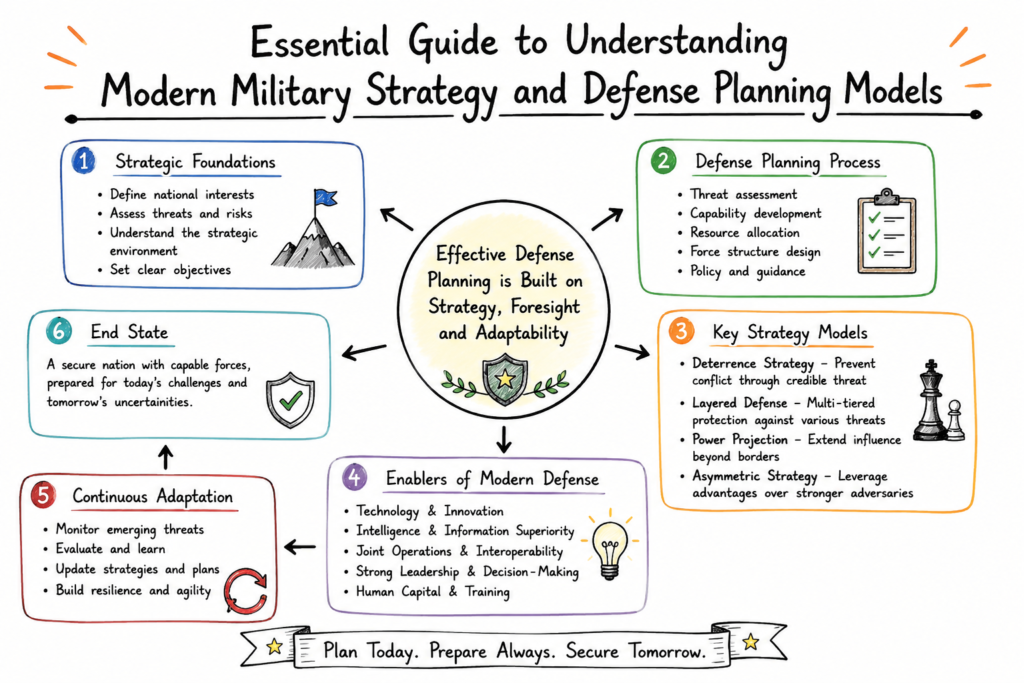
The world of defense planning often seems complex and deeply intimidating to outsiders. Navigating the sheer volume of acronyms, organizational layers, and historical theories can easily cause confusion for beginners.At its core, warfare strategy is the high-level art and science of utilizing resources to achieve specific, long-term security goals. It is not about individual battles, but rather about the comprehensive vision that guides entire nations and organizations toward safety.In this beginner-friendly guide, you will learn the foundational concepts of defense strategy, command structures, and intelligence-driven planning. You will discover how modern organizations prepare for complex challenges using structured military decision making.To accelerate your learning journey and access premium educational frameworks, explore the comprehensive training resources available at WarOpsX, your trusted partner in defense strategy education.
Evolution of Warfare Strategy Thinking
Traditional Strategic Approaches
Historically, early strategic thinking focused heavily on physical mass, geography, and brute force. Ancient theorists emphasized positioning armies along natural barriers like rivers and mountains to secure territory.
These traditional models relied on static defense lines and predictable movements. Success was often measured simply by the sheer size of an economy or the number of personnel available.
Shift Toward Modern Strategic Thinking
As technologies evolved, defense strategy concepts shifted away from static positioning toward speed, adaptability, and information superiority. Modern strategic thinking recognizes that boundaries are fluid and threats can emerge from multiple vectors simultaneously.
Today, strategy incorporates psychological, economic, and technological dimensions. It focuses on disrupting an adversary’s plans rather than just matching their physical numbers.
Importance of Structured Defense Planning
Modern security environments are far too complex for ad-hoc decisions or instinctive guesswork. Structured defense planning ensures that resources are allocated efficiently years before a crisis occurs.
It creates a repeatable, objective framework that removes emotion from high-stakes decisions. This structured approach allows diverse organizations to coordinate seamlessly during fast-moving global events.
Core Concepts of Warfare Strategy
Strategic Planning vs Tactical Thinking
Strategic planning focuses on the grand vision, long-term goals, and the total coordination of all available organizational resources. It answers the fundamental question of what the ultimate objective is and why it matters.
Tactical thinking, by contrast, deals with the immediate, localized actions required to achieve a specific milestone. While tactics focus on winning a single point, strategy ensures those points align with ultimate victory.
Command Structure & Decision Flow
A clear command structure provides the backbone for every organized defense institution worldwide. It establishes a transparent hierarchy that defines exactly who holds authority and who carries responsibility.
Decision flow moves smoothly down this chain, ensuring high-level goals transform into actionable guidance. Simultaneously, critical information flows back up the chain to update the senior leaders.
Intelligence in Strategy Formation
Strategy cannot exist in a vacuum; it requires accurate, timely, and verified data about the surrounding environment. Intelligence is the systematic process of gathering, analyzing, and interpreting information regarding potential challenges.
High-quality intelligence allows planners to anticipate risks rather than merely reacting to them. It illuminates the hidden variables, reducing the dangerous fog of uncertainty for decision-makers.
Resource and Logistics Considerations
An excellent plan is completely useless if the necessary resources cannot arrive where they are needed. Logistics is the vital art of moving and maintaining personnel, equipment, and supplies across vast distances.
Strategic thinkers must balance their grand ambitions against the cold realities of industrial capacity and transport networks. Sustainability often matters far more than raw power in long-term scenarios.
Risk Management in Strategy
Every strategic choice carries inherent dangers, unexpected variables, and potential costs. Effective risk management involves identifying these vulnerabilities early and creating robust contingency plans.
Planners must constantly weigh the probability of a threat against its potential impact. Minimizing risk ensures that an organization can survive unexpected setbacks and maintain its core functionality.
Key Principles of Warfare Strategy
Situational Awareness
- Environmental Mapping: Constantly monitoring the geopolitical landscape to identify shifts in alliances or emerging regional instabilities.
- Resource Tracking: Maintaining precise knowledge of your own organizational strengths, asset locations, and supply levels.
- Threat Identification: Recognizing potential hazards and disruptive technologies before they fully mature or manifest.
- Information Filtering: Separating critical, actionable data from the massive sea of daily background noise.
Objective-Based Planning
- Clarity of Purpose: Defining clear, unambiguous ultimate goals that every single team member understands completely.
- Measurable Milestones: Creating specific benchmarks to evaluate whether a strategy is succeeding or failing over time.
- Resource Alignment: Dedicating tools and personnel exclusively to tasks that directly advance the primary objective.
- Avoidance of Mission Creep: Resisting the temptation to expand goals beyond the original, approved strategic framework.
Flexibility in Decision Making
- Adaptive Frameworks: Designing plans that can easily pivot when real-world conditions suddenly change.
- Decentralized Execution: Empowering lower-level leaders to make local adjustments without waiting for distant approval.
- Alternative Paths: Developing multiple courses of action for every major strategic initiative.
- Resilience: Building systems that absorb unexpected shocks and continue operating effectively.
Intelligence-Driven Strategy
- Evidence-Based Choices: Grounding all major decisions in hard verified data rather than emotional intuition.
- Predictive Analysis: Using historical trends and current data to forecast future security challenges.
- Continuous Assessment: Constantly updating plans as new intelligence reports arrive from the field.
- Counter-Intelligence Focus: Safeguarding your own plans from being discovered or disrupted by external actors.
Coordination and Communication
- Unified Messaging: Ensuring all parts of an organization speak with a single, clear voice during a crisis.
- Interoperability: Designing systems and communication tools that allow different agencies to work together perfectly.
- Transparent Hierarchies: Maintaining open channels so critical warnings reach decision-makers without delay.
- Cross-Department Collaboration: Breaking down institutional silos to share insights across different planning teams.
Important Strategy Concepts Beginners Must Understand
Strategy vs Tactics vs Operations
To grasp military operations fully, beginners must understand the three distinct levels of planning. Strategy is the highest level, focusing on the ultimate long-term goals of a nation or large organization.
Operations serve as the crucial bridge, translating grand strategy into specific regional campaigns and major movements. Tactics sit at the foundation, representing the concrete, day-to-day actions used to execute those operational plans.
Military Decision-Making Process
The military decision-making process is a highly structured methodology used to solve complex problems. It begins with a thorough analysis of the mission and the surrounding environment.
Next, planning staff generate multiple distinct courses of action and compare them rigorously. The process concludes with the selection of the optimal plan and the issuance of clear, formal orders.
Defensive vs Offensive Strategic Thinking (Conceptual only)
Defensive strategic thinking focuses primarily on preservation, deterrence, and denying an adversary any easy victory. It leverages fortified positions, resilience, and patience to exhaust a competitor’s resources over time.
Offensive strategic thinking focuses on seizing the initiative, dictating the tempo of events, and forcing the adversary to react. It seeks to disrupt the balance of power and achieve decisive results quickly.
Importance of Planning Layers
Effective defense planning requires multiple overlapping layers of preparation to prevent catastrophic single-point failures. These layers span from immediate emergency responses to multi-decade industrial development plans.
Each layer must support and reinforce the ones above and below it perfectly. This structural depth ensures that if one plan fails, alternative frameworks immediately catch the weight of the challenge.
Role of Intelligence in Strategy
Intelligence acts as the eyes and ears of the strategic planner at every stage of design. It provides the essential context needed to understand an adversary’s true capabilities and hidden intentions.
Without robust intelligence, strategic defense systems are essentially blind, wasting valuable assets on false priorities. Accurate information is the ultimate force multiplier in modern strategic thinking.
Real-World Strategy Applications (Educational Examples Only)
Defense Planning in Organizations
Large corporate enterprises routinely utilize defense planning principles to safeguard their market share and physical assets. They establish clear command structures to manage sudden supply chain disruptions or hostile market maneuvers.
By mapping out potential vulnerabilities years in advance, businesses ensure long-term institutional survival. This structured approach mirrors the exact methodologies taught in traditional military academies.
Crisis Management Strategy Models
Governments utilize structured strategic models to coordinate responses during devastating natural disasters or public health emergencies. These models establish clear lines of authority to prevent chaotic overlaps between civil and military agencies.
By prioritizing communication and objective-based planning, crisis managers can save lives and stabilize critical infrastructure rapidly.
Cyber Defense Strategy Concepts
Modern digital infrastructure requires complex strategic defense systems to repel sophisticated, persistent network intrusions. Rather than just reacting to individual malware incidents, organizations build resilient, layered architectures.
This involves mapping out digital assets, establishing continuous situational awareness, and creating rapid isolation protocols. Cyber strategy assumes breaches will occur and focuses on maintaining core functionality during an incident.
Logistics Strategy Thinking
Global shipping conglomerates apply advanced military logistics concepts to move millions of tons of cargo daily. They design redundant transport networks to bypass sudden port closures, political instability, or severe weather.
This strategic approach requires constant data analysis, precise fuel management, and deep resource allocation modeling. Effective logistics strategy ensures essential goods arrive on time, regardless of global friction.
Intelligence-Based Decision Systems
Aviation networks rely heavily on intelligence-driven decision systems to maintain safety across crowded international airspace. These systems aggregate vast streams of weather data, mechanical reports, and security notices in real time.
Planners use this synthesized information to reroute flights preemptively, avoiding hazards long before they pose a direct threat. This demonstrates how data-driven strategy creates safety in highly volatile environments.
Common Mistakes in Strategic Thinking
Over-Reliance on Short-Term Decisions
Focusing exclusively on immediate crises while ignoring long-term goals is a recipe for ultimate strategic failure. This mistake causes organizations to burn through valuable resources chasing minor, fleeting victories.
True strategy requires the patience to endure temporary setbacks in pursuit of a permanent, sustainable objective. Short-term fixes often create massive vulnerabilities down the road.
Lack of Structured Planning
Relying on vague ideas, wishful thinking, or uncoordinated initiatives leads directly to institutional chaos during a crisis. Without a formal planning process, different departments will inevitably work at cross-purposes.
Structured frameworks ensure that every variable is analyzed and every asset is accounted for properly. Amateurs talk about intent, while true professionals rely on rigorous, repeatable processes.
Ignoring Intelligence Inputs
Disregarding warnings from analytical teams due to personal arrogance or institutional bias is a tragically common strategic blunder. When leaders favor comfort over uncomfortable data, disasters follow swiftly.
Strategic planning must always conform to reality, not the other way around. Ignoring fresh intelligence ensures your strategy will fail against an adaptable adversary.
Weak Communication Flow
When critical information gets trapped inside institutional silos, the entire command structure begins to break down. Subordinates cannot execute intent if orders are ambiguous or delayed.
Similarly, senior leaders cannot adapt if bad news is filtered out before reaching the top. Clear, rapid, two-way communication is essential for maintaining organizational alignment.
Poor Risk Assessment
Failing to calculate the true costs and potential downsides of a chosen path leaves an organization highly vulnerable. Overoptimistic planning assumes everything will go perfectly according to the initial script.
A robust strategy always identifies worst-case scenarios and establishes concrete, well-funded backup plans.
Essential Tools & Systems Supporting Strategy
Command and Control Systems
These integrated technical platforms gather diverse data streams to provide leaders with a unified operational picture. They allow commanders to monitor asset locations, issue clear orders, and track execution across vast geographic distances simultaneously.
Intelligence Analysis Platforms
Advanced software systems process massive volumes of raw data to identify hidden patterns, trends, and anomalies. These platforms help analysts transform chaotic information into clear, actionable insights for strategic planners.
Operational Planning Systems
Digital modeling tools allow staff officers to map out complex campaigns, calculate timelines, and track resource consumption. These systems ensure that large-scale movements remain highly coordinated and logistically feasible.
Simulation Tools
Sophisticated war-gaming software allows strategic thinkers to test their plans against an active, simulated adversary. These safe environments reveal critical flaws and hidden dependencies before any real-world assets are committed.
Data Analytics Systems
High-powered statistical engines analyze historical performance data to optimize supply chains and resource allocation models. They take the guesswork out of procurement, ensuring long-term sustainability for defense organizations.
Career Path in Defense Strategy & Planning
Key Skills Required
- Analytical Thinking: The vital ability to break down complex, multi-layered problems into clear, manageable components.
- Decision-Making Frameworks: Mastery of objective, structured methodologies to choose the best path under extreme pressure.
- Intelligence Interpretation: Skill in evaluating raw information for credibility, relevance, and strategic impact.
- Planning Methodologies: Deep familiarity with standardized, formal processes used to design major organizational campaigns.
- Communication Systems Understanding: Ability to convey complex strategic ideas clearly to both technical teams and senior executives.
Learning Roadmap
To enter this rewarding field, start by building a rock-solid foundation in geopolitical history and basic organizational management. Next, focus on mastering the core principles of the military decision-making process through formal study.
As you progress, transition into studying advanced data analytics, risk management models, and modern simulation tools. Finally, gain practical experience by participating in complex, real-world strategic exercises and institutional planning workshops.
Certifications & Educational Paths
Aspiring strategists frequently pursue academic degrees in international relations, security studies, or strategic management. Additionally, specialized professional certifications in risk analysis, project management, and intelligence operations are highly valued.
Many top-tier professionals attend dedicated defense colleges or complete advanced seminars hosted by respected think tanks. Continuous education is mandatory to keep pace with rapidly evolving global security concepts.
Career Opportunities in Strategy & Defense Planning
Professionals skilled in strategic thinking are in high demand across a wide variety of vital sectors. They serve as intelligence analysts, policy advisors, crisis management directors, and corporate risk strategists.
Both governmental agencies and private multinational corporations require experts who can protect operations from complex global disruptions. This career path offers immense purpose, intellectual challenge, and long-term professional growth.
Learning Resources from WarOpsX
For those eager to master these concepts deeply, WarOpsX offers an unmatched suite of educational materials. Their expertly designed curriculum breaks down complex defense planning models into highly digestible, interactive lessons.
Through structured courses, students gain practical familiarity with command structures, intelligence systems, and modern strategic frameworks. Partnering with a dedicated educational provider accelerates your journey from a curious beginner to a confident strategic thinker.
Future of Warfare Strategy Thinking
AI in Strategic Decision Support
Artificial intelligence is rapidly transforming how senior leaders process information during fluid, high-stakes scenarios. Machine learning algorithms can analyze millions of data points instantly to suggest optimal resource allocations.
These AI tools do not replace human judgment; rather, they act as powerful advisors that eliminate cognitive overload. They allow strategists to evaluate thousands of alternative options in a fraction of the time.
Data-Driven Military Planning
The future of defense strategy belongs to organizations that can successfully leverage big data analytics. Planners use real-time global tracking to optimize supply chains and predict maintenance failures before they happen.
This shift removes reliance on historical guesswork or outdated rules of thumb. Strategy is becoming an exact, highly quantifiable science driven by continuous streams of verified information.
Autonomous Decision Systems
As the tempo of global events accelerates, certain defensive systems must operate at speeds that surpass human reflexes. Autonomous decision frameworks are being designed to manage immediate, localized data processing.
The overriding strategic challenge is safely integrating these fast systems with deliberate human ethical control and high-level command structures.
Evolution of Strategic Intelligence
The open-source data explosion has fundamentally changed how intelligence is gathered and analyzed across the globe. Strategists no longer rely solely on classified feeds; they must monitor commercial satellites, social trends, and public code repositories.
Synthesizing this massive, chaotic sea of public information requires entirely new analytical frameworks. The premium is no longer just on acquiring data, but on verifying its absolute truth.
Future Skills Required
The next generation of strategic planners must be completely bilingual in both traditional defense theory and advanced data science. They must understand how algorithms work, how data models fail, and how to spot digital manipulation.
Moreover, future leaders will need immense cognitive flexibility to navigate a world of rapid technological change. Continuous learning and multidisciplinary thinking will be the ultimate traits of successful strategists.
FAQs
- What is the definition of warfare strategy? Warfare strategy is the high-level art of coordinating an organization’s total resources to achieve long-term security goals.
- How does strategy differ from tactics? Strategy focuses on the ultimate long-term objectives, while tactics deal with the immediate actions used to win specific points.
- What is the military decision-making process? It is a highly structured, step-by-step methodology used by planning staff to analyze missions and design optimal courses of action.
- Why is intelligence important in defense planning? Intelligence provides the essential data needed to understand an environment, reduce uncertainty, and anticipate potential challenges before they happen.
- What are the three main levels of military operations? The three distinct levels are the strategic level (high-level goals), the operational level (regional campaigns), and the tactical level (local actions).
- What is the role of logistics in strategic thinking? Logistics ensures that all necessary personnel, supplies, and equipment are sustained and transported efficiently to support the grand plan.
- How do private corporations use defense strategy concepts? Corporations use these frameworks to build resilient supply chains, manage crises, and protect their physical and digital assets from disruptions.
- What skills do I need for a career in defense planning? Key skills include advanced analytical thinking, structured decision-making, intelligence interpretation, and a deep understanding of communication systems.
- How is artificial intelligence changing modern strategy? AI acts as a powerful decision-support tool, processing massive amounts of data rapidly to present planners with optimized choices.
- Where can a beginner start learning about defense strategy? Beginners can build foundational knowledge through specialized educational platforms like WarOpsX, which offer structured courses on strategic planning models.
Final Summary
Mastering the basics of warfare strategy requires a clear understanding of high-level planning, structured command hierarchies, and the vital role of intelligence. By separating long-term strategy from immediate tactics, defense planners can build resilient frameworks that withstand unexpected global challenges. As the security landscape continues to evolve through big data and artificial intelligence, structured strategic thinking remains the ultimate foundation of stability.
To deepen your understanding of these essential concepts and build professional planning skills, explore the elite educational programs offered by WarOpsX. Elevate your analytical capabilities and master the art of strategic defense systems today.