Introduction
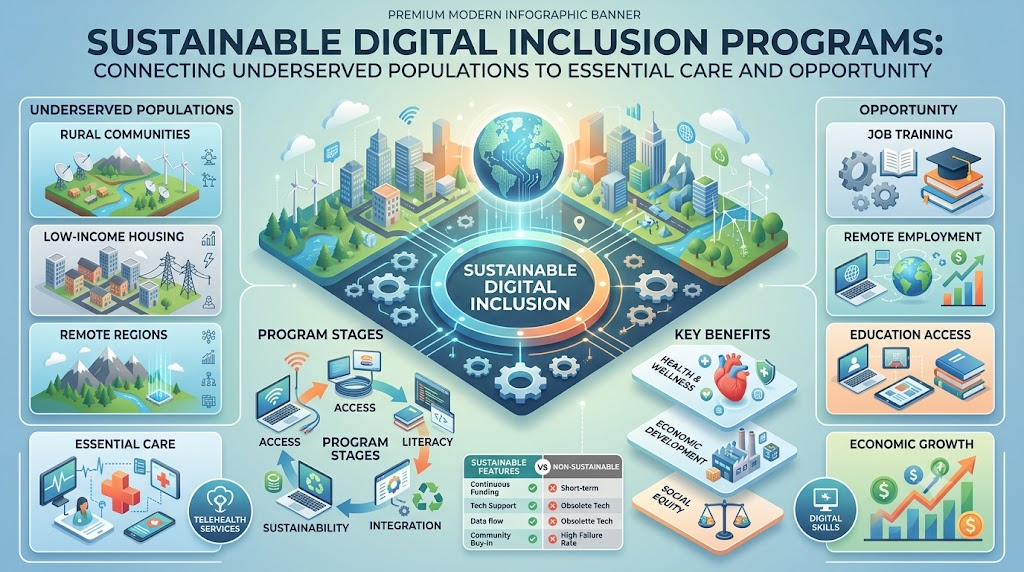
In modern healthcare and social welfare systems, access to essential care is mediated by online patient portals, electronic prescription refills, video consultations, and digital benefit renewals. Yet for millions of patients, older adults, and rural households, navigating these virtual interfaces presents an insurmountable barrier. When public health networks migrate life-sustaining care to the web without ensuring patients have functional hardware or connectivity, the digital divide becomes a direct determinant of poor clinical outcomes. Addressing these deep disparities requires trauma-informed, community-anchored digital inclusion programs embedded directly within neighborhood clinics, social service agencies, and care facilities. By aligning basic broadband access with empathetic technical mentorship and stringent health data privacy, initiatives led by the Cotocus Foundation demonstrate how community-centered institutions transform digital infrastructure into life-saving social support.
Re-Imagining Digital Inclusion Programs as Social Determinants of Health
From the perspective of public health analysts and medical social workers, digital inclusion represents an individual’s practical ability to safeguard their health, access nutritional benefits, and remain connected with trusted care networks.
A care-informed inclusion model rests on five clinical and human service pillars:
- Uninterrupted Home Connectivity: Securing continuous, affordable broadband capable of hosting secure, high-definition video calls for chronic illness checkups, mental health therapy, and family health management.
- Therapeutic-Grade Hardware Access: Providing accessible desktop systems, laptops, or large-format tablets that allow patients to read complex medical lab charts and complete multi-page disability applications comfortably.
- Trauma-Informed Digital Skills Instruction: Offering low-stress, patient-centered literacy workshops that guide individuals through setting up two-factor authentication for patient portals, handling electronic prescriptions, and identifying health misinformation.
- Accessible and Sensory-Inclusive Interfaces: Ensuring health portals conform to web accessibility guidelines, supporting screen readers, high-contrast text, clear visual cues, and plain-language translations across multiple dialects.
- Decentralized Neighborhood Tech Support: Establishing safe, walk-in support stations within health centers where individuals can repair devices, resolve login lockouts, and learn to operate specialized health peripherals without fear of judgment.
When clinical systems deploy digital health mandates without supporting these structural layers, patients with limited digital experience delay necessary treatments, leading to avoidable emergency room admissions.
The Human Impact of Digital Disconnection on Public Wellbeing
When life-saving social services transition to digital-only access channels without community scaffolding, the resulting divide severely compromises public health.
Chronic Disease Management and Telehealth Gaps
Patients managing chronic conditions like diabetes, hypertension, or heart disease benefit immensely from remote monitoring and virtual checkups. When patients lack home broadband or digital fluency, they miss routine follow-ups, allowing manageable symptoms to escalate into medical crises.
Nutritional Support and Welfare Program Enrollment
Accessing the Supplemental Nutrition Assistance Program (SNAP), child care subsidies, and disability income support increasingly requires navigating multi-step web forms and uploading verified identity documents. Digital illiteracy leaves vulnerable families stranded without critical safety-net benefits.
Mental Health and Social Isolation Among Seniors
Older adults and individuals with physical mobility constraints face profound social isolation when disconnected from online networks. Digital access enables virtual support groups, secure video calls with loved ones, and specialized counseling that significantly lowers the clinical risks associated with loneliness.
Health Literacy and Combating Online Medical Misinformation
The modern web contains vast quantities of deceptive medical marketing and unverified treatments. Without baseline media literacy, vulnerable patients fall prey to fraudulent wellness schemes, delaying evidence-based medical interventions.
The Compassionate Role of a Technology Nonprofit Organization
Commercial digital health firms frequently develop products aimed at tech-savvy, well-insured demographics. A public-interest technology nonprofit organization focuses on closing health equity gaps by delivering accessible, human-centered technology to under-resourced communities.
Public health-focused nonprofits operate through a community care cycle:
Community Health Needs Assessment → Collaborative Clinic Design → Low-Stress Pilot → Patient Navigation → Longitudinal Care Evaluation
Rather than forcing complex enterprise applications onto clinics, mission-driven teams sit down with community health workers, home health aides, and patient advocates. They design straightforward, privacy-conscious solutions tailored to elderly learners, patients with cognitive impairments, and non-native language speakers.
By prioritizing human wellbeing over commercial software subscriptions, technical nonprofits help regional health centers, public housing boards, and social services build trustworthy digital care networks.
Restoring Autonomy Through Compassionate Digital Literacy Programs
Instructional models in human services must be grounded in empathy, recognizing that fear of making mistakes often prevents patients from using health platforms. Effective digital literacy programs focus on building self-efficacy around daily living tasks.
Key wellness literacy priorities include:
- Patient Portal Mastery: Accessing electronic health records, reading lab results, scheduling clinic appointments, and requesting prescription refills independently.
- Secure Telehealth Participation: Checking camera and microphone permissions, connecting to secure video visits, and uploading symptom photos safely.
- Evaluating Online Health Claims: Distinguishing verified medical guidance from unscientific claims, recognizing official public health alerts, and consulting trusted medical libraries.
- Protecting Sensitive Medical Data: Safeguarding electronic health logins, identifying phishing emails disguised as hospital billing notices, and understanding digital medical privacy rights.
- Navigating Public Benefit Portals: Completing online intake forms for food assistance, housing vouchers, and utility relief safely from home.
Workshops achieve the highest engagement when hosted in familiar clinical or social spaces, such as community clinic waiting areas, senior centers, and public housing community rooms, staffed by patient digital navigators.
Integrating AI for Social Impact in Public Health and Human Services
Artificial intelligence holds significant potential for optimizing health clinic workflows and simplifying public assistance intake, provided these systems operate under strict human supervision. Within social welfare initiatives, AI for social impact can assist caseworkers in navigating complex health benefit guidelines and coordinating localized care.
Consider how an intelligent system can support community health operations:
- Problem: Caseworkers in a community mental health center spend hours manually screening public assistance directories to find available psychiatric beds and substance abuse rehabilitation slots for patients in crisis.
- AI Approach: Deploying a secure, locally hosted matching model that scans updated regional facility registries to identify open beds based on patient needs, insurance types, and transit proximity.
- Human Oversight: Licensed clinical social workers review the matched facilities, verify clinical appropriateness, and finalize all placement arrangements with the patient.
- Expected Benefit: Patients in severe distress are matched with specialized care facilities in minutes rather than days, reducing emergency room overcrowding and psychiatric boarding.
- Potential Risk: An unmonitored model could rely on outdated data, sending patients in need of specialized dual-diagnosis care to standard clinics lacking the necessary facilities.
Automated systems must never make final clinical or placement determinations. They must function strictly as assistive tools that reduce administrative burdens for medical caseworkers, preserving their energy for direct patient care.
Upholding Public Trust Through Responsible AI Research
Deploying automated technologies in healthcare and social services carries major ethical responsibilities. Health equity advocates must rely on established responsible AI research to prevent diagnostic bias and protect patient autonomy.
Vital ethical standards for health applications include:
1. Eliminating Algorithmic Triage Bias
Diagnostic and triage algorithms trained predominantly on data from affluent demographics often under-diagnose conditions in historically marginalized groups. All clinical models must be rigorously evaluated across diverse patient populations before clinical deployment.
2. Safeguarding Patient Health Privacy
Health data systems must adhere to strict data minimization practices. Platforms should never store patient health identifiers, personal biometric data, or location traces unless strictly necessary for clinical care.
3. Clear Algorithmic Transparency
Whenever an automated model assists in prioritizing public assistance eligibility or clinical risk scoring, the underlying criteria must be explainable in plain language to the patient and their care team.
4. Continuous Multidisciplinary Auditing
Care networks must conduct regular interdisciplinary reviews involving ethicists, clinicians, community advocates, and patients to identify potential algorithmic drift or inequities in system recommendations.
Fostering Independence via Technology Education Programs
While baseline digital literacy ensures patients can access virtual appointments, broader technology education programs empower community members to become active health advocates and technical caregivers.
Community health technology curricula should include:
- Navigating personal health tracking devices, glucometers, and wearable medical sensors
- Managing secure cloud storage for family medical documents, immunization records, and advance directives
- Basic troubleshooting for audio, visual, and connectivity hardware during virtual consultations
- Understanding digital health privacy laws, consent agreements, and medical record ownership
- Ethical considerations surrounding automated medical advice and online diagnostic chatbots
Training should emphasize hands-on, practical scenarios. When community members learn to configure remote health monitoring devices for an elderly family member or back up personal health files securely, they build lasting capabilities that benefit their entire extended family.
Inspiring Civic Empathy Through Youth Innovation Programs
Engaging young people in health-focused technology design helps address critical challenges within their own neighborhoods. High-impact youth innovation programs guide young developers through a human-centered design cycle:
Empathy-Led Inquiry → Community Health Discovery → Prototype Development → Usability Testing → Clinical Review
In these learning labs, mentors guide students to interview older relatives, local clinic nurses, and disability advocates. Students might build simplified medication reminder applications, design interactive maps of neighborhood food pantries, or develop visual guides for scheduling clinic appointments.
Through this project-based experience, youth gain technical fluency alongside deep empathy, civic responsibility, and collaboration skills. The goal is to cultivate community-minded technologists who view software development as a way to heal and support vulnerable neighbors.
Driving Empathetic Nonprofit Digital Transformation
Community health clinics, domestic violence shelters, and food distribution centers frequently operate using fragmented paper records, unencrypted spreadsheets, and outdated hardware. Executing thoughtful nonprofit digital transformation helps these organizations protect sensitive client data, streamline intake procedures, and spend more time providing direct human care.
True transformation requires understanding the difference between software acquisition and institutional capacity:
| Commercial SaaS Procurement | Compassionate Capacity Building |
| Purchasing expensive, complex electronic health record licenses | Deploying intuitive, secure platforms tailored to community workflows |
| Storing sensitive intake documents across unencrypted shared drives | Implementing encrypted data architectures with role-based access controls |
| Mandating digital patient check-in without in-person assistance | Training clinic navigators to guide patients through digital kiosks patiently |
| Relying entirely on costly outside technical contractors | Training internal staff members to troubleshoot and maintain core health tools |
When community agencies modernize their administrative workflows, they protect patient confidentiality, improve reporting accuracy, and direct more staff time toward compassionate patient care.
Structuring Corporate Social Impact Partnerships
Building durable public health technology infrastructure requires resources beyond the budgets of local clinics alone. Developing accountable corporate social impact partnerships allows corporations to contribute technical assets and funding to community health equity initiatives.
High-impact corporate collaborations provide:
- Certified Medical and Computing Hardware: Healthcare systems and tech firms can donate enterprise-grade tablets, clean laptops, and network equipment to equip community health centers and low-income clinics.
- Skills-Based Technical Mentorship: Corporate software engineers, cybersecurity specialists, and systems architects can volunteer paid hours to audit and improve clinic data security infrastructure.
- Unrestricted Multi-Year Operating Grants: Flexible, sustained funding allows health nonprofits to hire full-time digital health navigators, maintain public access spaces, and evaluate patient outcomes over several years.
- Accessible Software Design Collaborations: Technology companies can work alongside community clinics to test software usability for older adults, non-native speakers, and individuals with sensory disabilities.
To protect patient wellbeing, partnerships must be guided by community health needs rather than corporate marketing objectives. Community health advisory boards should oversee programs to ensure commercial interests do not compromise patient care.
Organizing Technology Volunteer Opportunities
Many technical workers want to support healthcare and social welfare initiatives, but need clear, structured pathways to contribute. Setting up well-organized technology volunteer opportunities channels technical expertise into high-value public health projects.
Constructive volunteer roles include:
- Serving as patient digital navigators in community clinic waiting rooms, helping patients set up secure portal accounts
- Refurbishing donated computers, sanitizing storage drives, and loading accessibility-focused operating systems
- Reviewing internal data storage systems at local health clinics to ensure patient records remain confidential and secure
- Mentoring youth teams designing public health applications and accessible community resources
- Translating clinic portal instructions and medical documentation into plain, accessible language across multiple dialects
Volunteer coordinators must provide comprehensive orientation on medical privacy, trauma-informed care, and safeguarding. Volunteers must approach community members with patience, empathy, and active listening, recognizing that technical guidance must always honor personal dignity.
Universal Accessibility as a Health Imperative
In healthcare and human services, accessible design is an absolute clinical requirement. If a telehealth portal or benefit application only functions on high-end smartphones or over high-speed fiber connections, it denies care to the very individuals who need it most.
Inclusive clinical technology incorporates essential safeguards:
- Comprehensive Assistive Peripherals: Equipping health access labs with screen readers, tactile keyboards, trackball mice, and high-contrast monitor setups.
- Low-Bandwidth Video Architectures: Designing telehealth interfaces that adjust video resolution dynamically and maintain clear audio streams during unexpected bandwidth drops.
- Culturally Sensitive Multilingual Localization: Translating health portals, consent forms, and appointment systems into the primary languages spoken across the clinic’s service area.
- Device Independence: Ensuring health platforms and appointment forms function reliably across older operating systems, budget tablets, and basic mobile devices.
Healthcare Trade-Offs, Challenges, and Strategic Considerations
Designing health-centered digital inclusion programs requires balancing clinical goals against everyday operational constraints.
Key Clinical Benefits
- Improves chronic disease management and reduces missed medical appointments through accessible telehealth channels.
- Restores patient dignity and independence in managing prescriptions, benefits, and personal health records.
- Alleviates clinical burnout by streamlining patient intake workflows and paperwork processing.
- Strengthens community resilience during public health emergencies through rapid, trusted communication channels.
Common Implementation Challenges
- Managing ongoing hardware wear, battery degradation, and equipment replacement cycles on tight nonprofit budgets.
- Navigating policy shifts in government broadband subsidies that leave vulnerable patients at risk of disconnection.
- Retaining dedicated digital health navigators within clinical budgets that prioritize direct medical staff.
- Overcoming deep-seated patient distrust resulting from past medical neglect or fears regarding personal data privacy.
Best Practices for Sustainable Programs
- Involve patients, community health workers, and neighborhood caregivers directly in program design and portal testing.
- Pair every distributed medical device or tablet with in-person digital health training and ongoing technical support.
- Enforce strict data-minimization and encryption standards to safeguard sensitive health and benefit records.
- Plan for long-term device replacement cycles and software updates from the project’s inception.
Practical Community Example
Scenario: A federally qualified community health center serving an agricultural valley observes that older patients with hypertension and diabetes frequently miss follow-up appointments and fail to pick up prescription refills due to transportation hurdles and unfamiliarity with the clinic’s new online portal.
Step-by-Step Implementation Approach:
- Patient Care Needs Assessment: Clinic social workers conduct brief, empathetic interviews in English and Spanish to understand why patients struggle to access virtual appointments and patient records.
- Dedicated Clinic Access Hub: The clinic converts an unused consultation room into a digital health lab equipped with high-speed internet, large-screen tablets, ergonomic seating, and blood pressure monitors.
- Bilingual Health Navigators: The center hires and trains community health workers to serve as full-time digital health navigators, walking patients through portal registration step by step.
- Hands-On Telehealth Practice Sessions: Navigators host small, collaborative practice workshops where patients practice starting video visits, adjusting microphone levels, and sending secure messages to their physicians.
- Medical Privacy and Fraud Training: Every session covers digital security fundamentals, teaching patients how to identify fraudulent pharmacy text messages and protect their health logins on shared devices.
- One-on-One Technical Mentorship: Local technology volunteers offer patient troubleshooting support, giving older adults the time they need to gain confidence using their devices independently.
- Documenting Clinical Outcomes: The clinic evaluates success by tracking reductions in missed follow-up appointments, improvements in blood pressure monitoring, and portal usage rates over six months.
- Program Expansion: Based on patient feedback, the clinic introduces weekend classes on using remote continuous glucose monitors and establishes a tablet lending library for homebound patients.
Impact Measurement
Evaluating public health technology initiatives requires measuring improvements in patient autonomy and clinical outcomes, rather than focusing on vanity metrics like the number of distributed devices.
Program Activity (Host 12 patient portal labs)
  → Program Output (90 patients trained)
    → Clinical Outcome (80% attend scheduled telehealth appointments independently)
      → Longitudinal Impact (Improved chronic illness management and reduced preventable ER visits)
Reliable indicators for health and human service evaluations include:
- Independent Patient Portal Fluency: The percentage of patients who can independently log in, view laboratory results, message their care team, and request prescription refills.
- Telehealth Appointment Adherence: Reductions in missed appointments and clinical cancellations among patients utilizing virtual consultation platforms.
- Long-Term Hardware Utility: The proportion of distributed tablets and home connectivity setups that remain functional and in active health use after twelve and twenty-four months.
- Clinical Health Milestones: Documented improvements in chronic disease management metrics (such as blood pressure stabilization or A1C levels) among digitally included patients.
- Patient and Caregiver Feedback: Qualitative reflections regarding patient confidence, reduced stress during clinic check-ins, and feelings of dignity when managing personal care.
FAQs
What is a technology nonprofit organization?
A technology nonprofit organization is an independent, mission-driven entity that uses technical research, software development, hardware access, and educational programs to address systemic public challenges. Rather than maximizing profits for commercial shareholders, it measures success by community wellbeing, health equity, and accessible public service delivery.
Why are digital literacy programs important for healthcare patients?
Digital literacy programs teach the practical skills needed to use devices, access patient portals, and communicate securely with healthcare providers. By helping patients refill prescriptions, attend virtual appointments, and evaluate health information critically, these programs foster lasting self-sufficiency and improved medical outcomes.
How can AI create social impact responsibly in public health?
AI can assist healthcare initiatives by automating administrative intake, predicting regional resource needs, and translating complex medical documentation into plain language. Responsible deployment requires human clinical oversight, regular bias audits, and strict patient privacy protections to ensure automated tools treat all patients equitably.
What does responsible AI research examine in healthcare and social services?
Responsible AI research evaluates methods to make automated decision systems fair, explainable, and secure. In public health, researchers identify algorithmic bias in diagnostic tools, protect patient health confidentiality, and create clear guidelines to ensure clinicians remain accountable for medical decisions.
How do digital inclusion programs reduce public health disparities?
Digital inclusion programs address the root causes of health exclusion: broadband costs, inadequate hardware, low digital literacy, inaccessible portal design, and the absence of neighborhood technical support. This comprehensive approach ensures that vulnerable patients can access modern healthcare and social safety nets.
Why are technology education programs critical for family caregivers?
Technology education programs provide practical instruction in managing remote monitoring tools, securing family health records, and troubleshooting virtual consultation software. These capabilities help caregivers monitor homebound relatives effectively and coordinate care across multidisciplinary medical teams.
How can young people participate in health-focused youth innovation programs?
Young people can participate through school maker clubs, public library hackathons, and nonprofit workshops. These environments provide access to modern equipment, supportive mentors, and collaborative spaces where students can design technical solutions, such as medication reminders and resource maps, to support vulnerable neighbors.
How should healthcare nonprofits approach digital transformation?
Nonprofits should begin by reviewing their patient intake workflows and listening to frontline clinical staff, rather than purchasing complex proprietary software suites. Sustainable transformation prioritizes user-friendly tools, comprehensive staff training, strong data security policies, and reliable long-term maintenance budgets.
How can corporations support community health digital inclusion programs?
Corporations can donate certified refurbished tablets and laptops, fund multi-year operating grants for community health centers, provide paid volunteer time for employee mentors, and help clinics build accessible, low-bandwidth software tailored to diverse patient populations.
How can professionals find meaningful technology volunteer opportunities in healthcare?
Professionals can connect with municipal public libraries, community health clinics, senior centers, and organizations like Cotocus Foundation. Technical volunteers can serve as patient digital navigators, assist with hardware refurbishment, and help community clinics improve their internal data security and network infrastructure.
Conclusion
Bridging the digital divide in healthcare is fundamentally an effort to protect human life and personal dignity. True health equity exists when every individual, regardless of income or background, has the dependable access, practical skills, accessible interfaces, and personal confidence needed to participate fully in modern healthcare, social services, and community life. Public health initiatives achieve lasting results when they treat digital access as a core social determinant of health and center patient voices in program design. By pairing affordable technology with compassionate, trauma-informed education, ethical adoption practices, and sustained institutional support, community programs ensure that technical progress benefits everyone. Through authentic collaboration, transparent partnerships, and community-centered initiatives, organizations like Cotocus Foundation continue working to make technology a practical catalyst for healing, personal autonomy, and public health equity.