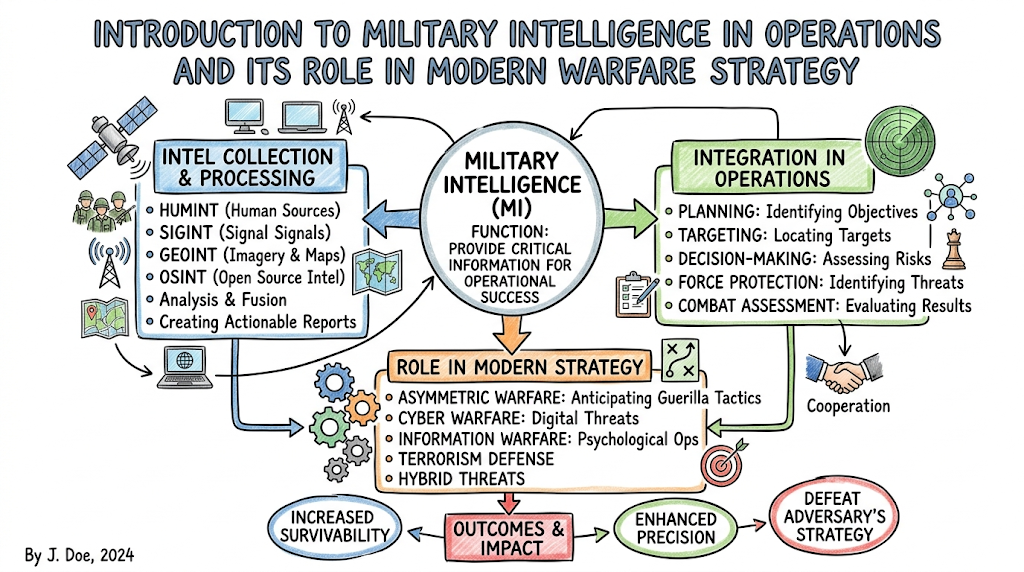
Introduction
Modern military operations take place in highly complex, fluid environments where traditional boundaries of conflict are constantly shifting. In these multidimensional domains—encompassing land, sea, air, space, and cyberspace—the ability to make rapid, informed decisions determines operational success. Commanders no longer rely on guesswork or static battlefield maps to project power or protect assets. Instead, successful military strategy depends on the systematic gathering, analysis, and application of precise information. For an in-depth exploration of defense strategies and operational planning frameworks, readers can access the educational resources available at WarOpsX. The foundational objective of military planning is the reduction of operational uncertainty. On the battlefield, variables such as adversarial intent, troop movements, technological capabilities, and environmental conditions introduce a high level of risk. Historically, military planning relied heavily on visible indicators and physical scouting. The evolution of modern intelligence-driven planning integrates advanced sensors, automated analytical tools, and multi-source verification to eliminate blind spots before forces deploy.
Featured Snippet
What Is Military Intelligence in Operations?
Military Intelligence in Operations is the systematic process of collecting, processing, analyzing, and disseminating critical information regarding foreign nations, hostile forces, and operational environments. It transforms raw, unverified data into actionable strategic and tactical insights, allowing commanders to anticipate adversary capabilities, mitigate risks, and make informed decisions during defense planning and live battlefield engagements.
Understanding Military Intelligence
What Is Military Intelligence?
At its core, military intelligence is both a product and a process. As a process, it involves the continuous monitoring of potential adversaries, geographical features, and technological developments. As a product, it provides a clear, objective understanding of the operational environment.
This discipline does not focus on speculation; it relies on verified, objective analysis to give decision-makers a clear view of both current realities and projected adversary actions.
Why Intelligence Is Critical in Operations
Without accurate intelligence, military operations risk catastrophic failure due to miscalculation. Operating without a clear intelligence picture means walking into an environment blind to ambush, technological counter-measures, and environmental hazards.
Intelligence serves as the foundational framework for risk mitigation. It allows planners to identify an adversary’s centers of gravity, map out defense vulnerabilities, and allocate resources efficiently. This ensures that personnel and material assets are deployed where they can achieve the highest strategic impact.
Intelligence vs Raw Data in Defense Systems
A common misconception is treating data and intelligence as interchangeable concepts. Raw data consists of unverified, disorganized facts, signals, or imagery collected from the field. It might be a single radio transmission intercept, a thermal signature on a sensor, or a civilian report.
Intelligence, however, is data that has been evaluated, contextualized, analyzed, and synthesized by trained specialists. Data states what exists; intelligence explains what it means and how it impacts the mission.
| Aspect | Raw Data | Military Intelligence |
| Structure | Unorganized, fragmented, and raw. | Structured, analyzed, and contextualized. |
| Verification | Unverified; may contain noise or deception. | Evaluated for credibility and accuracy. |
| Actionability | Cannot be acted upon safely without risk. | Directly informs operational decision-making. |
| Scope | Focuses on a single event or signal. | Integrates multiple sources for a complete picture. |
Types of Military Intelligence
HUMINT (Human Intelligence)
Human Intelligence is derived from information collected and provided by human sources. This includes traditional field reconnaissance, debriefings of captured personnel, interviews with local populations, and clandestine operations.
HUMINT remains highly valuable because it provides insight into adversary intentions, morale, and psychological states—nuances that electronic sensors cannot capture.
SIGINT (Signals Intelligence)
Signals Intelligence involves the interception and analysis of electronic transmissions. This discipline is divided into Communications Intelligence (COMINT), which focuses on text and voice transmissions, and Electronic Intelligence (ELINT), which tracks non-communication signals such as radar emissions. SIGINT allows forces to locate adversary command posts and track unit movements by monitoring their electronic footprints.
IMINT (Imagery Intelligence)
Imagery Intelligence is the analysis of representations of objects located on Earth, acquired via electro-optical, radar, infrared, or multi-spectral sensors. These images are captured by space-based satellites, high-altitude reconnaissance aircraft, or unmanned aerial vehicles (UAVs). IMINT provides visual verification of infrastructure, troop concentrations, and defensive fortifications.
OSINT (Open Source Intelligence)
Open Source Intelligence is collected from publicly available data streams. This includes news broadcasts, academic publications, government reports, commercial satellite imagery, and digital media platforms. OSINT serves as an essential foundation for strategic analysis, providing deep contextual knowledge regarding an operational theater’s socio-economic and political stability.
TECHINT (Technical Intelligence)
Technical Intelligence focuses on the analysis of foreign military materiel and equipment. When an adversary introduces a new weapon system, communications tool, or armored vehicle, TECHINT specialists evaluate its design, capabilities, and limitations. This analysis allows friendly forces to develop direct countermeasures and adjust tactical doctrines accordingly.
The Intelligence Cycle in Military Operations
The intelligence cycle is a continuous, iterative workflow that transforms raw data into actionable knowledge for operational commanders.
+-------------------------------------------------------+
|             Step 1: Planning & Direction              |
+-------------------------------------------------------+
                           |
                           v
+-------------------------------------------------------+
|                  Step 2: Collection                   |
+-------------------------------------------------------+
                           |
                           v
+-------------------------------------------------------+
|                 Step 3: Processing                    |
+-------------------------------------------------------+
                           |
                           v
+-------------------------------------------------------+
|          Step 4: Analysis & Interpretation            |
+-------------------------------------------------------+
                           |
                           v
+-------------------------------------------------------+
|                Step 5: Dissemination                  |
+-------------------------------------------------------+
                           |
                           v
+-------------------------------------------------------+
|                 Step 6: Feedback Loop                 |
+-------------------------------------------------------+
Step 1: Planning & Direction
The cycle begins when leadership identifies specific information requirements. Commanders establish Essential Elements of Information (EEIs) to outline what they need to know about the adversary and the terrain to plan future steps. Intelligence staff use these guidelines to plan collection strategies and assign tasks to specific units.
Step 2: Collection
Once objectives are defined, collection assets are deployed to gather the necessary data. This step leverages the intelligence disciplines described above, using satellites, ground sensors, recon assets, and human networks to gather raw information from the field.
Step 3: Processing
Raw data arrives in many different formats and languages, making it difficult to use immediately. During processing, telemetry data is converted into maps, encrypted radio signals are decoded, foreign documents are translated, and raw film or digital files are enhanced for analysis.
Step 4: Analysis & Interpretation
Processed data is handed over to intelligence analysts who evaluate its reliability and validity. Analysts look for patterns, compare new findings with existing records, and build a cohesive picture of adversary capabilities and intent. This step turns raw information into clear intelligence.
Step 5: Dissemination
The final intelligence product must reach the commander and relevant operational forces in time to be used. Dissemination takes the form of structured briefings, secure digital data feeds, or formalized written reports, tailored to the specific clearance level and operational needs of the recipient.
Step 6: Feedback Loop
The intelligence cycle is non-linear and relies on continuous assessment. Once the commander receives the intelligence report, they evaluate its completeness. If new vulnerabilities or gaps are revealed, the commander issues updated requirements, restarting the cycle to refine operational plans.
Special Learning Framework: The Intelligence Cycle
In Simple Terms
Imagine you are planning a long road trip through a region known for unpredictable weather and road closures. You do not just drive out into the unknown. First, you figure out what information you need (routes and weather). Next, you check live traffic apps, weather channels, and local highway reports.
You filter out old updates, look at the active roadblocks, and plan a safer route. Finally, as you drive, you keep checking for updates to adjust your path. This ongoing loop of checking, analyzing, and adjusting is exactly how the military uses the intelligence cycle to navigate complex battlefields safely.
Real-World Example
During a peacekeeping operation, a joint task force needs to secure a major supply route running through a contested valley. The commander initiates Step 1 by asking if any insurgent forces have placed explosive devices along the path.
For Step 2, UAVs fly over the route while electronic sensors scan for suspicious radio signals. In Step 3, engineers process the video feeds, using algorithms to highlight disturbed earth along the roadway.
Step 4 analysts confirm these signs match known ambush tactics. During Step 5, they send an immediate warning to the convoy commanders. Step 6 occurs when the convoy changes its route, prompting the intelligence team to shift their focus to monitoring the new path.
Why It Matters
Without a structured intelligence cycle, information management becomes chaotic and dangerous. Commanders would find themselves overwhelmed by a flood of raw, unverified data while missing the critical insights needed for survival.
The cycle filters out background noise, coordinates collection tools, and delivers verified insights to decision-makers in time to make a difference. This structured approach prevents information overload and keeps military planning proactive rather than reactive.
Key Takeaways
- The intelligence cycle translates unverified field data into actionable command decisions.
- It functions as an ongoing loop, constantly updating to reflect changing battlefield realities.
- Processing and analysis bridge the gap between raw data collection and final dissemination.
- Continuous feedback ensures collection assets stay aligned with the commander’s immediate needs.
Role of Intelligence in Military Operations
Strategic Decision Making
At the highest levels of government and military command, intelligence shapes national defense policy and long-term security strategies. Strategic intelligence focuses on assessing the long-term capabilities, defense doctrines, industrial limits, and political intentions of foreign nations. This high-level insight guides decisions regarding defense budgets, alliance formations, and the development of next-generation weapon systems.
Tactical Battlefield Support
On the front lines, tactical intelligence focuses on immediate, local threat environments. Small-unit leaders rely on tactical intelligence to understand what lies directly over the next hill, within an approaching urban center, or inside a specific maritime corridor. This information includes real-time adversary locations, local terrain weaknesses, and immediate weapon capabilities, directly influencing short-term survival and mission success.
Operational Planning Support
Operational intelligence bridges the gap between high-level strategy and immediate front-line tactics. It supports regional commanders in planning large-scale campaigns, orchestrating joint-force movements, and managing theater-level logistics. Operational intelligence maps out an adversary’s regional infrastructure, supply lines, and reinforcement capabilities, allowing forces to disrupt the enemy’s broader operational framework.
Threat Assessment
Continuous threat assessment involves identifying, monitoring, and evaluating potential hazards before they disrupt friendly operations. This includes analyzing conventional military forces, asymmetric unconventional groups, and non-military threats like electronic warfare or cyber attacks. Accurate threat assessments help commanders establish appropriate defense readiness postures and implement effective security measures around vital infrastructure.
Intelligence Gathering Methods
Reconnaissance Operations
Reconnaissance consists of active, targeted missions conducted by human scouts, armored vehicles, or specialized aircraft to gather information about a specific location or adversary force. These operations are typically short-term, focused efforts designed to answer explicit tactical questions about terrain conditions or enemy presence.
Surveillance Systems
Unlike targeted reconnaissance missions, surveillance involves the continuous, systematic observation of an area, person, or group. This persistent monitoring relies on ground sensors, radar stations, and long-range cameras to establish baseline activity patterns. By monitoring these areas over long periods, operators can easily spot unusual variations that indicate shifting adversary positions or preparations.
Satellite Intelligence
Space-based platforms offer unmatched global coverage without violating national airspace boundaries. Modern reconnaissance satellites use advanced optical systems, radar technology, and electronic sensors to track movements through cloud cover and darkness. These systems provide steady monitoring of deep-theater installations, missile test sites, and large-scale naval deployments.
Cyber Intelligence Operations
The modern digital landscape requires robust cyber intelligence operations. This method involves monitoring adversary networks, digital communications, and operational software systems. Cyber intelligence helps analysts map out an opponent’s digital infrastructure, spot potential vulnerabilities, and intercept planning documents before they are deployed in physical combat operations.
Military Intelligence vs Civil Intelligence
While both military and civil intelligence systems use similar analytical methods, their core missions, legal limits, and operating environments differ significantly.
| Feature | Military Intelligence | Civil Intelligence |
| Primary Focus | Foreign militaries, combat zones, and operational domains. | Domestic security, transnational crime, and political stability. |
| Primary Customer | Battle commanders, joint chiefs, and defense ministers. | Heads of state, law enforcement, and civilian policymakers. |
| Operating Environment | High-risk combat areas and international theaters. | Domestic territories and global political environments. |
| Legal Framework | Governed by the laws of armed conflict and defense acts. | Governed by domestic constitutional law and civil statutes. |
| Time Horizon | Shifts rapidly from long-range planning to real-time combat updates. | Focuses primarily on long-term trends and preventative security. |
Intelligence in Modern Warfare
Network-Centric Warfare
Modern military operations rely heavily on network-centric warfare frameworks, where all sensors, command platforms, and field units are linked within a shared digital ecosystem. This integration ensures that intelligence collected by an advanced sea platform or space asset is instantly shared with ground units. This shared awareness reduces delays, enhances cooperation, and accelerates response times across all branches of service.
Drone-Based Intelligence
Unmanned Aerial Vehicles (UAVs) have changed tactical intelligence gathering by providing affordable, low-risk, persistent aerial surveillance. Modern drones carry stabilized infrared cameras, electronic signal detectors, and laser tracking systems. These tools allow units to monitor hostile areas for hours without risking the lives of flight crews, making real-time video feeds standard across modern tactical units.
Real-Time Battlefield Data
The speed of modern operations requires moving from historical reporting to real-time data delivery. Secure digital radios, wearable tactical computers, and automated sensors stream live telemetry directly to command centers. This continuous flow of information lets commanders respond instantly to changing field conditions, altering artillery fire, air support, or troop movements mid-mission.
AI in Defense Intelligence
The sheer volume of information collected by modern sensors can quickly overwhelm human analyst teams. To manage this data influx, advanced defense systems use artificial intelligence and machine learning algorithms to sort through incoming files. AI systems scan thousands of hours of video, spot hidden vehicle tracks in satellite images, and translate intercepted messages, freeing human analysts to focus on deeper strategic decisions.
Special Learning Framework: Intelligence in Modern Warfare
In Simple Terms
Think of traditional military intelligence like checking yesterday’s printed newspaper to see how a city’s layout looks. Modern network-centric intelligence, however, is like using a live GPS navigation app while everyone on the road shares real-time updates.
If a driver ahead spots a hazard, the app instantly updates your screen and suggests an alternative route. By connecting sensors, drones, and AI, modern military units share an instant, accurate picture of the entire operational area.
Real-World Example
During a coastal defense exercise, an underwater sensor detects an unlisted sonar signature. Instead of routing this data through a slow, bureaucratic chain of command, the network-centric system instantly alerts a nearby airborne drone to investigate.
The drone flies to the area and streams live infrared video of a surfaced vessel back to the command ship. An AI system scans the hull shape, identifies the vessel type, and updates the shared tactical map across every friendly ship and aircraft in the area within minutes.
Why It Matters
In modern conflicts, the side that collects, processes, and acts on information fastest maintains a decisive advantage. Network-centric systems, drones, and AI tools speed up this decision-making cycle.
By automating data processing, these technologies prevent delay and confusion, giving forces a clearer understanding of the battlefield and allowing them to overwhelm opponents before they can adapt.
Key Takeaways
- Network-centric warfare links sensors and field units to build a shared battlefield picture.
- Drones provide low-risk, long-term surveillance across complex operational environments.
- Real-time data streams enable commanders to adjust tactics instantly during live missions.
- Artificial intelligence helps process massive volumes of data, reducing pressure on human analysts.
Tools and Technologies in Military Intelligence
Satellite Systems
Modern military intelligence relies on a foundation of diverse satellite networks. Synthetic Aperture Radar (SAR) satellites can map terrain features through heavy cloud layers and complete darkness.
Geostationary electronic intelligence satellites monitor continuous communication signals from high altitudes, providing strategic early warnings of missile launches and large-scale troop mobilizations worldwide.
UAVs (Drones)
Unmanned aircraft operate across multiple operational tiers to meet specific mission profiles. High-altitude, long-endurance (HALE) platforms monitor entire regional borders for days at a time.
Concurrently, micro-UAVs are deployed by front-line infantry squads to scout around immediate city blocks or over ridgelines, providing instant visual clarity during urban and wilderness engagements.
Signal Interception Systems
Ground stations, naval vessels, and specialized electronic warfare aircraft use highly sensitive signal interception tools to scan the electromagnetic spectrum. These systems isolate encrypted communications, identify enemy radar frequencies, and disrupt adversary signals. Mapping these electronic markers reveals the locations and organizational structures of opposing forces.
AI-Based Intelligence Platforms
Advanced software platforms use machine learning models to analyze multi-source information automatically. These systems combine historical intelligence reports, current open-source data, and live sensor feeds to track adversary behavior patterns. By flagging unusual deviations from baseline activities, these platforms help analysts anticipate potential threats before they escalate.
Challenges in Military Intelligence
Information Overload
Modern sensors gather massive amounts of data every day, creating a significant challenge for intelligence operations. When thousands of hours of drone footage, sonar records, and intercepted radio signals pour into command centers simultaneously, critical details can easily get lost in the noise. Managing this data volume requires effective automated filtering systems to keep key insights clear.
Data Accuracy Issues
The chaos of live conflict environments frequently degrades data quality. Blinding weather conditions can blur optical sensors, while electronic jamming can corrupt radio intercepts.
Additionally, adversaries actively use denial and deception tactics, such as constructing decoy missile sites or transmitting false messages. Analysts must carefully evaluate every piece of incoming data to avoid falling for intentional misinformation.
Cybersecurity Threats
Because modern intelligence systems are highly networked, they face constant cyberattacks from state-sponsored hackers and hostile groups. If an adversary compromises an intelligence network, they can steal sensitive operational plans, corrupt vital databases, or inject false sensor data directly into command screens. Protecting these information networks requires continuous monitoring and robust cybersecurity measures.
Misinterpretation of Intelligence
Even when data is accurate and abundant, human cognitive bias can lead to analytical failures. If analysts hold rigid, outdated assumptions about an adversary’s intentions, they may interpret new evidence in a way that simply confirms their existing beliefs. This misinterpretation can cause commanders to misread warning signs and suffer significant operational surprises.
Importance of Accuracy in Intelligence
Reducing Operational Risk
Every military operation carries inherent dangers, but accurate intelligence helps minimize these risks. Knowing the exact locations of adversary defensive positions, active anti-aircraft batteries, and minefields allows planners to design safer routes for friendly forces. This precision prevents units from marching into prepared ambushes or exposing vulnerable supply lines to sudden counter-attacks.
Improving Mission Success Rate
Accurate intelligence functions as a force multiplier, allowing smaller units to achieve significant results by striking an opponent at the precise time and place. By focusing assets directly against verified adversary vulnerabilities—such as a critical fuel depot or an isolated command post—forces can disrupt larger enemy formations while conserving ammunition and resources.
Preventing Strategic Failures
When high-level intelligence reports are inaccurate or poorly analyzed, the resulting policy decisions can lead to long-term strategic failures. Misjudging an opponent’s military readiness, political resolve, or technological capabilities can draw a nation into a prolonged conflict that drains its resources and weakens its global position. Accurate intelligence ensures that national strategy remains grounded in objective reality.
Advanced Intelligence Concepts
Predictive Intelligence
Predictive intelligence shifts the focus from analyzing past events to forecasting future adversary actions. By tracking historical patterns, logistics movements, and seasonal weather patterns, machine learning algorithms can calculate the mathematical probability of an attack along specific corridors. This foresight allows defensive forces to position resources in advance, turning a reactive posture into a proactive defense.
Automated Threat Detection
Modern security systems use automated threat detection algorithms to monitor live video and sensor feeds without relying solely on human operators. Computer vision programs can automatically identify military vehicles, detect hidden weapons, and flag unusual troop movements in real time. When a threat is detected, the system immediately alerts human monitors, significantly reducing response times.
AI-Driven Analysis Systems
AI-driven analysis platforms use natural language processing and advanced data cross-referencing to scan millions of pages of military documents, news reports, and intercepted communications simultaneously. These systems can connect isolated pieces of information—such as a sudden change in an adversary’s supply orders combined with a specific radio station’s silence—to uncover larger, hidden operational patterns that a human analyst might miss.
Cognitive Warfare Systems
Cognitive warfare focuses on altering how an adversary’s leadership and population perceive information, influencing their decision-making processes and public resolve. This approach combines psychological operations, targeted digital messaging, and strategic deception to disrupt an opponent’s command structure, sow internal doubt, and degrade their operational effectiveness from within.
Future of Military Intelligence
AI-Powered Defense Systems
Over the coming decades, artificial intelligence will move deeper into core command structures, acting as a real-time advisory tool for staff officers. Future AI systems will analyze incoming battlefield data instantly, generate multiple operational options, calculate expected casualty rates for each choice, and suggest optimized logistics routes, allowing commanders to make decisions with unprecedented speed and clarity.
Autonomous Surveillance Networks
Future surveillance operations will increasingly rely on coordinated networks of autonomous land, sea, and air drones working together without direct human steering. These automated networks will adjust their search patterns dynamically based on changing weather conditions and adversary movements, ensuring steady tracking over contested borders and isolated maritime zones.
Space-Based Intelligence Platforms
As rocket launch costs decrease, space-based intelligence networks will expand significantly. Future constellations will deploy hundreds of small, low-cost satellites equipped with advanced radar and hyperspectral sensors. This dense satellite coverage will eliminate gaps in orbital tracking, providing continuous, high-resolution surveillance over every point on the globe.
Real-Time Global Monitoring Systems
The long-term goal of modern defense planning is the creation of comprehensive global monitoring networks that fuse space assets, cyber tracking tools, open-source data, and ocean floor sensors into a single, unified view. This integrated system will allow defense analysts to monitor global security developments in real time, turning unexpected global movements into predictable events.
Common Misconceptions
Intelligence Is Not Just Espionage
Popular culture often portrays military intelligence as a series of clandestine espionage missions carried out by field agents. In reality, covert operations make up only a small fraction of modern defense intelligence. The vast majority of useful insights come from the methodical, tedious analysis of open-source reports, satellite imagery, and electronic signal data conducted by analysts working in secure command facilities.
Intelligence Is Not Always Real-Time
While modern technology has greatly accelerated data transmission speeds, intelligence is rarely an instantaneous window into an adversary’s mind. Gathering information, verifying its accuracy, and routing it through analysis channels takes time. Expecting instant, perfect clarity across a fluid combat zone overlooks the real-world friction caused by weather, communications interference, and intentional enemy deception.
Data Alone Is Not Intelligence
As emphasized throughout this guide, simply accumulating a massive warehouse of data does not make an organization well-informed. A command post can collect millions of electronic signals and aerial photos daily, but if those files sit unanalyzed on secure servers, no real intelligence has been gained. True intelligence only exists when data has been filtered, contextualized, and explained by qualified professionals.
FAQ Section
- What is military intelligence in operations?
Military intelligence in operations is the structured process of gathering, processing, and analyzing information about foreign adversaries, terrain, and operational conditions. This processed information is used by commanders to reduce uncertainty, minimize mission risks, and design effective tactical and strategic defense plans.
- Why is military intelligence important?
Intelligence is critical because it helps protect personnel, optimizes resource allocation, and prevents costly strategic miscalculations. Without accurate intelligence, military units risk operating blindly, making them highly vulnerable to enemy ambushes, technological counter-measures, and unexpected environmental hazards.
- What are the types of military intelligence?
The primary intelligence disciplines include Human Intelligence (HUMINT), Signals Intelligence (SIGINT), Imagery Intelligence (IMINT), Open Source Intelligence (OSINT), and Technical Intelligence (TECHINT). Each discipline focuses on a specific source type, ranging from human interviews and radio intercepts to satellite photos and open public records.
- What is the intelligence cycle?
The intelligence cycle is a repetitive six-step framework used to convert raw field data into actionable insights. The steps consist of Planning & Direction, Collection, Processing, Analysis & Interpretation, Dissemination, and Feedback. This ongoing loop ensures intelligence products remain aligned with a commander’s changing operational needs.
- How is intelligence collected in the military?
The military collects data using a wide array of specialized tools and assets. These include orbiting surveillance satellites, long-range unmanned aerial vehicles (UAVs), ground-based signal interception stations, open-source digital networks, and direct human scouting operations in the field.
- What is HUMINT and SIGINT?
HUMINT (Human Intelligence) refers to information gathered from human sources, such as local interviews, prisoner debriefings, and recon patrols. SIGINT (Signals Intelligence) refers to the interception and analysis of electronic transmissions, including radio communications, radar emissions, and digital network signals.
- How is AI used in military intelligence?
Artificial intelligence helps sort through massive volumes of incoming data by automating routine tasks. AI algorithms scan hours of aerial drone footage, identify military hardware patterns in satellite images, translate foreign documents, and flag unusual adversary behavior patterns for human review.
- What is the difference between intelligence and data?
Data consists of raw, unverified facts, signals, or images that lack context and cannot be acted upon safely. Intelligence is data that has been systematically evaluated for accuracy, analyzed by specialists, and contextualized to explain what the information means for ongoing operations.
- What tools are used in military intelligence?
Key tools include Synthetic Aperture Radar (SAR) satellites, high-altitude reconnaissance drones, tactical micro-UAVs, electromagnetic spectrum analyzers, and AI-driven data fusion platforms that combine multiple information sources into a single user interface.
- What is the future of defense intelligence systems?
The future of intelligence points toward AI-powered decision support platforms, autonomous drone surveillance networks, dense constellations of low-Earth-orbit satellites, and real-time global monitoring systems that integrate space, cyber, and surface sensors into a single view.
Final Summary
Military intelligence in operations serves as the vital foundation for modern defense planning and tactical execution. By utilizing a diverse array of collection disciplines—including human, signals, imagery, open-source, and technical intelligence—defense systems transform raw data into a clear understanding of the battlefield. This transformation relies on the structured, continuous steps of the intelligence cycle to keep insights accurate, relevant, and timely.
As modern warfare moves into highly interconnected, digital environments, technologies like unmanned aerial vehicles, satellite networks, and artificial intelligence are changing how information is analyzed. These advanced tools help manage information overload, speed up decision-making, and give commanders a shared, real-time view of the operational theater. Ultimately, accurate intelligence minimizes risk, improves mission success rates, and prevents long-term strategic failures.