Introduction
Exploring Japan by road unlocks hidden mountain passes, quiet coastal villages, and vibrant neon city streets. Smooth asphalt and courteous drivers make the country a dream destination for independent travelers. Experiencing this freedom starts with choosing the right vehicle for your journey across stunning landscapes.
Finding reliable transport can feel overwhelming without a clear starting point for rentals. MotoShare connects riders, tourists, and independent vehicle fleet owners through a seamless peer-to-peer and shop-backed marketplace. The platform makes booking bikes and cars straightforward so you can focus entirely on your upcoming road adventure.
Why Rent a Motorcycle in Japan?
Riding a motorcycle in Japan offers an intimate connection to the scenery and local culture. Clean highway rest stops known as Michi-no-Eki provide fresh local snacks and stunning views. Winding mountain roads and quiet countryside shrines reveal a peaceful side of the country.
Matching your engine class to your true riding experience ensures a safe and enjoyable journey. Beginners enjoy lightweight 50cc to 125cc options for city streets and quiet towns. Experienced riders prefer 250cc light bikes or 400cc+ heavy tourers for tackling long expressways and steep mountain passes.
Choosing Your Ride: Scooters, Touring Bikes, and Cars
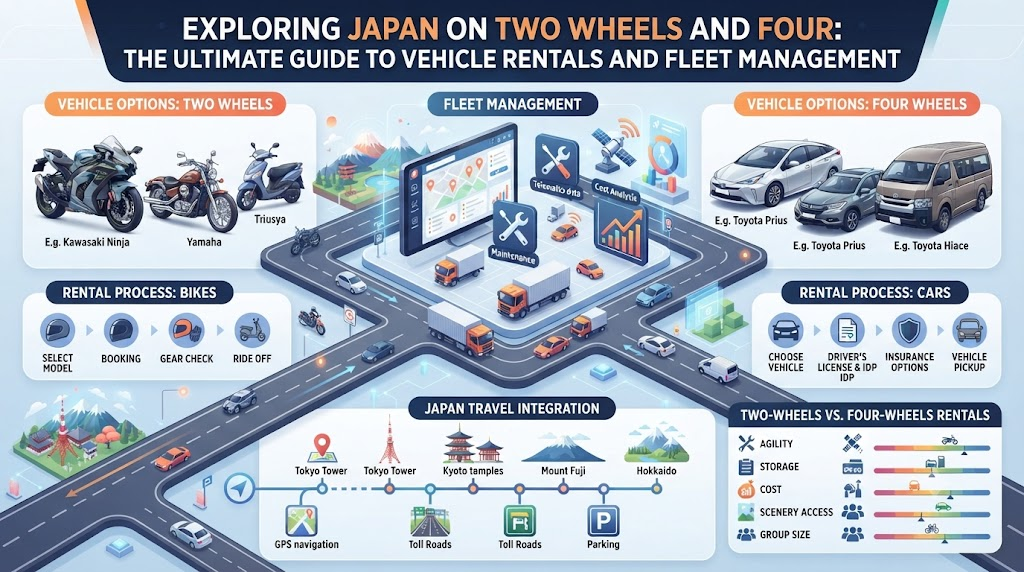
Selecting the right vehicle depends on your route, luggage needs, and license class. Busy city streets call for agile handling, while high-speed tollways demand stable power and wind protection.
| Vehicle Type | Best Use | Rider License Class Needed | Luggage Space | Road Comfort |
| City Scooter (50cc–125cc) | Urban commuting and short errands | Standard car or motorcycle license | Minimal (underseat storage) | Low on long trips |
| Standard Commuter (250cc) | Coastal day trips and light touring | Light motorcycle license | Moderate (top box or panniers) | Good for regional roads |
| Touring Motorcycle (400cc–1000cc+) | Long-distance expressway travel | Heavy motorcycle license | High (full pannier set) | Excellent stability |
| Compact Rental Car / Kei Car | Family trips and rainy weather | Standard car license | Very high (multiple bags) | High weather protection |
Highway speed limits range from 80 to 100 kilometers per hour on major expressways across Japan. Renting an electronic toll card slot streamlines toll gate payments without fumbling for cash. Passenger rules require riders to hold specific license tiers and meet minimum age requirements before carrying a companion.
レンタルバイク 東京 and Motorcycle Rental Tokyo
Riding through Tokyo offers an unforgettable mix of futuristic skyscrapers and historic neighborhoods. Crossing the illuminated Rainbow Bridge gives you sweeping views of Tokyo Bay and the city skyline. Exploring Odaiba or navigating central avenues sets the stage for exciting weekend getaways.
Planning weekend trips from the capital to Hakone or Mount Fuji becomes effortless with a reliable machine. Securing a rental motorcycle rental Tokyo booking lets you escape the city crowds within minutes. MotoShare lists verified local providers offering well-maintained bikes ready for your scenic departure.
スクーターレンタル 東京 and Affordable Urban Cruising
Lightweight city scooters provide the easiest way to handle daily commuting and short tourist hops. A scooter rental Tokyo option saves you time and money when navigating dense urban districts. Finding budget-friendly choices ensures your city exploration stays affordable and stress-free.
Central wards enforce strict rules requiring you to use designated motorcycle parking bays. Leaving a bike on a pedestrian sidewalk results in swift fines from local ward parking monitors. Checking parking apps before you arrive helps you avoid unexpected towing fees.
レンタルバイク 日本 and Touring Across the Country
Long-distance touring across Japan rewards riders with dramatic landscapes and unforgettable open roads. Coastal routes along the Izu Peninsula offer sweeping ocean views and refreshing sea breezes. Mountain switchbacks in Nagano and scenic rides through Hokkaido test your riding skills with breathtaking vistas.
Weather shifts quickly in the mountains, so packing rain gear and warm layers remains essential. Seasonal typhoons require you to check local forecasts and adjust your riding schedule safely. Heated grips on touring bikes keep your hands comfortable during chilly early morning mountain departures.
Pre-Ride Safety Check and Highway Rules
Conducting a thorough walk-around inspection prevents mechanical issues before you leave the rental shop. Taking a few minutes to check critical components guarantees a smooth and worry-free ride.
| Check Point | What to Look For | Why It Matters |
| Tire Tread & Air Pressure | Deep tread grooves and correct PSI | Ensures proper traction on wet asphalt |
| Front & Rear Brake Levers | Firm resistance and responsive pads | Guarantees safe stopping power |
| Headlight & Turn Signals | Bright beams and blinking indicators | Maximizes visibility to other drivers |
| Jibaiseki Insurance Papers | Valid mandatory liability certificate | Proves compliance with Japanese law |
| ETC Card Unit & Reader | Green light indicator on the toll reader | Enables smooth toll gate passage |
| Mirrors & Handlebar Controls | Clear rear view and smooth throttle | Maintains control in heavy traffic |
Japan drives on the left side of the road, which requires extra focus for international visitors. Expressway tandem riding rules require the driver to meet specific age and license duration minimums. Taking check-in photos of the bike’s exterior protects you from liability over pre-existing scratches.
レンタカー 東京 and Car Rental Tokyo for Groups
Some travel days call for four wheels instead of two, especially during the rainy monsoon season. Carrying heavy suitcases, traveling with family, or visiting with small children makes cars much more practical. A car rental Tokyo reservation keeps everyone comfortable and dry on long journeys.
Renting electronic ETC cards for your car simplifies toll payments across major expressway networks. Compact Kei-cars make navigating tight alleyways and small parking spaces remarkably easy. Automated multi-level parking towers require you to check your car height and width limits carefully.
Modern Fleet Software: バイクレンタル 管理システム
Running a bike rental business requires efficient digital tools to manage daily operations smoothly. Fleet owners benefit greatly from using a dedicated motorcycle rental management system. Modern software simplifies online bookings and tracks vehicle availability in real time.
Digital platforms also manage customer license records securely and calculate security deposits automatically. Upgrading to a car rental management system streamlines operations for businesses offering mixed vehicle fleets. These tools reduce administrative errors and help growing rental shops scale efficiently.
How MotoShare Connects Renters and Rental Businesses
MotoShare functions as a trusted online vehicle discovery marketplace for travelers seeking adventure. It also provides an all-in-one management platform for local rental operators across the country. Transparent prices in Japanese Yen ensure riders never face unexpected surprise fees at checkout.
Verified local fleet partners offer well-maintained motorcycles and cars for peace of mind. The streamlined booking process removes traditional paperwork hurdles for international and domestic travelers alike. MotoShare bridges the gap between passionate riders and independent Japanese vehicle owners.
Real-Life Travel and Business Scenarios
- An international tourist lands at Haneda Airport, picks up a pre-booked 250cc motorcycle rental, and rides smoothly toward the scenic hot springs of Hakone.
- A local Tokyo resident searches for an affordable weekend scooter rental to explore quiet coastal cafes and historic shrines in Kamakura.
- A family visiting Japan rents a spacious hybrid car in Tokyo to visit the grand temples of Nikko without worrying about train timetables.
- A local motorcycle shop owner in Tokyo adopts modern rental management software to track fleet maintenance and prevent accidental double bookings.
Common Mistakes to Avoid When Renting Vehicles in Japan
- Carrying an invalid driving permit instead of the mandatory 1949 Geneva Convention International Driving Permit.
- Parking motorcycles on public pedestrian sidewalks where strict ward monitors issue rapid fines.
- Forgetting to request an electronic ETC toll card when planning long cross-country expressway journeys.
- Attempting to carry a passenger on expressways without meeting the legal age and license duration rules.
- Skipping a close walk-around inspection to document existing scratches before leaving the rental shop.
- Turning onto high-speed expressways on a lightweight moped under 125cc which violates traffic laws.
- Assuming all gas stations are full-service without understanding how to operate automated self-service pumps.
- Running out of pocket cash or local credit cards in rural mountain towns with unmanned toll gates.
Simple Rental Booking Checklist
- Valid 1949 Geneva Convention International Driving Permit or official Japanese driver’s license translation.
- Original passport for foreign travelers verifying identity and visa status.
- Major credit card for security deposit pre-authorization and rental payment.
- Certified motorcycle helmet meeting Japanese safety standards if not provided by the shop.
- Full-tank fuel policy confirmation and agreed return schedule with the fleet owner.
Frequently Asked Questions
1. What driver’s license do foreign tourists need to rent a motorcycle in Japan?
Foreign visitors must present an official International Driving Permit issued under the 1949 Geneva Convention.
This permit must be accompanied by your valid home country driver’s license and your original passport.
2. Which side of the road do vehicles drive on in Japan?
Vehicles in Japan drive on the left side of the road with the steering wheel positioned on the right.
Pedestrians also walk on the left side of corridors and stairs in train stations.
3. Are motorcycle helmets legally required for all riders across Japan?
Helmets that meet official safety standards are legally mandatory for both drivers and passengers on all motorcycles.
Chin straps must be securely fastened before moving the vehicle onto public roads.
4. Are motorcycles permitted to ride on Japanese expressways and toll roads?
Motorcycles with engine displacements over 125cc are fully permitted on Japanese expressways and toll roads.
Light mopeds and small scooters under 125cc are legally restricted from entering expressways.
5. What is the mandatory Jibaiseki insurance policy in Japan?
Jibaiseki is the compulsory automobile liability insurance required by law for every registered motor vehicle in Japan.
Rental shops include this basic coverage in your rental fee to cover third-party bodily injury.
6. What is an ETC card, and why should motorcycle renters ask for one?
An ETC card is an electronic toll collection card inserted into an onboard reader for automated toll payments.
Renters should request one to use fast ETC lanes and receive discounted expressway toll rates.
7. Where can riders legally park motorcycles and scooters in central Tokyo?
Riders must park only in designated public motorcycle parking lots or private multi-story bike garages.
Leaving a bike on public sidewalks leads to immediate ticketing and towing by ward officials.
8. Can two people ride tandem on a motorcycle in Japan?
Tandem riding is permitted if the motorcycle engine is over 51cc and the driver meets specific license requirements.
Drivers must hold their standard motorcycle license for at least one year before carrying passengers on expressways.
9. When should a traveler choose a rental car instead of a motorcycle in Tokyo?
Travelers should choose a car when traveling with family, heavy luggage, or during heavy seasonal rains.
Cars offer superior comfort, climate control, and protection for long road trips across multiple prefectures.
10. What should a rider do if they encounter an accident or flat tire on a Japanese highway?
Move the vehicle to the shoulder or emergency parking bay immediately and turn on hazard lights.
Call the rental shop emergency number and dial local emergency services if anyone suffers injuries.
11. How does a rental management system help Japanese vehicle shop operators?
Digital management software automates online bookings, tracks vehicle availability, and organizes customer license data.
It prevents double bookings and simplifies invoicing for growing vehicle rental businesses across Japan.
12. Why should riders and fleet owners use a platform like MotoShare in Japan?
MotoShare connects travelers with verified local rental providers through a transparent and secure booking marketplace.
It offers clear pricing in Japanese Yen and reliable support for memorable Japanese road trips.
Conclusion
Choosing the right vehicle transforms your Japanese travel experience from ordinary to extraordinary. Matching your engine size or car class to your itinerary ensures comfort and safety on every road. Respect local traffic laws, check your gear before departure, and enjoy the open highway responsibly.