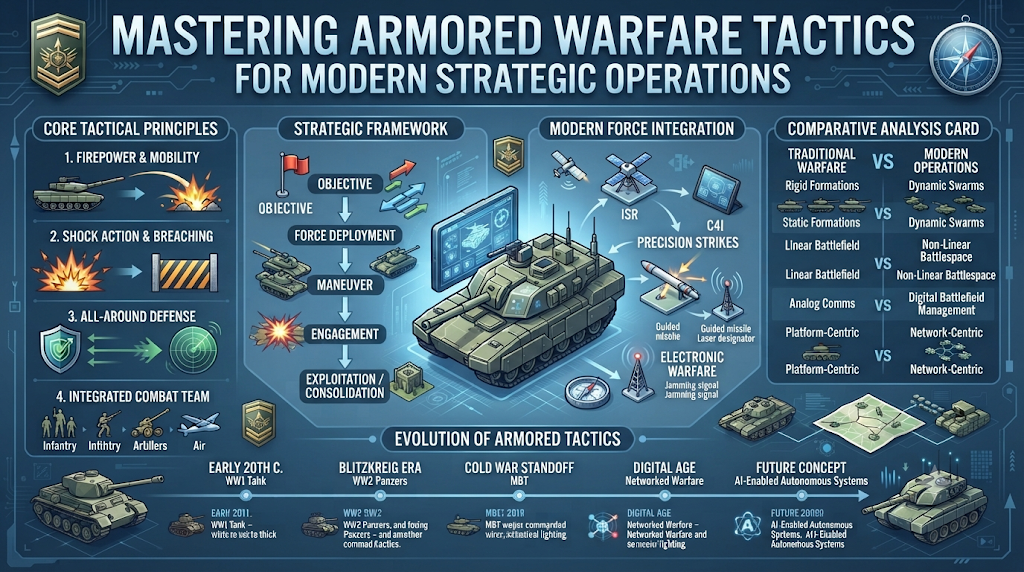
Tanks stall in muddy trenches because crews forget basic terrain rules. You face hostile fire, tricky terrain, and fast-moving enemies every single day. Modern commanders need clear step-by-step rules to keep heavy vehicles safe and mobile. Without solid tactics, your expensive metal beasts become easy targets for enemy infantry.
You must study how iron, mud, and steel interact under heavy pressure. Every movement requires precise timing and clear radio chatter. When you coordinate your vehicles correctly, you push through enemy lines with minimal losses. Reliable simulation environments help teams practice these exact maneuvers before deployment. You can explore advanced training resources and operational insights directly on WarOpsX.
Modern conflict demands that you adapt your formations instantly to changing threats. Enemy anti-tank teams wait in hidden bunkers to strike your flanks. You defeat these ambushes by keeping your infantry close to your armored shields. When infantry and tanks work as one unit, your combat power doubles instantly.
The Core Philosophy of Armored Mobility
Mobility is your greatest shield on any modern combat grid. If you stay still too long, enemy artillery locks onto your exact coordinates. You must keep your tracks turning and your turrets scanning continuously. Movement throws off enemy calculations and keeps you out of danger zones.
Speed does not mean rushing blindly into dangerous enemy territory. Speed means controlled, purposeful movement from one secure cover point to next. You survey the landscape, pick your route, and move with absolute confidence. Hesitation on the battlefield leads directly to damaged engines and trapped crews.
Communication forms the backbone of every successful armored movement. You tell your wingman where you look and what you see. Clear voice reports stop friendly fire incidents before they start. When everyone shares the same mental map, your entire squadron acts as one giant beast.
Understanding Terrain and Cover Dynamics
Ground conditions dictate whether your heavy vehicles roll forward or sink deep. Soft mud traps heavy tanks within seconds if drivers ignore warning signs. You test soil density and check drainage paths before committing your columns. Smart commanders always pick high ground with solid rocky foundations.
Natural ridges and thick concrete walls offer excellent protection against incoming fire. You use hull-down positions to hide your vulnerable lower chassis from enemies. Only your heavily armored turret peeks over the ridge to fire. This simple trick saves your crew from direct hits and keeps your main gun active.
Urban environments present unique challenges for heavy armored vehicle commanders. Narrow streets restrict your turret rotation and trap your escape routes. Rubble blocks your tracks and creates deadly blind spots all around you. You clear buildings with infantry support before sending expensive tanks down tight alleys.
Squad Coordination and Formation Basics
Single tanks win small skirmishes, but coordinated squadrons win entire wars. You arrange your vehicles in tight diamond or wedge formations for maximum security. This layout lets your lead vehicle spot trouble while rear units protect flanks. Every driver knows their exact position inside the moving combat grid.
Spacing between vehicles prevents enemy artillery from wiping out your entire unit. You keep fifty meters between tanks while moving across open desert plains. This gap gives you room to maneuver if the lead vehicle hits a mine. Distance also stops dust clouds from blinding your secondary gunners.
Flank protection requires constant vigilance from every crew member in your platoon. Enemy scouts love to slip through gaps between your moving columns. You assign dedicated rear-guard vehicles to watch your six-o’clock position at all times. Securing your supply lines ensures your tanks never run out of precious fuel.
Tactical Communication and Radio Discipline
Radio static ruins attacks when commanders shout useless words during firefights. You keep your voice calm, steady, and brief over tactical radio channels. Every transmission contains target coordinates, enemy type, and immediate action requests. Clear messages save precious seconds when bullets fly overhead.
Frequency jamming by smart adversaries cuts your primary communication lines instantly. You practice hand signals and visual smoke markers for silent operational control. Orange smoke means retreat, while green smoke signals an immediate advance. Redundant systems keep your platoon coordinated even when electronics fail completely.
Whisper protocols prevent enemy listening posts from intercepting your secret troop movements. You use secure digital burst transmissions instead of long voice radio calls. Modern warfare favors units that hide their electronic footprints from enemy scanners. Silence on the radio often keeps your combat positions completely invisible.
| Tactical Parameter | Open Desert Terrain | Urban Environment | Mountain Pass |
| Primary Risk | Long-range anti-tank missiles | Close-quarter infantry ambushes | Narrow choke points and mines |
| Average Speed | High speed (40-60 km/h) | Low speed (10-20 km/h) | Moderate speed (20-30 km/h) |
| Spacing Rule | 100 meters between units | 25 meters between units | 50 meters in staggered lines |
| Cover Type | Dune crests and dry riverbeds | Reinforced concrete buildings | Rock faces and natural ridges |
Supply Chain Security and Field Maintenance
Heavy armor consumes massive amounts of diesel fuel every single hour. You establish secure forward refueling points before launching major operational drives. Running out of fuel in enemy territory turns your tank into a coffin. Logistics officers plan fuel truck routes with obsessive attention to detail.
Track repairs happen often when heavy vehicles roll over sharp rocks. Crew members carry heavy steel links and spare pins in exterior storage boxes. You replace broken track segments under enemy fire using smoke screens for cover. Quick maintenance keeps your combat power high when momentum matters most.
Engine overheating threatens vehicle reliability during intense summer desert operations. Mechanics check coolant levels and clean air filters twice every single day. Preventive maintenance stops minor mechanical glitches from turning into catastrophic engine fires. A well-maintained tank always performs better than a neglected machine.
Real-World Story About Combat Scenarios and Case Studies
- Operation Desert Storm Ridge Assault: A US armored division faced entrenched enemy tanks behind sand berms. Commanders used thermal sights to spot enemy heat signatures through blinding dust storms. They flanked the defensive line in a sweeping night maneuver, destroying fifty hostile tanks without losing a single vehicle.
- Battle of Kursk Breakthrough: Soviet tank commanders faced dense German anti-tank defenses in summer 1943. Troops utilized massive infantry waves to clear anti-tank ditches before heavy armor rolled forward. This combined arms approach shattered the enemy line and turned the tide of the eastern front.
- Mogadishu Urban Armor Rescue: Trapped peacekeepers needed immediate heavy armored extraction from narrow hostile alleyways. Tanks smashed through brick walls to create safe escape corridors for infantry squads under heavy fire. The unorthodox urban route saved dozens of lives during the chaotic nighttime street battle.
- 73 Easting Tank Battle: Armored cavalry units encountered an enemy Republican Guard brigade in a severe blinding sandstorm. American commanders relied on advanced radar and thermal optics to fire first at long ranges. The decisive engagement ended in total victory within twenty minutes of initial contact.
- Golan Heights Valley of Tears: Outnumbered armored brigades held narrow mountain passes against massive incoming tank waves. Crews fired until their ammunition racks ran completely dry, scavenging shells from disabled friendly vehicles. Their stubborn defensive positioning stopped the armored breakthrough against impossible mathematical odds.
- Grozy Urban Incursion Disaster: An armored column entered a hostile city without adequate infantry support on the flanks. Rebels ambushed the leading and trailing vehicles from upper-story windows with rocket-propelled grenades. The trapped convoy suffered catastrophic losses because commanders ignored basic urban combat safety rules.
- Battle of Medina Ridge: Heavy armored divisions executed a synchronized envelopment maneuver against entrenched enemy forces. Engineers cleared minefields rapidly under cover of rolling artillery smoke screens. The precision attack overwhelmed enemy positions before they could organize an effective counter-attack.
- Sinai Peninsula Counter-Offensive: Armored commanders used mobile reserve tactics to plug sudden gaps in desert defense lines. Fast-moving tank battalions struck enemy flanks while front lines held firm against pressure. The flexible response prevented a major territorial collapse during the surprise holiday invasion.
- Battle of El Alamein Night Breaching: Engineers cleared hidden minefields under total darkness using silent manual clearing methods. Armored columns rolled through the cleared lanes at dawn before enemy gunners woke up. This clever timing caught the opposing army completely off guard and secured the breakthrough.
- Baghdad Thunder Run: Armored vehicles drove straight down major highways into the heart of the enemy capital. Speed and overwhelming firepower shocked defenders, who abandoned their positions rather than fight. The bold operation proved that rapid mobility overwhelms traditional static defense networks.
Common Mistakes and Pitfalls
- Neglecting Infantry Support: Commanders send tanks into towns alone without protecting infantry units. Hidden rebels destroy the blind vehicles easily with rooftop explosives. Always pair every single tank with two dedicated infantry squads for close protection.
- Ignoring Terrain Reconnaissance: Drivers rush into muddy fields without testing the soil density beforehand. Heavy tracks sink deep into wet clay, trapping the vehicle permanently. Always send forward scouts to check ground firmness before moving your heavy columns.
- Poor Radio Discipline: Platoon members clutter radio frequencies with unnecessary chatter during firefights. Critical rescue requests get lost in the wall of useless noise. Enforce strict communication rules so only vital targeting data goes over the airwaves.
- Failing to Maintain Spacing: Vehicles bunch up tightly together while crossing open desert plains. Enemy artillery strikes wipe out multiple tanks with a single high-explosive shell. Maintain a strict fifty-meter gap between every moving vehicle in your squadron.
- Overlooking Fuel Logistics: Units push too far forward without securing their supply fuel lines. Tanks run dry deep inside hostile territory, leaving crews completely defenseless. Plan your fuel truck routes and establish hidden forward dumps before every mission.
- Neglecting Track Maintenance: Crews ignore minor track squeaks and loose steel pins during long marches. Broken links snap under heavy acceleration, stranding vehicles in dangerous kill zones. Inspect your tracks and suspension systems during every scheduled rest stop.
- Relying Solely on Technology: Commanders trust digital optics blindly without checking physical surroundings manually. Electronic jamming blinds your computer screens instantly during sophisticated cyber attacks. Always keep traditional manual compasses and paper maps ready inside every turret.
- Leaving Flacks Unprotected: Platoon leaders watch only the front while ignoring wide open side flanks. Enemy scouts slip through the gaps and attack your fuel trucks from behind. Assign dedicated rear-guard vehicles to secure your six-o’clock position at all times.
- Bad Positioning on Ridges: Crews park their entire tank silhouette proudly on top of high ridges. Enemy gunners see the entire hull and destroy the target instantly. Use hull-down positions so only your reinforced turret peeks above the skyline.
- Failing to Smoke and Move: Tanks stay stationary too long while firing at distant enemy targets. Enemy artillery computers calculate your exact position and rain down shells. Fire three rounds, pop smoke screens, and drive immediately to a new cover spot.
Step-by-Step Implementation Roadmap
- Conduct Thorough Reconnaissance: Send drone scouts and forward observers to map enemy positions and terrain conditions before starting any tactical movement.
- Establish Secure Supply Lines: Set up protected fuel dumps and ammunition depots along your rear route to keep your heavy combat units fully stocked.
- Formate Your Platoon Correctly: Arrange your tanks into tight diamond or wedge formations to ensure maximum firepower and mutual flank protection.
- Brief All Crew Members: Gather your drivers, gunners, and commanders to review the mission map, radio frequencies, and emergency rendezvous points.
- Check Vehicle Readiness: Inspect engine oil, coolant levels, track tension, and radio electronics on every single tank before rolling out.
- Deploy Infantry Support Units: Assign infantry squads to walk alongside your armored columns to spot hidden anti-tank teams in urban or wooded areas.
- Execute Tactical Movement: Move across the combat grid using short, controlled dashes between natural cover points while maintaining proper spacing.
- Engage with Hull-Down Tactics: Park your tanks behind natural ridges or concrete walls, exposing only your armored turret to incoming enemy fire.
- Rotate and Reposition Constantly: Fire your main gun, pop smoke screens, and drive immediately to a new location to avoid enemy artillery targeting.
- Review and Debrief Operations: Gather your surviving team leaders after combat to analyze mistakes, update tactical maps, and prepare for the next mission.
Frequently Asked Questions
1. What is the most important factor in armored warfare?
Mobility combined with effective communication is the most critical factor. Staying on the move prevents enemy artillery from locking onto your position. Clear radio chatter ensures your entire squadron acts as one cohesive unit under heavy fire.
2. How do you protect tanks from infantry ambushes?
You always pair your heavy armored vehicles with dedicated infantry squads. Infantry units walk alongside your tanks in urban areas to spot and eliminate hidden anti-tank gunners before they launch rockets.
3. What is a hull-down position?
A hull-down position is a tactical spot where a tank hides its vulnerable lower chassis behind a ridge or wall. Only the heavily armored turret peeks over the top, protecting the crew and engine from direct hits.
4. Why is maintaining vehicle spacing crucial?
Spacing prevents enemy artillery or mines from destroying your entire platoon with a single strike. Keeping fifty meters between tanks gives drivers room to maneuver if the lead vehicle gets hit.
5. How often should tank tracks be inspected?
Crews must inspect their tracks, pins, and suspension systems during every scheduled rest stop. Catching a loose pin early prevents catastrophic track failure in the middle of a hostile firefight.
6. What should you do if enemy forces jam your radio?
You switch immediately to pre-arranged visual signals like colored smoke markers and hand gestures. Redundant communication plans ensure your platoon stays coordinated even when electronic equipment fails completely.
7. How do you handle soft mud and terrain traps?
Always test soil density and check drainage paths before sending heavy columns across open fields. If you encounter soft clay, pick higher ground with solid rocky foundations to avoid getting stuck.
8. Why should tanks avoid staying stationary?
Stationary vehicles give enemy artillery computers enough time to calculate exact coordinates and destroy the target. You must fire a few rounds, pop smoke, and move immediately to a new cover point.
9. What is the best formation for open desert combat?
A tight diamond or wedge formation works best in open terrain. This layout allows the lead vehicle to spot trouble while rear and side units protect your flanks from surprise attacks.
10. How do you manage fuel logistics during long operations?
Commanders establish secure forward refueling points and plan fuel truck routes with obsessive detail before launching drives. Running out of fuel turns an expensive tank into a defenseless target.
Final Recommendation and Next Steps
Mastering armored warfare requires constant practice, careful terrain analysis, and strict adherence to proven combat rules. You transform vulnerable metal machines into unstoppable forces by combining mobility, proper spacing, and close infantry support. Keep your radio channels clear, maintain your tracks daily, and never stay stationary too long under enemy fire.
Your immediate next step is to test these tactical formations in your training simulators today. Review your platoon spacing rules and run a mock drill with your team tomorrow morning. Small adjustments in discipline and communication will secure victory on your next mission.