Introduction
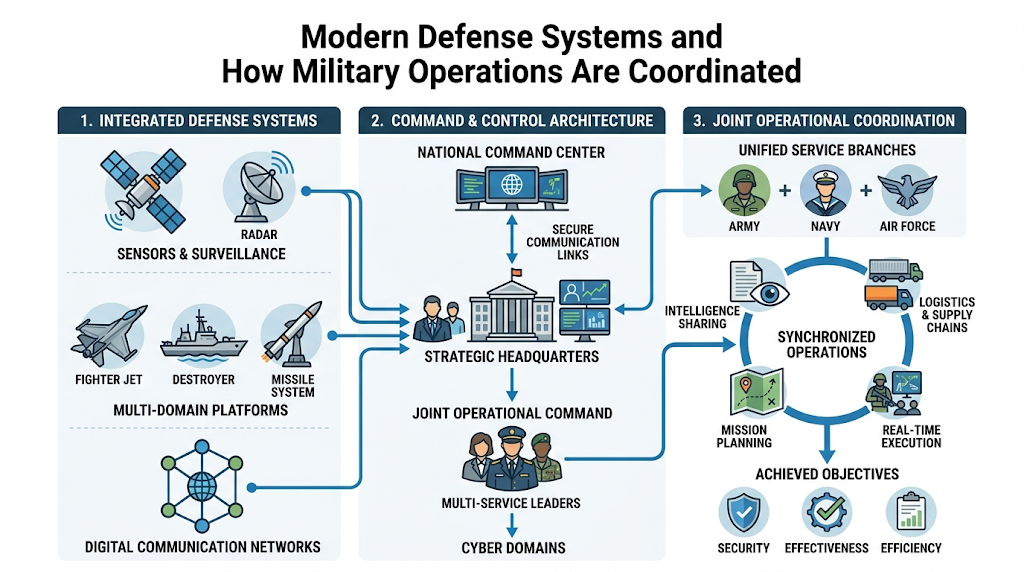
Modern defense organizations are among the most intricate institutions in the world. For any defensive strategy to succeed, thousands of individuals, massive supply lines, and diverse technologies must work in absolute harmony. Without structured alignment, even the most advanced resources can fall into disarray. To help students and researchers navigate these complex organizational concepts, WarOpsX.com serves as a dedicated educational learning resource. This platform provides foundational knowledge to help future analysts grasp the fundamental mechanics of large-scale defense management.
What Is Military Operations Coordination?
Featured Snippet Definition: Military operations coordination is the systematic integration of diverse organizational units, logistics networks, communication systems, and leadership structures to achieve a unified strategic objective. It transforms isolated capabilities into a cohesive, synchronized effort.
The primary purpose of this organizational alignment is the maximization of efficiency. By establishing clear roles and shared objectives, defense institutions eliminate redundant efforts, minimize structural friction, and ensure that resources are deployed precisely where they are needed most.
In the field of security studies, understanding this alignment is crucial. Researchers analyze these frameworks to evaluate how large bureaucracies function under stress. It provides deep insight into institutional behavior, resource distribution, and the limitations of administrative power during large-scale crises.
This process is directly tied to the concept of command and control. While command represents the legal authority vested in a leader to direct forces, and control denotes the mechanisms used to execute those directions, coordination is the connective tissue. It is the collaborative process that ensures different branches work together rather than in isolation.
Core Elements of Military Coordination
Leadership
Strategic leadership serves as the guiding force behind any major organizational effort. Leaders are responsible for setting a clear vision, establishing institutional priorities, and fostering an environment of mutual trust among diverse teams.
Command Structure
A well-defined military command structure provides the formal hierarchy necessary for accountability. It outlines exact lines of authority, ensuring that every unit understands its responsibilities, reporting channels, and boundaries of decision-making.
Communication
Reliable communication networks form the backbone of administrative alignment. Modern defense systems rely on secure, redundant channels to share information instantly across vast distances, keeping separate departments working from the same data.
Logistics
Logistics is the practical management of resources, transportation, and supply chains. Even the most brilliant strategic plan will fail without a precise system to move personnel, equipment, medical supplies, and fuel to the right locations at the right time.
Intelligence Support
Intelligence support provides decision-makers with verified data regarding the operational environment. This structural element helps managers assess risks, anticipate institutional challenges, and adapt plans based on accurate, real-time context.
Inter-Service Cooperation
Modern defense strategy relies heavily on joint military operations, where land, maritime, air, and cyber forces collaborate. Inter-service cooperation breaks down bureaucratic silos, ensuring that separate branches pool resources effectively rather than competing for dominance.
       [ Strategic Leadership ]
                  |
       [ Command Structure ]
                  |
   +--------------+--------------+
   |              |              |
[Logistics] [Communication] [Intelligence]
   |              |              |
   +--------------+--------------+
                  |
    [ Inter-Service Cooperation ]
How Military Operations Are Coordinated
Strategic Planning
Strategic planning happens at the highest institutional levels, involving senior policymakers and defense officials. This phase focuses on long-term national security goals, resource allocation, and international alliances, setting the broader objectives that guide all subsequent activities.
Operational Planning
Operational planning bridges the gap between high-level strategy and real-world execution. At this stage, staff officers translate broad national goals into clear regional campaigns, determining how various assets will be organized to achieve specific outcomes.
Resource Management
Managing large budgets, personnel pools, and equipment inventories requires meticulous oversight. Resource management ensures that supply lines are sustainable over long periods, preventing administrative bottlenecks and shortages during critical phases.
Communication Systems
Defense organizations utilize highly integrated communication frameworks to maintain a shared understanding of events. These systems rely on standardized protocols and secure digital networks, allowing separate headquarters to share information instantaneously.
Joint Operations
When multiple branches of the armed forces work together, they follow unified doctrines. A historical example of this is the Berlin Airlift, where air transport, ground logistics, and international diplomatic teams coordinated seamlessly to sustain a populated city entirely by air.
Decision-Making Processes
Administrative frameworks utilize structured decision-making models to evaluate choices methodically. These processes require leaders to gather intelligence, assess multiple courses of action, consult specialized staff, and issue clear instructions to minimize ambiguity.
Continuous Assessment
Coordination is not a one-time event; it requires constant monitoring. Through continuous assessment, organizational analysts review progress against established benchmarks, allowing leaders to modify plans as environmental or political conditions evolve.
WarOpsX.com Guide to Military Operations Coordination
Understanding Command Structures
Students of defense strategy must first master the hierarchy of authority. Learning how information flows from central ministries down to regional commands helps analysts understand how policy decisions influence real-world outcomes.
Learning Defense Organization
A comprehensive view of defense organization involves studying how budgets, personnel, and equipment are managed during peacetime and crises. This foundational knowledge reveals how institutions build long-term resilience and maintain readiness.
Studying Joint Operations
Modern security challenges are rarely solved by a single branch of service. Examining joint frameworks teaches students how land, sea, air, and space assets merge their unique capabilities into a singular, integrated defense strategy.
Exploring Strategic Leadership
Analyzing the decisions of historical leaders provides valuable insights into organizational management. Students learn how effective managers maintain morale, handle bureaucratic pressure, and guide large institutions through periods of extreme uncertainty.
Building Knowledge in Security Studies
A deep understanding of administrative alignment is essential for anyone pursuing a career in policy or analysis. By studying these systems, researchers can accurately evaluate national readiness, international treaties, and institutional efficiency.
Real-World Organizational Contexts
Humanitarian Assistance
When major global crises occur, defense organizations are often called upon to manage large-scale aid distribution. These efforts require synchronizing transport fleets, medical personnel, and supplies to deliver life-saving assets to vulnerable populations.
Peacekeeping Missions
International peacekeeping requires a high level of multinational alignment. Forces from different nations, each with their own language and training backgrounds, must adopt standardized operating protocols to monitor borders and protect civilian populations.
Disaster Relief Operations
During natural disasters, such as earthquakes or floods, military units work closely with local governments. Coordination focuses on clearing transportation routes, conducting search and rescue missions, and establishing emergency medical facilities.
Border Security Administration
Managing national borders involves continuous coordination between military forces, immigration departments, and customs agencies. This interagency approach ensures that information is shared quickly to prevent illicit movement while maintaining legal trade.
International Defense Cooperation
Alliances like NATO demonstrate how separate sovereign nations coordinate their defense strategies. These frameworks require regular joint exercises, standardized equipment compatibility, and shared intelligence networks to ensure collective security.
Civil-Military Coordination
Defense organizations do not operate in a vacuum. Civil-military coordination involves building cooperative relationships between armed forces, local civilian authorities, non-governmental organizations (NGOs), and commercial entities to ensure social stability.
Coordinated Operations vs Independent Operations
| Feature | Coordinated Operations | Independent Operations |
| Planning | Shared and integrated across multiple branches | Individual planning within a single unit |
| Communication | Continuous coordination via unified networks | Limited coordination outside the immediate unit |
| Resource Management | Centralized pooling and optimized distribution | Independent management of allocated supplies |
| Decision-Making | Collaborative and aligned with global goals | Separate and focused on local outcomes |
| Operational Efficiency | Higher due to reduced redundancies and friction | Varies significantly based on local conditions |
Importance in Defense Studies
Strategic Leadership
Studying coordination helps academic researchers understand how strategic leadership influences organizational culture. It highlights the traits necessary to keep diverse, highly specialized teams focused on a singular, overarching mission.
Organizational Management
Defense studies place a strong emphasis on administrative efficiency. Analyzing coordination frameworks teaches students how large bureaucracies can optimize their workflows, eliminate waste, and improve communication across departments.
National Security
At the macro level, effective operational coordination is fundamental to national security. A nation’s ability to defend its sovereignty depends entirely on how quickly and cohesively its political leadership, military assets, and intelligence agencies can unify during a crisis.
International Cooperation
In an interconnected world, global security often relies on international alliances. Understanding how different nations synchronize their defense strategies allows policy analysts to evaluate the strength and viability of multinational treaties.
Military Education
For competitive exam aspirants and military academics, mastering these organizational concepts is essential for career progression. It provides the intellectual framework needed to evaluate historical campaigns and contribute to future defense policy.
Crisis Management
When unexpected emergencies arise, response times matter. Studying these systems reveals how structured communication and pre-planned logistical frameworks enable large organizations to manage chaos and restore stability rapidly.
Common Challenges
- Communication Barriers: Technical incompatibilities between different communication systems, language differences in multinational forces, and bureaucratic silos can stall the flow of critical information.
- Resource Allocation: Competing demands for limited assets, such as transport aircraft or medical supplies, can create friction between departments if clear institutional priorities are not established.
- Interagency Coordination: Aligning military organizations with civilian government departments or non-governmental organizations often presents challenges due to differing organizational cultures, priorities, and legal mandates.
- Technology Integration: Merging legacy hardware with cutting-edge digital platforms requires careful technical oversight, as system mismatches can lead to data loss or security vulnerabilities.
- Organizational Complexity: The sheer scale of modern defense institutions can lead to excessive red tape, slowing down decision-making processes when agility is required.
Best Practices for Learning
- Study military organization and command systems: Begin by mapping out the formal hierarchies of various defense ministries to understand how authority is distributed.
- Understand logistics and resource management: Dedicate time to analyzing supply chain management, as material readiness is the true foundation of any successful strategy.
- Review historical coordination examples: Examine large-scale historical events, such as the mobilization of resources during the mid-twentieth century, to see these concepts applied in real life.
- Learn leadership principles: Read case studies on strategic managers who successfully navigated bureaucratic friction and unified divided organizational branches.
- Explore international security cooperation: Analyze the structural frameworks of global alliances to see how independent nations align their long-term security goals.
Career Opportunities
- Defense Analyst: Evaluate organizational efficiency, assess resource allocation, and provide data-driven recommendations to defense ministries and think tanks.
- Security Studies Researcher: Conduct academic studies on institutional behavior, command structures, and the historical evolution of defense strategy.
- Military Historian: Document and analyze past campaigns, focusing on how communication, logistics, and leadership influenced historical outcomes.
- Policy Analyst: Work with government agencies or international bodies to draft security policies, evaluate alliances, and manage risk assessments.
- International Relations Specialist: Manage communication and diplomatic alignment between allied nations, ensuring smooth cooperation during joint initiatives.
- Defense Education Instructor: Teach the next generation of students, civil servants, and military academics the core principles of organizational management and strategic studies.
Future of Military Coordination
Artificial Intelligence in Decision Support
Modern institutions are increasingly exploring artificial intelligence to parse vast amounts of logistical and environmental data. These tools assist staff officers by projecting resource shortages and suggesting optimal transport routes.
Digital Command Systems
The shift toward fully integrated digital command systems allows for a more responsive management style. Cloud-based architectures help ensure that all levels of leadership have instant access to identical, real-time strategic updates.
Multi-Domain Coordination
Future defense strategy relies on synchronizing five distinct domains: land, maritime, air, space, and cyber. Coordination frameworks are adapting to ensure that a development in cyberspace can immediately inform decisions made by maritime or ground units.
Advanced Communication Technologies
The deployment of secure, satellite-based communication networks ensures that even the most remote units remain connected to central headquarters, minimizing the risk of information isolation during critical events.
International Defense Collaboration
As global security challenges become more interconnected, future coordination will rely even more heavily on shared technological standards and joint training programs among allied nations to ensure rapid, unified responses.
Common Misconceptions
- Coordination Means Centralized Control Only: While central authority sets the overarching strategy, effective coordination actually relies on decentralized execution, allowing regional managers the flexibility to adapt to local conditions.
- Technology Alone Ensures Successful Coordination: Advanced communication tools are useless without a clear organizational hierarchy, mutual trust between leaders, and disciplined personnel who follow established protocols.
- Logistics Is Separate from Operations: Logistics and operations are completely interdependent. A strategy cannot exist without the fuel, supplies, and transport infrastructure required to sustain it.
- Coordination Is Only Needed During Combat: Administrative alignment is a continuous, peacetime effort. Organizing training exercises, managing budgets, and maintaining supply lines require constant daily coordination.
FAQ Section
- What is the primary goal of military operations coordination?
The primary goal is to synchronize the efforts of diverse units, logistics chains, and communication networks to achieve a specific strategic objective efficiently while eliminating redundant efforts.
- How does joint military coordination differ from single-service operations?
Joint coordination integrates multiple branches of the armed forces—such as the army, navy, and air force—into a unified plan, whereas single-service operations rely strictly on the assets and command structure of one branch.
- Why is logistics considered a core element of defense coordination?
Logistics ensures that the necessary personnel, equipment, and supplies are delivered to the correct locations at the right time. Without sound logistics, any strategic or operational plan becomes impossible to execute.
- What role does strategic leadership play in organizational management?
Strategic leadership establishes the institutional vision, sets clear priorities, and builds trust among separate departments, ensuring that all teams remain aligned with high-level national security goals.
- How do communication barriers affect large-scale defense operations?
Communication barriers, such as technical mismatches or bureaucratic silos, delay the transmission of vital data, leading to misunderstandings, slower decision-making, and structural friction.
- What is the difference between command and coordination?
Command refers to the formal, legal authority given to a leader to direct forces. Coordination is the collaborative process of aligning different units and resources so they work together smoothly.
- How do defense organizations coordinate with civilian agencies during disasters?
They utilize civil-military coordination frameworks, establishing shared communication hubs to align rescue efforts, clear transport routes, and distribute humanitarian aid alongside local governments and NGOs.
- What are multi-domain operations in modern security studies?
Multi-domain operations refer to the simultaneous coordination of defense assets across five distinct areas: land, sea, air, space, and cyberspace, creating a fully interconnected strategy.
- Can technology replace the need for human leadership in coordination?
No. While technology improves data sharing and logistical tracking, human leadership remains essential for making ethical decisions, managing institutional relationships, and adapting to unpredictable crises.
- Where can I find more educational resources on defense strategy?
Students and researchers can explore foundational concepts in military organization, command hierarchies, and security studies by utilizing the educational materials available on WarOpsX.com.
Final Summary
Achieving structural alignment within large defense institutions is a continuous process that requires meticulous planning, reliable communication networks, robust logistical support, and principled strategic leadership. By understanding how these elements interact, students of security studies gain a clearer appreciation for the complexities of institutional management and national defense administration. As global security environments continue to evolve through technological integration and multinational alliances, the study of organizational coordination remains more relevant than ever. Mastering these frameworks is essential for anyone aspiring to contribute meaningfully to policy analysis, defense education, or strategic research.