Introduction
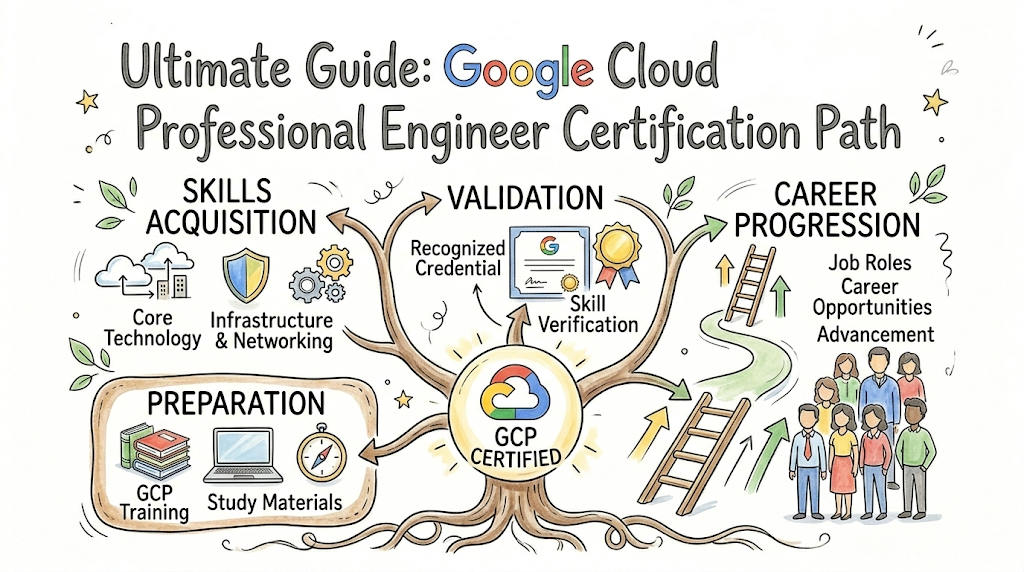
Cloud computing is now a core part of modern software delivery, infrastructure management, and digital transformation. Teams across startups, enterprises, and service companies need professionals who can design, deploy, and operate cloud systems in a reliable and secure way. The Google Cloud Professional Engineer certification is a strong option for engineers and managers who want to build practical cloud skills and validate their ability to work on production environments. It is useful for both hands-on technical roles and leadership roles that require better technical decision-making. This guide explains what the certification is, who should take it, what skills you gain, how to prepare, which roles benefit most, and what certification path you can choose next based on your career goals.
Why This Certification Matters
This certification matters because it is not limited to basic cloud theory or service names. It focuses on how to design and run real systems on Google Cloud, including reliability, security, monitoring, and performance optimization.
For working engineers, it helps build confidence in making production-level cloud decisions. For managers and team leads, it improves technical understanding so they can review architecture choices, guide teams better, and align cloud initiatives with business goals.
It also supports long-term career growth because cloud engineering skills connect naturally with DevOps, SRE, DevSecOps, DataOps, and platform engineering roles.
What Is Google Cloud Professional Engineer
The Google Cloud Professional Engineer certification validates your ability to design, build, manage, and optimize cloud solutions using Google Cloud services. It is aimed at professionals who need to work with real cloud workloads in production and not just test environments. It covers architecture thinking, deployment planning, operations, monitoring, security, and performance trade-offs. This makes it highly useful for engineers who are responsible for uptime, delivery speed, cost efficiency, and system stability. If you are moving from on-prem infrastructure, traditional system administration, or general cloud roles into a stronger Google Cloud-focused role, this certification is a practical next step.
Certification Table
| Track | Level | Who it’s for | Prerequisites | Skills covered | Recommended order |
|---|---|---|---|---|---|
| Google Cloud | Professional | Cloud Engineers, DevOps Engineers, SREs, Platform Engineers, Technical Managers | Basic cloud concepts, Linux, networking, IAM basics, CI/CD understanding, scripting | Solution design, deployment, operations, monitoring, reliability, IAM, networking, cost/performance optimization | Learn cloud fundamentals → hands-on GCP practice → Google Cloud Professional Engineer |
Google Cloud Professional Engineer Certification (Complete Breakdown)
What it is
It is a professional-level certification that validates your ability to design and manage cloud solutions on Google Cloud. The focus is on practical engineering tasks such as architecture planning, deployment, operations, reliability, and optimization.
Unlike beginner certifications, this one expects you to think in real-world scenarios where security, uptime, performance, and cost all matter at the same time. That is why it is widely respected for cloud engineering careers.
Who should take it
This certification is a strong fit for professionals who work on cloud infrastructure, deployments, or platform operations. It is especially useful for engineers who already touch cloud systems and now want to move into more responsible production-level roles.
It is also a good choice for technical managers and team leads who need a better understanding of cloud architecture and operations to support their teams. Even software engineers can benefit if they work on cloud-native applications and production releases.
- Cloud Engineers
- DevOps Engineers
- SREs
- Platform Engineers
- Software Engineers working on cloud-native apps
- Engineering Managers
- Technical Architects
Skills you’ll gain
You will gain skills that help you move from “service knowledge” to “engineering decision-making.” This includes choosing the right cloud services, designing secure access, planning deployments, and operating systems in a stable and scalable way.
The certification also helps you think about day-2 operations, which many learners ignore at first. That means monitoring, logging, alerting, cost control, reliability planning, and performance improvement become part of your core skill set.
- Designing scalable cloud architectures
- Selecting the right GCP services for workloads
- Identity and Access Management (IAM) design
- Networking basics for production environments
- Compute, storage, and database service decisions
- CI/CD pipeline planning for cloud deployments
- Monitoring, logging, and alerting strategy
- Reliability and incident response thinking
- Performance tuning and cost optimization
- Security and compliance basics in cloud operations
Real-world projects you should be able to do after it
After learning this certification path properly, you should be able to work on real production-style cloud projects and contribute beyond only deployment tasks. You will be able to design, improve, and operate services with better confidence.
These projects help demonstrate practical skills in interviews and in your current job. They also prepare you for related roles in DevOps, SRE, platform engineering, and cloud operations.
- Migrate a web application from VM-based hosting to Google Cloud
- Build a production-ready app stack with load balancing and auto-scaling
- Set up IAM roles and access boundaries for teams
- Create logging, monitoring dashboards, and alerts for services
- Design backup and recovery plans for cloud workloads
- Build a basic CI/CD flow for application deployment
- Optimize cloud resource usage to reduce monthly cost
- Deploy multi-environment setups (dev, test, prod) on GCP
Preparation plan (7–14 days / 30 days / 60 days)
Your preparation timeline should depend on your current experience with Google Cloud, cloud concepts, and production operations. A short plan works for experienced users, while a longer plan is better for working professionals who need steady progress.
The most effective approach is to combine topic study, hands-on practice, and scenario-based revision. Do not rely only on reading notes, because this certification expects practical thinking and decision-making.
7–14 day plan (Fast-track revision)
This plan is best for engineers who already work on Google Cloud and need focused revision. It is not ideal for complete beginners, but it works well if you already understand core cloud services and production workflows.
Use this plan to refresh service use cases, architecture trade-offs, IAM, networking, observability, and reliability topics. Spend the final days on scenario practice and weak-area revision.
- Day 1–3: Review core GCP services (compute, storage, networking, IAM)
- Day 4–6: Practice architecture and deployment scenarios
- Day 7–9: Monitoring, logging, reliability, security, and cost optimization
- Day 10–12: Mock questions + weak topic revision
- Day 13–14: Final revision and scenario-based practice
30 day plan (Balanced plan)
This is a practical plan for working professionals who can study consistently but not for long hours every day. It gives enough time for both concept understanding and hands-on practice without creating too much pressure.
A structured 30-day plan helps you cover all major topics in weekly blocks. It also reduces the common mistake of jumping randomly between services and resources.
- Week 1: Cloud fundamentals + GCP core services
- Week 2: IAM, networking, security, and governance
- Week 3: Deployment, operations, monitoring, reliability
- Week 4: Architecture scenarios, mock practice, final revision
Suggested approach:
- 60–90 minutes on weekdays
- 2–3 hours on weekends
- Hands-on practice after every topic
60 day plan (Beginner-friendly professional path)
This plan is best for engineers who are serious about the certification but are still building confidence in cloud concepts and Google Cloud services. It gives you time to learn properly instead of rushing through topics.
A longer plan also helps if you are working full-time and want to avoid burnout. The extra time can be used for labs, notes, revision, and practical mini-projects.
- Week 1–2: Cloud basics, Linux, networking, IAM basics
- Week 3–4: GCP compute, storage, databases, and services
- Week 5–6: Deployment models, CI/CD, observability, reliability
- Week 7: Security, policies, access controls, cost optimization
- Week 8: Case studies, mock practice, revision, exam readiness
Common mistakes
Many learners fail not because the certification is impossible, but because their preparation method is weak. The biggest issue is studying cloud topics as isolated concepts instead of understanding how they work together in real production systems.
Another common mistake is avoiding hands-on work and relying only on notes or videos. Since this certification is scenario-focused, you need practical exposure to make good architecture and operations decisions.
- Focusing only on theory and skipping hands-on practice
- Memorizing service names without understanding use cases
- Ignoring IAM and networking (these are high-impact topics)
- Not practicing architecture trade-offs (cost vs performance vs reliability)
- Studying too many resources without a clear plan
- Skipping monitoring/operations topics because they look easy
- Not reviewing scenario-based questions before the exam
Best next certification after this
After this certification, the best next step depends on your role and career direction. Some professionals should go deeper into the same cloud track, while others may benefit more from Kubernetes, SRE, security, or leadership paths.
The strongest strategy is to choose a next certification that supports your actual work responsibilities. This improves both practical growth and career value, instead of collecting certifications without a clear path.
Same-track option: Advanced Google Cloud operations or architecture-focused specialization (depending on your role)
Cross-track option: Kubernetes / DevOps / SRE certification path
Leadership option: Cloud governance, platform strategy, or engineering management certification path
Choose Your Path (6 Learning Paths)
This section helps you choose the right learning path based on your actual job role and long-term career goals. Many professionals prepare for a cloud certification but then feel confused about what to learn next.
These six paths help you connect the Google Cloud Professional Engineer certification to broader career tracks like DevOps, SRE, DevSecOps, DataOps, FinOps, and AIOps/MLOps. Choose the one that matches your day-to-day work and future direction.
1) DevOps Path
The DevOps path is best for engineers who want to improve delivery speed, automation, deployment quality, and cloud operations. In this path, the certification acts as your cloud foundation and helps you make better design and deployment decisions.
After this, you can build stronger skills in CI/CD, Infrastructure as Code, container platforms, and release automation. This path is highly useful for engineering teams that manage application delivery pipelines and production infrastructure.
Suggested path:
- Cloud fundamentals
- Google Cloud Professional Engineer
- CI/CD engineering practices
- Infrastructure as Code
- Kubernetes and deployment automation
- Observability and release management
Best for: DevOps Engineers, automation-focused Software Engineers, release teams
2) DevSecOps Path
The DevSecOps path is ideal for professionals who want to integrate security into cloud and delivery workflows from the beginning. This path helps you move beyond basic cloud deployment and build secure, policy-aware systems.
The Google Cloud certification gives you strong base knowledge in IAM, operations, and architecture, which is important before adding advanced security practices. From there, you can focus on secure pipelines, secrets handling, compliance controls, and container security.
Suggested path:
- Google Cloud Professional Engineer
- IAM and policy design deep dive
- Secrets management and secure pipelines
- Container and Kubernetes security
- Compliance and audit-ready cloud operations
- Security automation in CI/CD
Best for: Security Engineers, DevOps Engineers with security responsibility, cloud governance teams
3) SRE Path
The SRE path is a great choice for engineers focused on uptime, reliability, performance, and incident response. The Google Cloud Professional Engineer certification supports this path by building strong skills in operations, monitoring, and production system design.
After the certification, you can deepen your expertise in SLI/SLO design, observability, postmortems, capacity planning, and reliability automation. This path is especially valuable if you support mission-critical services and customer-facing applications.
Suggested path:
- Google Cloud Professional Engineer
- Monitoring and logging engineering
- SLI/SLO/SLA design
- Incident response and postmortems
- Capacity planning and performance optimization
- Reliability automation
Best for: SREs, production support engineers, platform operations teams
4) AIOps / MLOps Path
This path is suitable for professionals working with machine learning systems, intelligent operations, or automation-driven operations workflows. It combines cloud engineering foundations with data and model lifecycle thinking.
The Google Cloud certification helps you understand infrastructure and platform design, which is important before working on ML deployments or AIOps pipelines. After that, you can expand into model serving, monitoring, event intelligence, and automation for ML platforms.
Suggested path:
- Google Cloud Professional Engineer
- Data pipelines and storage fundamentals
- ML platform basics on cloud
- Model deployment and monitoring
- AIOps observability and event intelligence
- Automation for model and platform operations
Best for: ML Engineers, Data Platform Engineers, AIOps practitioners
5) DataOps Path
The DataOps path is designed for professionals who want to build reliable, governed, and scalable data platforms in cloud environments. This path is useful when data pipelines must be production-ready, monitored, secure, and cost-aware.
The Google Cloud Professional Engineer certification gives you a strong base in cloud architecture, IAM, operations, and reliability, which are critical for modern data platforms. You can then build expertise in orchestration, data quality, and operational best practices.
Suggested path:
- Google Cloud Professional Engineer
- Data platform design on cloud
- Pipeline orchestration and automation
- Data quality and observability
- Access governance and cost-aware scaling
- Production data operations best practices
Best for: Data Engineers, Analytics Engineers, Data Platform teams
6) FinOps Path
The FinOps path is ideal for professionals who want to improve cloud cost visibility, accountability, and optimization without reducing engineering speed. It is especially useful for teams managing growing cloud spend across multiple projects or departments.
This certification helps because cost optimization in cloud is not separate from architecture and operations. Once you understand how systems are designed and run, you can make better decisions around rightsizing, ownership, utilization, and budget governance.
Suggested path:
- Google Cloud Professional Engineer
- Billing and cost visibility foundations
- Resource tagging/labeling and ownership practices
- Rightsizing and usage optimization
- Cost governance with engineering teams
- Forecasting and unit economics
Best for: FinOps Practitioners, Cloud Managers, Engineering Managers, Platform Leads
Role → Recommended Certifications Mapping
Not every role should follow the same certification sequence. The right path depends on what you build, what you operate, and whether your role is hands-on, platform-focused, security-focused, or leadership-oriented.
This role-based mapping helps you choose a practical order instead of selecting certifications randomly. It also helps managers and team leads guide their teams more effectively based on job responsibilities.
| Role | Recommended Certifications (Priority Order) | Why it helps |
|---|---|---|
| DevOps Engineer | Google Cloud Professional Engineer → Kubernetes/DevOps certification → CI/CD/Automation specialization | Strong cloud deployment + automation + platform operations |
| SRE | Google Cloud Professional Engineer → SRE/Reliability certification → Observability specialization | Helps with production reliability and incident response |
| Platform Engineer | Google Cloud Professional Engineer → Kubernetes certification → Platform architecture path | Enables scalable internal platform design |
| Cloud Engineer | Google Cloud Professional Engineer → Cloud architecture specialization → Security/Networking path | Builds end-to-end cloud delivery and operations skills |
| Security Engineer | Google Cloud Professional Engineer → Cloud security / DevSecOps path → IAM/compliance specialization | Improves secure cloud design and policy implementation |
| Data Engineer | Google Cloud Professional Engineer → Data platform/DataOps path → MLOps/data pipeline specialization | Useful for running reliable data platforms on cloud |
| FinOps Practitioner | Google Cloud Professional Engineer → FinOps path → Cloud cost optimization/governance track | Improves engineering-cost collaboration and cloud spend control |
| Engineering Manager | Google Cloud Professional Engineer (awareness level prep if not hands-on) → Leadership/cloud strategy → FinOps/Governance track | Better technical decisions, planning, and team alignment |
Next Certifications to Take (3 Options)
Choosing the next certification after Google Cloud Professional Engineer should be a strategic decision, not just a quick follow-up. The best option depends on whether you want deeper expertise, broader career movement, or stronger leadership capability.
A clear next step helps you build a stronger professional story for interviews and promotions. It also prevents the common mistake of collecting unrelated certifications without practical role alignment.
1) Same Track (Cloud Depth)
This option is for professionals who want to grow deeper inside the Google Cloud ecosystem and become stronger in architecture, operations, security, or data-specific cloud work. It is a good choice if your current job is already cloud-heavy and you want advanced specialization.
Going deeper in the same track helps you become the go-to person for cloud decisions in your team. It also improves confidence in production design reviews and optimization planning.
2) Cross-Track (Broader Career Growth)
This option is best for professionals who want to combine cloud skills with platform, automation, and reliability expertise. Certifications in Kubernetes, DevOps, or SRE are strong follow-ups because they build directly on the cloud foundation you already created.
A cross-track path is especially useful for engineers who work in platform teams, cloud-native deployments, or operational excellence programs. It makes your profile more flexible and valuable across teams.
3) Leadership Track (Management & Strategy)
This option is ideal for engineering managers, technical leads, and senior professionals who are responsible for cloud strategy, team alignment, governance, and budgets. It helps you move from implementation-level thinking to organization-level decision-making.
Leadership-focused paths are useful when your work includes platform standardization, reliability planning, cloud governance, or cost accountability. This path is also a strong choice for professionals moving toward architecture leadership roles.
Top Institutions That Help with Training cum Certifications (Google Cloud Professional Engineer)
DevOpsSchool
DevOpsSchool is a well-known training provider for cloud, DevOps, SRE, and certification-focused programs. It is popular among working professionals because of its practical learning approach and structured guidance. For Google Cloud Professional Engineer aspirants, it can help with roadmap-based preparation, real-world concepts, and career-oriented support.
Cotocus
Cotocus is known for enterprise-focused technology training and consulting-oriented learning support. It can be useful for professionals who want to understand both technical implementation and business-side cloud adoption. This makes it a good option for learners preparing for certification while also improving practical project understanding.
Scmgalaxy
Scmgalaxy has strong visibility in the DevOps and automation training space and is often considered by technical learners. It supports foundational to advanced learning in cloud and DevOps-related domains. For Google Cloud Professional Engineer preparation, it can help with structured concept building and guided learning.
BestDevOps
BestDevOps is recognized for training programs in DevOps, cloud, and modern IT engineering domains. It is often chosen by learners looking for certification-aligned preparation combined with practical examples. This makes it helpful for professionals who want exam support along with real-world skills.
devsecopsschool.com
devsecopsschool.com is a useful option for professionals who want to combine cloud engineering learning with security-focused practices. It helps learners understand the link between cloud platforms, security controls, and secure delivery pipelines. This is especially useful for those planning a DevSecOps path after cloud certification.
sreschool.com
sreschool.com is helpful for professionals focusing on reliability engineering, observability, and incident response. It complements Google Cloud Professional Engineer preparation by strengthening operational excellence and production reliability knowledge. It is a good choice for learners targeting SRE or platform reliability roles.
aiopsschool.com
aiopsschool.com supports learners who want to explore AIOps, operational intelligence, and automation-driven monitoring practices. It can help cloud engineers expand into modern operations and intelligent system management use cases. This is useful for professionals planning to combine cloud engineering with AIOps/MLOps career growth.
dataopsschool.com
dataopsschool.com is useful for professionals working with data pipelines, analytics platforms, and cloud-based data operations. It helps learners understand how cloud engineering connects with data workflow reliability and operational practices. This can be valuable for Data Engineers and DataOps practitioners after building cloud foundations.
finopsschool.com
finopsschool.com is a good option for professionals interested in cloud cost optimization, governance, and financial accountability. It helps connect technical cloud usage decisions with cost efficiency and business impact. This is especially useful for Cloud Engineers, managers, and FinOps practitioners managing cloud spend.
Testimonials
Testimonial 1
“Before preparing for this certification, I knew cloud services but not how to design production-ready systems properly. This learning path helped me connect architecture, operations, monitoring, and cost decisions in one practical mindset.” — Amit
This kind of outcome is common for engineers who already work in cloud environments but want to move into more responsible roles. The certification helps them think in systems, not just services.
Testimonial 2
“I moved from a traditional operations role into a cloud-focused platform team. The certification preparation gave me confidence in IAM, deployment choices, and reliability thinking. It also helped me perform better in technical discussions.” — Neha
This is a strong example of role transition value. Professionals moving from operations or support roles often benefit because the certification improves both technical understanding and communication in cloud teams.
Testimonial 3
“As an engineering manager, I did not need deep coding for every task, but I needed to understand cloud trade-offs. This certification journey improved how I review solutions, estimate risk, and guide my team.” — Rohit
For managers and leads, the certification builds confidence in architectural conversations and helps them support engineering teams with better decisions. It is especially useful in cloud migration and modernization programs.
FAQs — Career, Value, Difficulty, Time, Sequence
These FAQs focus on the most common questions professionals ask before starting the Google Cloud Professional Engineer certification. They cover preparation difficulty, study time, prerequisites, career value, and the right learning sequence.
If you are unsure whether this certification fits your current role, this section will help you make a practical decision.
1) Is Google Cloud Professional Engineer difficult?
It is a professional-level certification, so it is not beginner-easy. However, it becomes manageable if you prepare with a structured plan and combine concept learning with practical hands-on work.
The difficulty is usually higher for people who memorize service names without understanding architecture and operations scenarios. Scenario-based thinking is the key to success here.
2) How much time do I need to prepare?
Preparation time depends on your current cloud experience, daily work exposure, and study consistency. Professionals already working on Google Cloud may prepare faster than those starting from a general infrastructure background.
A focused learner may prepare in 2–4 weeks with strong prior experience, while many working professionals prefer a 30–60 day plan for steady progress and better retention.
3) Do I need coding skills?
You do not need advanced software development skills to begin this certification path. However, basic scripting and automation understanding are very helpful in cloud engineering and operations workflows.
It is more important to understand cloud design, IAM, deployment models, monitoring, and system operations than to write complex application code.
4) Are there prerequisites?
There may not always be a strict formal prerequisite, but practical preparation is strongly recommended. You should understand cloud basics, Linux concepts, networking fundamentals, and access management before starting serious preparation.
If you are new to cloud, spend some time on basics first. This makes the certification journey much smoother and reduces confusion later.
5) Is this certification good for DevOps roles?
Yes, it is highly relevant for DevOps roles because it covers core areas that DevOps engineers handle in real environments. These include deployments, infrastructure decisions, IAM, monitoring, and cloud operations.
It becomes even more valuable when combined with CI/CD, Infrastructure as Code, and container platform skills such as Kubernetes.
6) Is it useful for managers?
Yes, especially for engineering managers, technical leads, and platform leads who work closely with cloud teams. It helps them understand cloud trade-offs, risks, cost decisions, and reliability concerns more clearly.
Managers do not always need deep implementation-level knowledge, but they do need enough technical clarity to review decisions and support teams effectively.
7) What should I study first before this certification?
Start with cloud fundamentals and then move into Google Cloud core services. Focus first on compute, storage, IAM, networking, and basic deployment concepts before jumping into advanced architecture scenarios.
Once the basics are clear, continue with monitoring, logging, reliability, security, and optimization topics. This sequence improves learning quality and confidence.
8) Should I do Kubernetes before or after this?
It depends on your role, but for many professionals this certification is a strong foundation before Kubernetes. It helps you understand cloud infrastructure and operations, which makes Kubernetes learning easier later.
If your daily work is already container-heavy, you can prepare Kubernetes in parallel. Still, cloud fundamentals remain important for production success.
9) Does this certification help in salary growth?
It can contribute to salary growth by improving your cloud profile, interview confidence, and practical value in engineering teams. Employers often value certifications more when they are supported by real project experience.
The best results come when you combine certification learning with hands-on implementation, documentation of projects, and role-aligned skill development.
10) Is hands-on practice mandatory?
Yes, hands-on practice is strongly recommended and practically essential for this certification. Without it, service selection, IAM behavior, monitoring setup, and cloud operations decisions can remain theoretical and unclear.
Even small labs and mini-projects can make a big difference. Practical exposure helps you answer scenario-based questions more confidently.
11) How many mock tests should I take?
There is no fixed number, but you should take enough mock tests to identify weak areas and improve decision-making under exam conditions. The goal is not only to score but to understand why the correct answer fits the scenario.
A few high-quality mock revisions with deep review are usually more useful than many random tests without analysis and correction.
12) What is the best sequence after this certification?
The best sequence depends on your job role and future direction. Some professionals should go deeper in cloud specialization, while others should move into Kubernetes, DevOps, SRE, or leadership/governance paths.
A role-based sequence gives better results than a generic sequence. Choose what supports your real responsibilities and career growth plan.
FAQs on Google Cloud Professional Engineer
1) Can a software engineer from a non-cloud background prepare for this?
Yes, absolutely. A software engineer can prepare successfully by first learning cloud basics and then gradually moving into deployment, IAM, networking, and operations concepts.
Start with simple labs and production-style examples. This reduces confusion and helps you build confidence step by step.
2) Is this certification only for Google Cloud administrators?
No, it is not limited to administrators. It is relevant for cloud engineers, DevOps engineers, SREs, platform engineers, and software engineers who work with cloud-hosted applications and services.
The certification is broad enough to support multiple technical roles because it covers design, deployment, operations, and optimization.
3) Will this help in multi-cloud roles?
Yes, it can help a lot even if your organization uses more than one cloud platform. The engineering mindset you build—reliability, IAM thinking, monitoring, and cost-aware decisions—applies across cloud environments.
While service names may differ between providers, the core design and operations principles are highly transferable.
4) What is the biggest mistake beginners make?
The biggest mistake is studying cloud services like a list instead of learning how to use them in real architecture scenarios. Many beginners remember names and features but struggle with service selection and trade-offs.
Another common issue is skipping hands-on practice. Without practical work, scenario-based learning remains weak.
5) Should I focus more on architecture or operations?
You should prepare for both because this certification expects end-to-end thinking. Real cloud engineering is not only about designing systems but also about operating, monitoring, and improving them in production.
A balanced preparation strategy gives better results than focusing only on architecture diagrams or only on operational tasks.
6) Is this good for platform engineering careers?
Yes, it is a very good foundation for platform engineering careers. Platform engineers need strong cloud design, IAM, deployment, standardization, and operational governance skills, all of which are supported by this certification path.
It becomes even stronger when followed by Kubernetes and automation-focused learning.
7) Can I prepare while working full-time?
Yes, many working professionals prepare successfully with a structured 30-day or 60-day plan. The key is consistency, not very long study hours every day.
Short daily sessions plus focused weekend practice work well. A clear weekly goal helps you stay on track without burnout.
8) What should I do after passing the certification?
After passing, apply the concepts in real projects as quickly as possible so the knowledge becomes practical and long-lasting. Build mini-projects, improve systems in your current role, and document what you learn.
Then choose your next certification based on your career path—same-track depth, cross-track growth, or leadership direction.
Conclusion
The Google Cloud Professional Engineer certification is a powerful step for professionals who want to build real cloud credibility, not just theoretical knowledge. It helps you understand how to design, deploy, operate, secure, and optimize cloud systems in a way that supports real production needs. For engineers, it can improve hands-on confidence and technical growth. For managers, it can improve decision-making and cloud strategy discussions. If you prepare with a clear plan, regular practice, and role-based direction, this certification can become a strong foundation for DevOps, SRE, DevSecOps, DataOps, FinOps, and platform engineering growth.