Introduction
I have guided riders across Canada for more than twenty years. My groups have traced the Icefields Parkway under summer sun. We have waited out fog on the Sea-to-Sky Highway. Each season, I watch new riders fall hard for this country.
Canada rewards people who slow down and look. The Trans-Canada Highway ties two oceans together with over 7,800 km of road. Pine forests, prairie skies, and grey peaks slide past your visor. But the road only opens up when you pick the right machine.
That is where MotoShare.ca earns its keep. It is a Canadian vehicle-rental marketplace. Travelers find verified local shops there in minutes. This guide shares what I tell my own clients before they ride out.
Why Rent a Motorcycle in Canada?
Clients always ask me why two wheels beat four. My guide answer never changes. A car frames Canada through glass. A bike hands the whole country to you. You smell pine, feel wind, and hear rivers rush below.
The parkways here are simply world class. Riders fly in from every continent just for the Icefields Parkway. Switchbacks above Lake Louise test your lines and reward your effort. Each curve opens a fresh postcard view. I never get tired of that road.
Wildlife comes with the territory. I have watched grizzlies fish at dawn from a safe ridge. My rule for my groups stays simple. Stay on your machine, keep your distance, and never feed anything. Pull over only at marked spots.
Now the honest guide talk. Pick an engine and bike class that suit the season and your real skill. A 650cc mid-size handles most Canadian roads with room to spare. A heavyweight 1,800cc cruiser belongs under practiced hands only. Spring and fall demand heated grips and warm layers. Know your limits before you twist the throttle.
Choosing Your Ride: Cruisers, Touring Bikes, and Cars
Distances in Canada humble every rider. My first tours taught me that the hard way. What looks near on the map can eat a full day. So pick your wheels with the route in mind, not just the price tag. Solo city riders want something light. Families want doors, heat, and space. Start with this quick breakdown.
| Vehicle Type | Best Use | Rider Skill Needed | Luggage Space | Road Comfort |
|---|---|---|---|---|
| City Commuter Bike | Town riding and short hops | Low to medium | Small | Fine on pavement |
| Touring Cruiser | Full highway days with a passenger | High | Big bags plus trunk | Top notch behind a screen |
| Adventure Motorcycle | Gravel tracks and mountain roads | High | Medium in tough bags | Solid even on rough ground |
| Rental Car / SUV | Families, groups, bad weather | Standard driving licence | Huge | Cozy in rain and cold |
Wind shapes my route advice more than anything. Trucks on the Trans-Canada throw hard side gusts at riders. A tall screen and full fairing turn brutal hours into easy ones. Check the trunk if you carry bags for two people. Sit on the bike first, because a sore back ruins day two.
Motorcycle Rental Toronto and Motorcycle Rental Calgary
I run tours out of both cities, and they could not feel more different. Motorcycle rental Toronto puts you beside Lake Ontario. The lakefront loops are flat, pretty, and kind to newer riders. Ride east and you reach Prince Edward County. That wine country has gentle two-lane roads and great lunch stops.
Toronto traffic deserves respect, though. The 400-series highways run fast and tight. Ontario also grades its licences. You start with an M1 learner class, move to an M2, and finish with the full M. Shops in Ontario will check for that full class. Bring your licence card itself, never a photo.
Motorcycle rental Calgary feels like a launch pad. The city spreads across flat plains. Then the Rocky Mountains rise straight up to the west. My favourite foothill roads sit less than an hour away. Banff and Kananaskis country follow right after.
But listen to a guide who has been caught out. Alberta mountain weather flips fast. A warm Calgary morning can become a cold, rainy pass by noon. Pack layers in July. Buy your Banff park pass early, because rangers stop cars at the gates.
Motorcycle Rental Vancouver and Scenic Coastal Rides
Vancouver gives my riders the easiest weather in Canada. Spring through early fall stays mild on the coast. Rain drops in often, so good rain gear is not optional here. Ocean, mountains, and rainforest all sit minutes from downtown.
Motorcycle rental Vancouver lives in the shadow of one legend. The Sea-to-Sky Highway climbs from the city up to Whistler. It hugs cliffs, rounds tunnel corners, and serves up Howe Sound at every pull-off. I still grin every single time. Give it a whole day and stop at Shannon Falls.
British Columbia licences work like this. Locals need the full Class 6 motorcycle licence. Learners ride with limits and a supervisor beside them. Visitors can ride on a valid foreign licence, often with an International Driving Permit. Rental shops check this at the counter.
To rent a motorcycle in Canada is to join a warm culture. West Coast riders wave at each other on the Sea-to-Sky. Wave back, hold your own pace, and let faster bikes pass. The ocean deserves your eyes more than your mirrors do.
Adventure Motorcycle Rental Canada
Let me define the machine first. An adventure bike is a tall, rugged dual-sport. It carries long suspension, gravel-ready tires, and an upright seat for big days. That seat saves your back and wrists on long hauls. In plain words, it shrugs at both asphalt and gravel.
Adventure motorcycle rental Canada routes are why I still guide. Gravel logging roads thread through the British Columbia interior. Fire roads near Banff reach lakes that cars never see. The Dempster and the Cassiar call serious riders north. Every one of those routes demands respect and real planning.
Mountain air plays tricks here. My group once rode a 25°C valley and hit 5°C at the pass. Fresh snow can fall in the Rockies during any month. Pack warm layers under your gear, always. Mountain weather turns cold without asking you first.
Wildlife sense keeps adventure riders alive. Moose stand on logging roads at first light. Bears work the berry patches in late summer. Slow right down in blind corners. Never ride between a mother and her young. Make some noise in thick forest.
Pre-Ride Vehicle Inspection Checklist
I inspect every bike in my fleet before each tour, and so should you. Ten minutes at the rental lot saves whole days on the road. Canada is not the place for a lazy check. Photograph any damage you find, then point it out. Work through this list each time.
| Check Point | What to Look For | Why It Matters |
|---|---|---|
| Tires & Tread Depth | Even wear, no cuts, legal depth | Wet mountain asphalt demands full grip |
| Front & Rear Brakes | Solid levers, no fade, hard stops | Long descents eat weak brakes |
| Headlight & Turn Signals | Every lamp works, bright and dim | Fog and rain hide riders fast |
| Engine Oil & Fluid Levels | Oil, coolant, and brake fluid topped up | Breakdowns happen far from help |
| Provincial Registration & Insurance Papers | Valid plate and current liability proof | Police ask for them at every stop |
| Mirrors & Throttle Cable | Clean glass, smooth throttle snap-back | Wind gusts need instant control |
The handover is your best safety net. Walk around the machine with the owner and log each scratch. Agree on the fuel level and the return rule out loud. Ask for the breakdown number before you leave. Then get all of it in writing before you ride off.
Motorcycle Road Trip Canada and Seasonal Route Planning
Planning a motorcycle road trip Canada style starts with the calendar, not the map. The real riding window runs June through September. May and October can work in the south. But mountain routes stay risky at the edges of the season. Snow can linger on high passes into June.
Daylight rules my tour plans. Northern summer hands you long bright evenings. But mountain afternoons bring wind and rain on schedule. Start early, break often, and finish before the light dies. Tired riders crash more than storms do.
Set honest daily distances. Two hundred to three hundred km feels easy on prairie flats. Cut that roughly in half for mountain switchbacks. My groups stop about every ninety minutes. We stretch, drink water, and check chains and tires.
Sort your park passes before you leave town. Banff, Jasper, and Yoho charge daily entry fees. A Parks Canada Discovery Pass covers a full year everywhere. The Icefields Parkway sits entirely inside park land. Arrive without a pass and you turn back at the gate.
Car Rental Canada and Car Rental Toronto
Some trips belong on four wheels, and I say that as a riding guide. Shoulder-season rain can soak British Columbia for days. Early spring and late fall drop frost on most provinces. A warm car with wipers beats a wet saddle in that weather.
Car rental Canada trips suit families best. Kids need seats, snacks, and room to nap. An all-wheel-drive SUV shrugs off mountain weather and gravel. Your bags stay locked and dry in the trunk all night.
Car rental Toronto makes a fine base camp. Niagara Falls sits under two hours away. The Muskoka cottage country starts two hours north. Montreal and Ottawa both work as easy weekend targets.
Think about a car for coast-to-coast runs too. That journey covers thousands of km. Winter coats, tents, and coolers swallow a trunk fast. My smart clients rent a car for the long haul. Then they swap to a bike for the scenic mountain days.
Finding Local Rides and Booking Through MotoShare
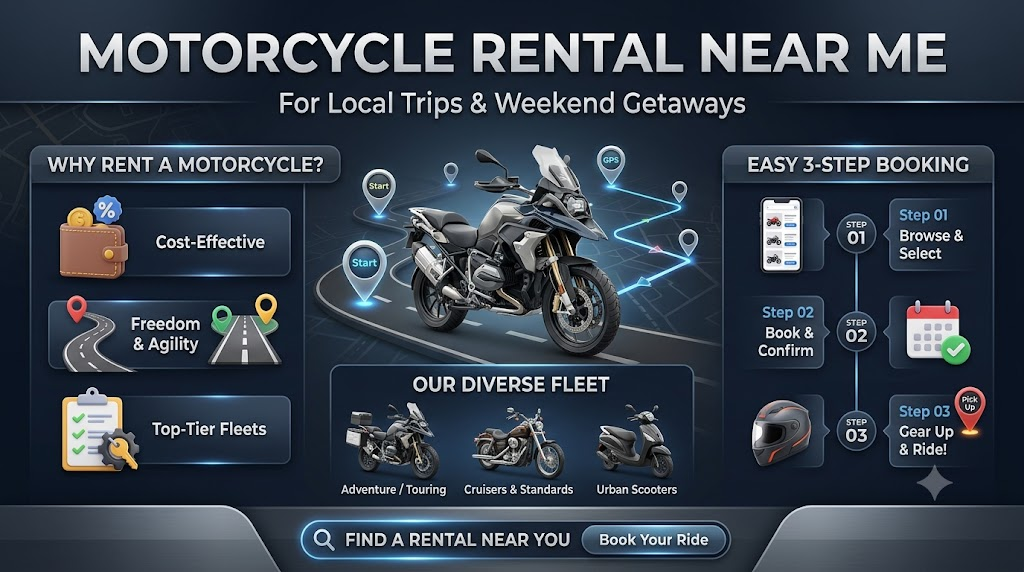
Here is where I send my own clients. MotoShare.ca is an online marketplace built for Canada. It links riders and drivers with verified local rental shops. The site covers major provinces from British Columbia to Quebec. One search shows many trusted options at once.
Start by typing motorcycle rental near me into the search. Enter your city and your dates, and results appear right away. You can compare daily CAD rates side by side. No phone calls and no wild guessing needed.
Each listing shows clear vehicle specs. Engine size, model year, and included gear all sit up front. Photos show the real bike or car, not stock shots. Rental terms and insurance details stay in plain sight before you pay.
Booking runs direct and simple. Pick your ride, lock the deposit terms, and set your pickup time. Reviews from other Canadian riders steer you well. It is the fastest honest way to find a good local machine.
Real-Life Travel Scenarios
- A Toronto rider wants one easy weekend. He books a cruiser through MotoShare and points it at Prince Edward County. Farm stands, lake beaches, and wineries fill his route. He rolls home after 400 happy km.
- A Calgary adventurer rents a 750cc dual-sport. She takes the Icefields Parkway north to Jasper with time to spare. Glaciers and mountain goats drift past her mirrors. Gravel pull-offs lead her to views cars cannot reach.
- A European visitor lands in Vancouver with a full licence. He rents a touring bike and ferries over to Vancouver Island. The Pacific Rim Highway carries him through old rainforest to Ucluelet. Fog and surf become the story of his week.
- A Montreal family books an all-wheel-drive SUV in October. They roll north into the Laurentians for the fall colours. Boots, coats, and camera bags vanish into the trunk. Rain and four degrees never slow them down.
Common Mistakes to Avoid When Renting Vehicles in Canada
- Underestimating highway distances between fuel stops. Northern rural routes can run 200 km with no gas station. I mark fuel stops on my map every evening. Never roll past an open pump and hope.
- Forgetting that mountain passes can freeze in July. High Rockies passes drop below zero overnight in mid-summer. Check pass forecasts, not just valley weather. Thermal layers live in my bags all season.
- Failing to verify your licence class meets shop rules. Ontario M2 and BC Class 6 are examples of valid classes. Learner permits carry limits that shops reject. Confirm your full motorcycle endorsement before you fly in.
- Riding at dusk or dawn through wooded areas. Moose and deer step onto highways in low light. A moose strike is often fatal for a rider. Plan to arrive before sunset and ease off near treelines.
- Skipping windproof and waterproof layers. Mountain weather flips from warm sun to cold rain in minutes. A windproof shell and waterproof gloves are kit, not extras. Wet riders get stiff and slow to react.
- Renting a heavyweight cruiser without crosswind practice. Heavy touring bikes catch truck gusts like sails. Prairie highways and mountain gaps push hard gusts. Learn on a mid-size bike before you move up.
- Not checking national park pass rules. Banff, Jasper, and Yoho cover many classic routes. Parks Canada charges entry fees at the gates. Buy a Discovery Pass ahead and keep it in view.
- Relying only on mobile data in remote valleys. Signal dies between mountains and across northern stretches. I download offline maps before leaving any city. Carry a paper map and tell someone your route.
Simple Rental Booking Checklist
- Valid unrestricted motorcycle licence from home. Bring the card itself, plus an International Driving Permit if visiting. Shops check the licence class at every handover.
- Major credit card for the deposit. Hosts place a card hold, often 1,000 to 3,000 CAD. Confirm the hold amount and refund timeline up front.
- Proof of insurance and clear deductible terms. Third-party liability insurance is required in each province. Ask your deductible for theft, damage, and glass.
- DOT or ECE certified helmet check. Each province requires an approved full helmet. Check the shell, strap, and inner padding before you take it.
- Fuel return policy and drop-off schedule. Most shops run a full-to-full fuel rule. Confirm the return time and after-hours drop-off options in writing.
Frequently Asked Questions
1. Can international visitors rent a motorcycle in Canada using their foreign driver’s license?
Yes, most visitors ride on a valid foreign motorcycle licence. Many shops also ask for an International Driving Permit. That permit simply translates your licence for shops and police.
Your licence must show a full motorcycle class. Learner permits get turned away at most counters. Check the shop’s licence rules before you book. Rules can shift a little by province.
2. What months are best for planning a motorcycle road trip across Canada?
June through September is the golden window for most of the country. July and August bring the warmest, steadiest weather. Mountain roads stay clear of snow only in these months.
Southern Ontario rides well from May into early October. The West Coast often stretches into November. Always check pass forecasts first, because weather changes with height.
3. Are motorcycle helmets legally required in every Canadian province?
Yes, every Canadian province requires an approved motorcycle helmet. There are no exceptions for adults. The helmet must be DOT or ECE certified.
Passengers wear certified helmets too, no exceptions. Police hand out fines for improper or missing helmets. Rentals always include or offer helmets of this standard. Check the fit before you accept one.
4. What type of insurance is mandatory when renting a motorcycle or car in Canada?
Third-party liability insurance is mandatory in each province. It pays others for injuries or damage you cause on the road. Minimum coverage varies between provinces.
Your rental contract should state the liability limit clearly. Ask about collision and theft deductibles before you sign. Some personal policies and credit cards cover rentals. Get all of it in writing first.
5. Can beginner riders rent high-powered sport or touring bikes?
Most Canadian shops say no, and I agree with them. Sport bikes and heavyweight cruisers demand real saddle time. Many shops want one to three years of riding history.
Beginners should start on a 300cc to 500cc machine. Those bikes stay light, calm, and easy to manage. Some shops run guided beginner tours on small bikes. Honest skill-matching protects you and your deposit.
6. How does MotoShare help riders find a reliable motorcycle rental near me?
MotoShare lists verified local shops across Canadian cities and provinces. You search your location and dates and compare options in seconds. Daily CAD rates, specs, and photos sit side by side.
Each shop is checked and approved before listing. Rider reviews add another layer of honest detail. Instead of cold-calling around, you see the whole local market at once. It saves hours of guesswork.
7. Are one-way rentals possible between major Canadian cities like Calgary and Vancouver?
Yes, some shops run one-way rentals between major cities. Expect a big drop fee for the distance covered. Not all rides or shops support one-way trips.
Confirm the one-way option and fee before you book. Get the exact drop-off spot and its hours. Check the fuel and cleaning rules for returns too. Larger shops run one-way deals with the least fuss.
8. Do Canadian rental motorcycles include roadside assistance for remote highway breakdowns?
It depends on the shop, so always ask first. Some rentals include roadside help within a set service area. Others sell it as a cheap daily add-on.
Remote stretches of British Columbia sit outside some service zones. Carry the shop’s phone number and a basic tool kit. Plan fuel and rest stops where real services exist. Preparation beats any policy.
9. What should riders pack to handle rapid mountain weather changes?
Pack thermal base layers under your riding gear at all times. Then bring a windproof jacket and waterproof pants. Waterproof gloves and warm socks finish the kit.
A spare neck tube blocks the cold mountain air. Keep everything in tank bags that open fast. Weather can flip from 25°C to 5°C in one pass. Riders with layers stay happy all day.
10. Can I rent a car instead of a motorcycle on MotoShare if the weather turns cold?
Yes, MotoShare lists cars and SUVs alongside motorcycles. Plenty of my clients switch to four wheels when forecasts turn. You can compare both options in one search.
A warm car with a dry trunk shrugs off rain and early frost. SUVs add all-wheel drive for mountain roads. One site keeps the switch painless. Check each ride’s cancellation terms first.
11. What security deposit amounts do Canadian rental hosts typically hold?
Most hosts place a hold on your credit card. Typical holds run from 1,000 to 3,000 CAD for motorcycles. Luxury or adventure bikes can require more.
Cars and SUVs often carry lower holds than big bikes. The hold releases a few days after a clean return. Ask for the exact amount and refund timeline. Keep the deposit terms in writing.
12. Why should travelers book through a specialized Canadian rental marketplace?
A Canadian marketplace knows our rules, seasons, and roads. Listings show CAD pricing with no hidden foreign fees. Local hosts understand provincial licence and insurance rules.
Checks and reviews filter out weak shops before you pay. Support speaks your language and knows your route. You compare trusted local options in minutes, not days. That peace of mind is worth a lot up north.
Conclusion
After twenty years of guiding, my advice stays simple. Match the machine to the route, the season, your bags, and your skill. Light commuters own the city streets and lakefront loops. Touring cruisers rule long Trans-Canada days with a passenger. Adventure bikes earn their keep on gravel and mountain passes. A warm SUV wins when family, luggage, or cold rain joins the trip. Inspect each ride before you leave the lot. Keep your licence, insurance, and park passes within reach. Ride inside your limits and give every moose and bear room to breathe. The Canadian summer is short but magic. So gear up, plan well, and ride the open highway responsibly.